
How Cinnamon Ragdoll Kittens Change Color: From Kittenhood To Adulthood

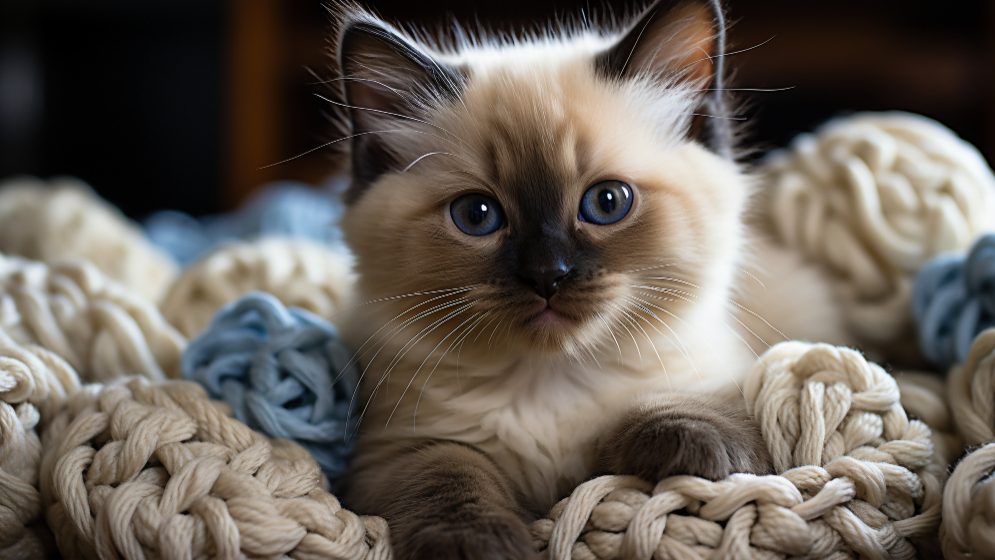
One of the most interesting things about Ragdolls is how much their appearance can change as they grow. A kitten that looks almost white during its first weeks can develop much stronger facial, ear, tail, and leg color over time.
This is especially noticeable with cinnamon Ragdoll kittens. Their warm pigmentation can start very softly and become easier to recognize as the kitten matures. Because of that, a twelve-week-old photo does not always tell you exactly how the same cat will look at one, two, or even three years old.
For prospective families, understanding this process is useful for more than curiosity. It can help explain why cinnamon may be confused with chocolate or seal in young kittens, why lighting affects photographs so much, and why experienced breeders look at genetics, parentage, and development rather than judging color from a single image.
Table of Contents
- Why Ragdoll kittens are born so light
- What makes cinnamon pigmentation different
- How cinnamon color develops from kitten to adult
- Cinnamon vs chocolate vs seal
- How pattern changes the appearance of cinnamon
- Why lighting and temperature matter
- What nose leather and paw pads can tell you
- How adopters can evaluate kitten photographs
- Why color should never be the only consideration
- Final thoughts
Why Ragdoll Kittens Are Born So Light
Pointed Ragdolls begin life much lighter than they will appear as adults.
This happens because the gene responsible for colorpoint restriction is temperature-sensitive. Pigment develops more strongly in cooler parts of the body and less strongly in warmer areas.
That is why Ragdolls gradually develop darker coloring on the:
- ears
- face
- tail
- legs
- feet
The warmer central body generally remains lighter.
This explains why very young Ragdolls can look almost entirely white or cream. Their point color is not fully visible yet.
It also explains why judging a kitten’s final appearance too early can be misleading.
The change does not happen overnight. Ragdolls mature slowly, and their color can continue developing for several years.
What Makes Cinnamon Pigmentation Different?
Cinnamon is not simply a pale version of seal.
It has its own genetic basis.
At the B locus, three important forms of pigmentation are commonly discussed:
- B — full black-based pigment
- b — chocolate
- bˡ — cinnamon
Their dominance relationship is:
B > b > bˡ
That means full pigment dominates chocolate, while chocolate dominates cinnamon.
A cat can therefore carry cinnamon without looking cinnamon.
For example:
B/bˡ
The cat carries cinnamon but visually expresses the dominant full pigment.
b/bˡ
The cat looks chocolate but carries cinnamon.
bˡ/bˡ
The cat expresses cinnamon.
This is why genetics can tell us something that appearance alone cannot.
A young kitten may look pale or warm-toned, but that does not automatically make it cinnamon.
How Cinnamon Color Develops From Kitten to Adult
Every kitten develops at a slightly different rate. Still, there are general stages families can expect.
Birth to 2 Weeks
Pointed kittens are usually extremely light.
Very little visible color may be present, and subtle differences between cinnamon, chocolate and other lighter shades can be difficult to judge from photographs.
At this age, parent genetics often tell the breeder more than the coat itself.
2 to 4 Weeks
The first traces of pigment may become visible around the ears, nose or tail.
Cinnamon can still look very soft at this stage.
Photos can also be deceptive. Warm indoor lighting may exaggerate brown tones, while bright natural light can make the kitten look much paler.
4 to 8 Weeks
The ears and tail usually become easier to evaluate.
Facial color also starts developing, and the points begin showing more contrast against the lighter body.
This is when families often start noticing that the kitten is no longer nearly white.
However, the adult color is still far from finished.
8 to 12 Weeks
By this age, the kitten’s pattern becomes much clearer.
The point color may show more warmth, and cinnamon can begin to look more distinct from darker shades.
Even so, this is still an early stage.
A kitten photographed around twelve weeks should not be expected to look the same at two or three years old.
3 to 6 Months
The points generally continue becoming stronger.
The facial mask develops further, while the ears and tail may show more obvious warmth and depth.
The coat is also beginning to move away from the very soft baby texture.
6 to 12 Months
This is often when changes become more noticeable.
A kitten that looked very pale at three months may show much stronger point color by its first birthday.
The body may also begin developing some shading.
1 to 3 Years
Ragdolls mature slowly.
As the cat approaches adulthood, the point color can continue deepening while the body develops more mature shading.
The full coat also becomes longer and fuller, which changes how the color looks overall.
By this stage, the difference between kitten photographs and adult appearance can be dramatic.
Cinnamon vs Chocolate vs Seal
These three colors are often confused, especially in younger cats.
The easiest way to think about them is as related but genetically different forms of brown-based pigmentation.
Seal
Seal is the darkest of the three.
Adult seal points can become deep brown and may even look nearly black in some lighting.
Chocolate
Chocolate is softer and warmer.
It is usually described as a milk-chocolate type of brown rather than the deeper color seen in seal.
Cinnamon
Cinnamon is lighter and warmer again.
It often has a reddish-brown, warm brown or almost caramel quality.
A simple comparison looks like this:
| Color | General Appearance |
| Seal | Deep, dark brown |
| Chocolate | Softer, warmer milk-chocolate brown |
| Cinnamon | Lighter, warmer reddish-brown |
The difficulty is that kittens do not always show these differences clearly.
A young seal kitten may still be pale. A chocolate kitten under warm indoor lighting may look more cinnamon-like than it really is. A cinnamon kitten photographed in bright light may appear almost cream.
That is why color identification should not depend on one photograph.
Genetics, parentage, nose and paw pigmentation, age and natural-light photos all help create a more reliable picture.
How Pattern Changes the Appearance of Cinnamon
Two cinnamon Ragdolls can look very different even though their underlying color is the same.
That is because color and pattern are separate traits.
Cinnamon Colorpoint
A colorpoint Ragdoll shows its point color on the ears, face, legs, feet and tail without the large white areas found in mitted or bicolor patterns.
Because of this, more cinnamon pigmentation remains visible.
Cinnamon Mitted
Mitted Ragdolls have white feet and other white areas.
This means some regions that would otherwise display cinnamon are covered by white spotting.
Cinnamon Bicolor
Bicolors have even more white, including the characteristic inverted “V” on the face.
The contrast between white and cinnamon can make the warm point color look more noticeable in some cats and less extensive in others.
Cinnamon Lynx
Lynx adds striping within the colored areas.
Instead of seeing one smooth cinnamon tone, the points show patterning with lighter and darker markings.
This is one reason families should avoid expecting every cinnamon Ragdoll to look identical.
The base color may be the same while pattern and white distribution create a very different overall appearance.
Why Lighting Matters So Much
Cinnamon is a warm color, which means lighting can strongly influence how people perceive it.
Warm indoor lighting
Yellow-toned bulbs can make a brown coat look warmer and more reddish.
This can sometimes make chocolate appear more cinnamon-like.
Cool indoor lighting
Cool LEDs can reduce the warmth and make cinnamon appear duller or grayer.
Strong sunlight
Sunlight can make cinnamon look brighter, warmer and more copper-toned.
Indirect natural light
Soft daylight is usually the most useful lighting for comparing coat colors.
For this reason, families should ideally look at several photos rather than one heavily edited image.
Useful photos include:
- natural-light images
- face and body views
- photos at several ages
- videos
- pictures of parents
- older siblings from the same lines
This gives a more realistic impression of the kitten’s development.
Temperature Can Influence Point Expression
Because colorpoint pigmentation responds to temperature, environment can affect how much pigment is expressed.
Cooler parts of the body produce more pigment.
This is why the ears, face, tail and feet darken more than the warm central body.
Season and climate can also influence overall coat appearance.
However, temperature does not change one genetic color into another.
A chocolate Ragdoll does not become cinnamon because the weather is colder.
Temperature affects how strongly the genetically determined pigment appears.
The underlying color genetics remain the same.
What Nose Leather and Paw Pads Can Tell You
Breeders often look beyond coat color when evaluating a kitten.
Nose leather and paw-pad pigmentation can provide additional clues.
Cinnamon tends to produce lighter, warmer pigmentation compared with the deeper tones associated with seal.
Still, these areas should not be judged in isolation.
Mitted and bicolor Ragdolls can have pink paw pads or mixed pigmentation because of their white spotting.
Therefore, the most useful evaluation combines several factors:
coat color + nose leather + paw pads + parent colors + pedigree + genetics
No single characteristic tells the whole story.
Why Two Cinnamon Kittens Can Mature Differently
Even two kittens from the same litter may not develop exactly the same way.
Differences can include:
- depth of point color
- amount of body shading
- pattern
- white distribution
- lynx markings
- coat length
- coat density
- rate of maturity
That is why adult relatives are useful for reference but should not be treated as exact predictions.
A breeder may be able to show how cinnamon generally develops within a particular line, but no responsible breeder can promise that one kitten will eventually look exactly like another adult cat.
How Prospective Adopters Can Evaluate Kitten Photos
Families researching cinnamon Ragdoll cats for sale should look at more than the prettiest photo on a breeder’s website.
A few questions can make the evaluation much more useful.
How old is the kitten?
Age matters because cinnamon may still be developing.
A six-week-old kitten and a six-month-old kitten should not be compared as if their coat development were equal.
Is the photo taken in natural light?
Natural light generally gives a more realistic view of warm brown tones.
Is the image heavily edited?
Filters, saturation and color-temperature changes can dramatically alter brown and reddish colors.
Are there several photos?
Multiple images taken at different ages are much more informative than one carefully selected photograph.
Can you see the parents?
Adult parent photos can help families understand the type of color development present in the line.
Can the breeder explain the genetics?
A breeder working with a rare color should be able to explain why a kitten is expected to be cinnamon.
The explanation should make sense genetically rather than relying only on appearance.
Is video available?
Video gives families a better view of movement, coat tone, lighting changes and personality.
It also makes it easier to focus on the whole kitten rather than only the color.
Why Color Should Never Be the Only Consideration
Cinnamon is visually distinctive, and it is understandable that families become interested because of the color.
However, a Ragdoll will live with its family for many years.
Health, temperament and socialization matter much more in everyday life.
Before choosing a kitten, families should also consider:
- parent health testing
- kitten socialization
- temperament
- household compatibility
- breeder transparency
- veterinary care
- registration and pedigree information
A rare color does not make up for poor health or poor socialization.
Likewise, the “best” cinnamon kitten is not necessarily the darkest, lightest or most unusual-looking kitten.
The best match is the one whose personality and needs fit the home waiting for it.
Final Thoughts
Cinnamon Ragdolls are fascinating partly because their warm pigmentation develops gradually rather than appearing fully formed in early kittenhood.
Pointed kittens begin life very light. Over time, pigment becomes stronger around the ears, face, tail, legs and feet. Cinnamon usually develops as a warm reddish-brown tone, while pattern, lighting, temperature and individual genetics influence how that color appears.
For prospective families, the most useful approach is to avoid judging a kitten from one photograph.
Look at several ages. Use natural-light images. Learn about the parents. Ask how the color was determined. Consider genetics when available.
Most importantly, remember that color is only one part of the kitten.
Health, temperament, socialization and a thoughtful breeder will matter long after the coat has reached its mature shade.
Share





Leave A Comment