
Can Cat Eye Ulcer Cause Eyesight Loss? Can It Get So Severe?

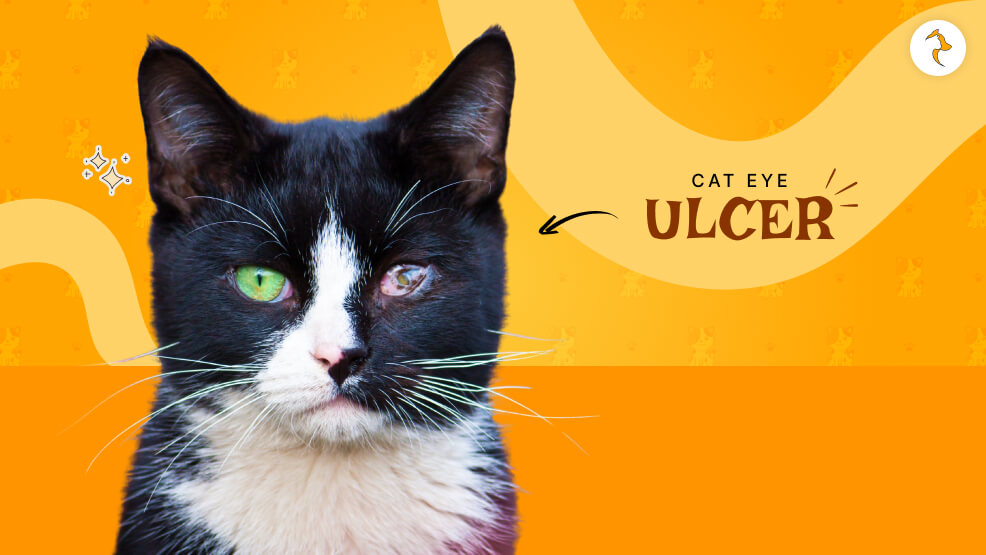
Have you ever heard of cat eye ulcer? Yes, you heard it right. They also develop ulcers, often in their eyes. This is popularly known as corneal ulcers, and these can cause you feline baby discomfort and pain.
The cornea is the glistening, transparent membrane that covers the surface of the eyeball. The cornea has three layers, and each layers are specialized skin cells. The three layers are epithelium, the stroma, and then the Descemet’s membrane.
Erosion through a few layers of the epithelium is known as corneal ulcer. However, this can turn into something serious, and if the situation worsens, it can cause them irreparable damage.
What Is Cat Eye Ulcer?

The cornea is the outer layer that protects the frontal part of the eyeball. When one or more layers are damaged structurally, like a scratch or a hole, it is known as a cat eye ulcer or corneal ulcer.
There are different levels of severity of this ulcer based on its depth and seriousness. One of the most common causes of these ulcers is injury to the eye. You might not even detect it with the naked eye.
Therefore, you should be aware of the symptoms of corneal ulcer and take your pet to a vet immediately if any of these symptoms appear.
Symptoms of Cat Eye Ulcer

If your cat is affected by eye ulcer, you will notice some of these symptoms. So, keep an eye out to figure it out in time. Here are some of the common cat eye ulcer symptoms.
- Eye inflammation: This is one of the most common symptoms of eye ulcers. Their eyes turn red and swollen. This is the tissue around their cornea swelling up.
- Pain in the eye: Your feline friend will squint, rub their eye, or try to keep it closed. They will behave like any other cat experiencing vision problems.
- Weepy eye: You might even notice some discharge from their eyes.
- Hypersensitivity: They might become hypersensitive to any bright light.
- Cloudy eye: Check if their cornea appears cloudy. This could be another sign of corneal ulcer.
- Depressed eye: The affected eye will become depressed on the surface.
What Causes Corneal Ulcers?

Trauma is one of the major causes of corneal ulcers. Trauma might look like a foreign body in their eye. Sometimes eyelid abnormalities or teat-production conditions can also cause eye ulcers. Here are some of the common cat eye ulcer causes.
1. Trauma
Eye scratch can happen from any foreign object, fighting with another cat, or from their sharp claws. This can damage the cornea, and that leads to ulcers.
Cats often rub their faces on rough surfaces or objects with sharp edges, which can lead to eye injuries.
2. Foreign Bodies
Dust particles or plant matter can get into their eyes when they try to satisfy their curious nature and get too close to where they should not. This can also cause cat eye ulcers.
3. Infections
Fungal, bacterial, or viral infection like feline chlamydia or herpesvirus can cause issues in your cat’s eye, which can lead to ulcers.
4. Abnormal Eyelid Anatomy
Sometimes, your cat may have an eye condition, such as entropion, where their eyelids are rolled inward, or distichiasis, where they have abnormal eyelash growth.
These conditions can cause the eyelids or eyelashes to rub against the cornea repeatedly, resulting in corneal ulcers.
5. Dry Eye
Insufficient tear production can cause the cornea to dry out, making it prone to ulcers. This is one of the most common causes and a major reason to get your eyes checked regularly.
6. Chemical Burns
Chemical burns in the cornea also cause corneal ulcers. This can happen from drywall dust, irritating shampoos, or certain lotions or liquids that get into their eyes.
Moreover, it can also occur due to other causes, such as dirt trapped under the eyelid, bacterial or viral infections, and ingrown eyelashes.
Diagnosis
It is essential to take the little furball to a vet as soon as they start showing any symptoms of ulcers. It is necessary to get them checked and treated before their condition worsens.
After the physical exam, they undergo a neurological and ophthalmic examination, and several tests are conducted to determine the cause of their problems with certainty. These are some of the common tests that are conducted to know what is troubling them.
- A test to assess their tear production, known as the Schirmer tear test.
- Their intraocular pressure also needs to be checked.
- Moreover, the rate at which the tear film evaporates also needs to be checked.
However, the fluorescein dye application is one of the most effective tests when you suspect your cat is suffering from a corneal ulcer. In this test, a dye is applied and taken up by different layers of the cornea, and then it is flushed out gently.
The vet will be able to see if the dye stays in their eyes as it glows neon green. They will also be able to show you the corneal scar.
Treatment
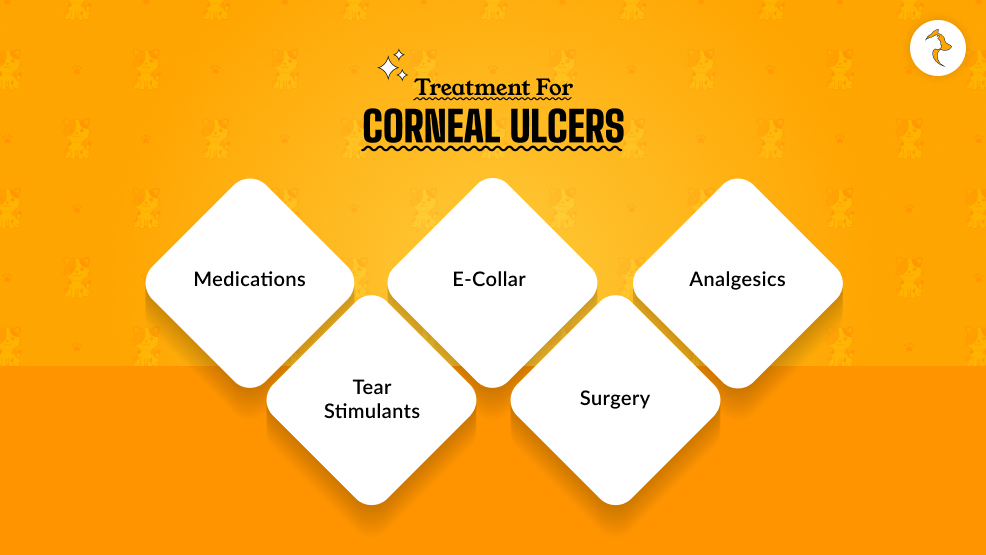
The treatment of corneal ulcers depends on the severity of the condition and the underlying cause of the issue. But, how do you treat an ulcer in a cat’s eye? Some of the common treatment options that vets take up are:
- Medications: Veterinarians generally prescribe antiviral eye drops, topical antibiotics, or ointments to reduce secondary infections and pain.
- E-collar: This is also a supportive care that veterinarians recommend to prevent cats from scratching their eyes during the recovery process and afterwards.
- Analgesics: These are again pain relievers, as the ulcers are painful, and doctors recommend them to alleviate the constant pain.
- Tear stimulants: If dry eye is causing the ulcers, this medicine is recommended to stimulate tear production.
- Surgery: If the situation is complicated, then surgery is necessary to promote healing. A primary care veterinarian can perform the procedure, but if the ulcer has reached 50% or more of the cornea or is not responding to treatment, refer to a board-certified veterinary ophthalmologist.
Recovery And Management
You need to take them back to the vet for a check-up. Also, if their condition does not improve even after five days, it is considered a complex ulcer, and their treatment plan needs to be revised.
Take them within two to three days to ensure their condition is improving. Mostly, your doctor will advise you to get things under control before they worsen.
However, how to tell if a cat eye ulcer is healing? You will see that the redness in and around their eye is reducing, and so is the cloudiness. They will be less sensitive to light, and the discharge will also decrease.
Frequently Asked Questions
Here are some of the commonly asked questions about corneal ulcer.
Well, the treatment can range from a few hundred to several thousand dollars. This depends on the treatment approach and the seriousness of the case.
Yes, this can be a serious issue. Some improve immediately after the start of the treatment. However, when left untreated, ulcers can cause severe pain, permanent vision loss, and in some cases loss of an eye.
These are considered a medical emergency and does not heal on their own. They need prompt action and medication. A delay can even cost them their eye.
If you want to treat a sore eye at home, start with cleaning the area with a soft, warm, damp cloth. Moreover, you can use a saline solution to clean out any foreign objects, particles, or debris from their eyes. Do not use human medications on them.
Flush their eye with saline or water to remove any irritants, and then it is best to seek professional help.
Prevent It Before It Gets Serious
Trauma is one of the primary causes of cat eye ulcers, and you can reduce their chances of this by removing objects that can cause it. Moreover, if you find your cat getting into lots of fights, manage their behavior and aggression.
Take them to a vet if their behavior is causing them trouble. Additionally, get them the core vaccines. Vaccinate them against FHV or feline herpesvirus to prevent it from happening over and over again.
Share









Leave A Comment