
Cat Vomiting: Know The Cause Behind It To Help Them Effectively

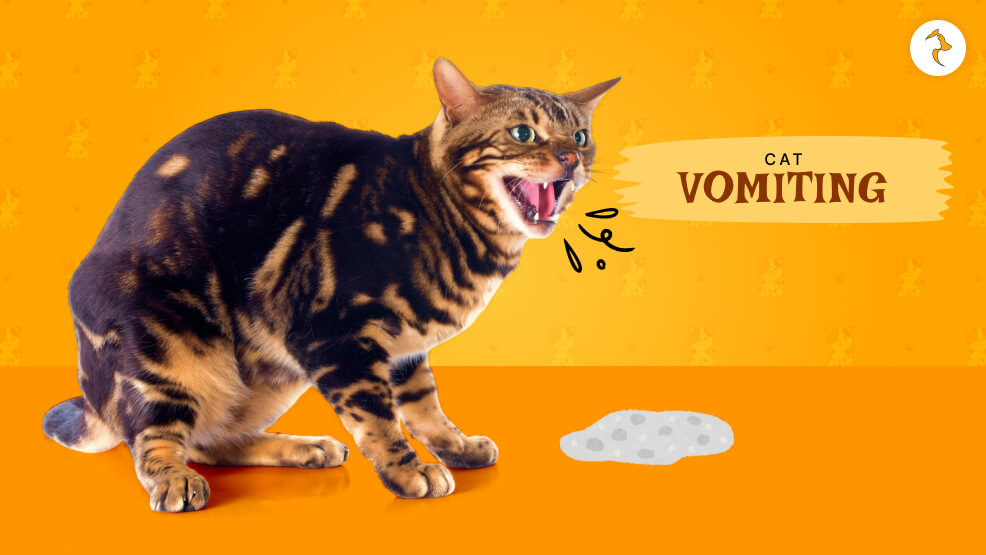
It is not a good feeling to see your cat suffer. They cannot speak like us and cannot always show that they are in pain. So, you have to be a little extra cautious when you get the feeling that something is off.
Moreover, it is difficult to differentiate between coughing, regurgitation, and vomiting. These are all different and come with a different set of causes. It is important that you know the difference and understand the reason behind cat vomiting.
Also, there could be various underlying issues. This is why you have to look at other symptoms as well, like cat vomit colour, and know when you need to take them to a vet.
Cat Regurgitation Vs. Cat Vomiting: What Is The Difference?
Vomiting is the motion of taking out contents from the small intestine and stomach through the mouth. This is not the case with regurgitation. Regurgitation is a massive portion that ejects contents without any force through the mouth.
Regurgitation can happen when they eat a lot or when there is a hairball. However, vomiting is generally caused by any underlying illness. The vomited content mostly seems digested, whereas the regurgitated contents are mostly undigested.
You might even mistake it for coughing if you don’t see anything coming out. If you cannot figure out what it is, vomiting, regurgitation, or coughing, take a video and show your vet. They will be able to help in the best possible way.
Acute And Chronic Vomiting In Cats
Acute vomiting happens when they keep vomiting because they have eaten something they should not have. This can happen because of a viral or bacterial infection, pancreatitis, or intestinal parasites. Once you have treated the reason behind it, acute vomiting will stop.
Chronic vomiting happens when there is an underlying reason that you need to handle. For instance, cats with hyperthyroidism, kidney disease, inflammatory bowel syndrome, and cancer may experience on-and-off vomiting for months.
Cat Vomiting: What Are The Possible Causes?
Cat vomiting, whether chronic or acute, can be similar, but there are some exceptions. Chronic vomiting does not happen from toxins. Consumption of foreign bodies is not a cause of chronic vomiting as well. Here are some of the common reasons behind vomiting.
- Cancer
- Dietary indiscretion
- Pancreatitis
- Injection of any foreign object
- Kidney disease
- Inflammatory bowel disease
- UTI
- Diabetes
- Heartworm disease
- Hyperthyroidism
- Constipation
- Liver disease
- Intestinal parasites
- Medications like chemotherapy
- Inner ear infections
- Viral or bacterial infections
Meaning Of Different Cat Vomit Colours
Even though the colour of cat vomit does not definitely mention the reason behind cat vomiting, it gives a head start. This helps with the detection of the underlying disease.
Here are some examples of vomir consistency and colour, and the reason behind that.
1. Yellow/Bile
Cats often vomit bile when they keep their stomach empty for a long time. The major reason behind this is that when they stay on an empty stomach for around 24 hours.
For instance, you feed them in the morning, and then they don’t eat anything for almost 24 hours, and you feed them again the next morning. It can also happen when they are anorexic.
2. White, Foam-Like Vomit
Vomit with white foam is mostly seen when the lining of the small intestine or stomach is inflamed from any underlying issue. Moreover, this can also be regurgitation from the esophagus or when they stay on an empty stomach for a long time.
3. Red/Blood Like Vomit
Cats often vomit blood when they have ulcers. Also, if they have vomited several times, they can puke blood due to stomach lining irritation or esophagus issues. This happens when there is increased acid in the system.
4. Water/Clear Liquid
If your feline baby is vomiting clear liquid, this could mean they are puking their stomach contents. This can also happen if they have drunk too much water.
5. Worms
Cats often puke worms. And the most common kind of worm that is found in cat vomit is roundworms. This is a serious condition that you should not ignore. Take them to a vet immediately so they can get appropriate treatment.
6. Green Vomit
If your cat is throwing up green, this means that the contents of the food are brought up from the small intestines. The vomit mixed with bile gives it the green color.
7. Black Liquid
Black vomit generally indicates digested blood from the intestinal tract and can mean there is a foreign body in the intestine, ulcers, or inflammation of the intestines.
8. Hairballs
If you are wondering, “My cat keeps throwing up but seems fine,” this could be the reason. Cats often throw up hairballs. This is one of the most common causes of vomiting. This is common in cats that like to overgroom themselves, or a cat with long hair.
9. Food In Vomit
If a cat eats too much and too fast, then it is common that they will throw up. Moreover, the vomit contents appear in tubular food.
10. Mucus In Vomit
You will generally notice mucus if they are regurgitating and not vomiting. If you notice them puking mucus, you have to look into the matter and figure out the actual reason behind this.
Symptoms To Look Out For
When your cat vomits, there are some other symptoms as well. Describing all the symptoms to your vet is important to understand the correct diagnosis and its treatment. Some of the symptoms that you need to look out for are:
- Check whether they are constipated as well.
- Notice if they are drinking a lot of water.
- Also, it is important to notice whether they are eating or not.
- Check if they are sneezing.
- Also, find out if they have diarrhea.
- Lastly, check if they are pooping on the floor.
When Should You Take Them To A Vet?

Things can turn out too serious too fast. So, it is important that you know when to seek immediate help.
- Take them to a vet if they have vomited more than two to three times in a row.
- You have to take them to a vet if they have diarrhea, along with vomiting and not eating.
- If they have not eaten anything for 12 hours, not drunk anything, and vomited several times.
- Suppose they are diagnosed with a disease like hyperthyroidism or diabetes. You have to take them to a vet immediately, as this is an emergency.
- Moreover, if they have vomited up worms, you need to take them to a vet and deworm them immediately. Also, if you have other pets, you need to get them checked as well.
How To Treat Them?
The treatment depends on the cause behind this. And you have to do as recommended by the vets, but here are a few generalized things that you can try.
- Give them plenty of fluids. This can flush out their system and keep them hydrated as well.
- You can also give them some anti-vomiting medicines to stop vomiting and fluid loss.
- You can change their diet if they have chronic vomiting or acute vomiting.
These are a few things you can try, but take them to a vet immediately to get them proper treatment.
Frequently Asked Questions
Here are some of the common questions people ask when discussing cat vomiting.
Cats can vomit for various reasons. Some are serious, while some might go away on their own. But if there are other symptoms along with vomiting, you need to take it seriously.
If your cat has vomited two to three times in a row and shows signs of lethargy, appears to have consumed something toxic, has difficulty breathing, or vomits blood, you need to take them to a vet immediately.
If your cat is vomiting, withhold food for 12 hours and give them fresh water. After this fasting period, give them a small amount of food, without any seasoning. Make sure you give them food that is easy to digest.
For infrequent vomiting, do not give them food for a while. After that, give them plain, bland food in small quantities. You can provide boiled fish or chicken. Moreover, make sure you give them fresh water. Also, after consulting a vet, you can give them a probiotic supplement.
Occasional vomiting is normal for cats. However, frequent and persistent vomiting is a sign that there is something more serious. Take them to a vet if they continue to vomit.
Share







Leave A Comment