
How To Say Cat In Russian


Are you tired of the lousy translation service of Google Translation? Well, so are we. Many people use this easy translation tool when they want to say something in a different language.
But over the years, we have come to know that it is not such a reliable tool. For example, if you want to say cat in Russian, the Google translator will show you ‘kот.’ But that’s not the right term for the cat.
So, welcome to this genuine article, where we will take you to step by step so that you know what cat is in Russian by the end. Therefore, without wasting much time, let’s get on with it, my amigos. Well, amigos are not Russian. They’re friends in Spanish. Anyways, let’s start.
Russian Word for “Cat”
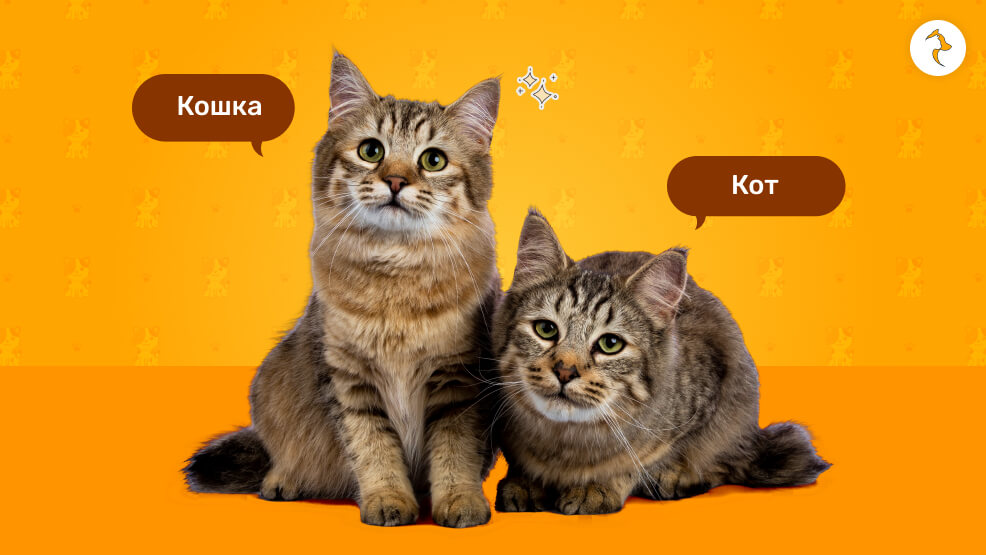
The simplest Russian word for “cat” is:
1. Кот (kot) — Male Cat
It’s a common word for a male cat. It’s not too long, easy to say, and commonly used.
2. Кошка (kosh-ka) — Female Cat
This is the female form of the noun, and it’s reserved only for a female cat. It’s also the more general or default name for “cat” in any situation that’s not very specific.
When Do You Use “Кот” vs. “Кошка”?
Russian nouns are either masculine or feminine. This is not only something that will influence what word you choose, but even the structure of the rest of your sentence. Here’s when to employ each:
Checked opción
- Кот (male) in case you know the cat to be male.
- Example: Мой кот любит молоко. – “My (male) cat likes milk.”
- Кошка (female) is used when you speak of a female cat or when you do not know whether the cat is male or female.
- Example: У меня есть кошка. – “I have a cat.”
In informal usage, although you do not know what gender the cat is, most Russian speakers will default to кошка.
Is There a Word for “Kitten” in Russian?
There is! Russian has specific vocabulary for kittens:
Котёнок (pronounced ka-TYON-ok) — Kitten (Any Gender)
This is the general word for a kitten, male or female.
- Example: Какой милый котёнок! – “What a cute kitten!”
And then there are those words that have male or female diminutive forms:
- Котик (KO-tik) – A sweet or cute term for “little male cat” or simply “kitty.”
- Кошечка (KOSH-ech-ka) – A nice, affectionate term for “little female cat.” Children or in affectionate speech use these forms.
How Do You Pronounce “Cat” in Russian?
The most common pronunciation for both is:
- Кот – kot (rhyming with “boat” without the “b”)
- Кошка – kosh-ka (stress on first syllable)
- Котёнок – ka-TYON-ok (stress on second syllable) Russian is a phonetic language, so, having learned how to pronounce the letters, it will be easier to pronounce.
Do Russians Have Slang or Nicknames for Cats?

Yes, Russians do have some colloquial names or nicknames for cats:
- Котик (KO-tik) – “Kitty” or “Cutie” (also used romantically towards human beings, for example, “sweetie”)
- Кошечка (KOSH-ech-ka) – Diminutive, also used for sweet pets
- Мурка (MOOR-ka) – a cat nickname, also a colloquial term for a fond female cat
- Барсик (BAR-sik) – Generic male cat name in Russia, applied indiscriminately
- Мурлыка (moor-LY-ka) – Derived from “мурлыкать” (to purr), a purring cat or one who purrs too much
How Do You Say Cat In Russian Language?
If you want to know how to say cat in Russian, you have to keep reading the article till the end. Trust me; it’s more about understanding the correct application of the word than just knowing it merely. So, let’s follow these steps;
Step 1: If It’s A She-Cat
If you want to say a female cat in Russian, the correct word for it will be ‘Koshka,’ or ‘кошка.’
Pronunciation Tips
Pronounce the ‘K’ the way you pronounce Kind, ‘O’ as in you pronounce Boy, ‘SH’ as in you say Shoes, and ‘KA,’ as in you say Card.
Step 2: If It’s A He-Cat
If you want to say cat in Russian, and it’s a he-cat, then the correct translation will be ‘Kot’ or ‘Кот.’
Pronunciation Tips
Pronounce the ‘K’ the way you say Kind, and ‘OT’ as you pronounce Lot. It’s much simpler to remember because it is just like the English word ‘Cat’. But, instead of the ‘a’ vowel, Russians use the vowel ‘o’ in the middle.
Step 3: If It’s In Diminutive Form
The next step is to learn how to say cat in Russian but in diminutive forms. Well, in this case, the spelling may look longer than the actual word, but the pronunciation is indeed shorter. For a she-cat, ‘Koshechka,’ or ‘кошечка.’ However, if it’s a he-cat, the word is ‘Kotik,’ or ‘котик.’
Pronunciation Tips
For Koshechka, you pronounce the ‘K,’ as in Kind, ‘O’ as in Boy, ‘SH’ as in Shoe, ‘ECH’ as in Itching, and ‘KA’ as in Card. For Kotik, you pronounce the ‘K’, as in Kind, ‘O’ as in Boy, and ‘TIK’ as in Chicken.
Step 4: If It’s In Plural Form
You have come quite some steps ahead now in saying cat in Russian. However, there are a few more steps to go.
So, if you see a group of cats in front of you, you will say ‘Koshki,’ or ‘кошки,’ and for she-cats, and ‘Koty,’ or ‘коты’ for he-cats. The diminutive forms of these plural forms will also change respectively. For the she-cats, it will be ‘Koshechki,’ or ‘кошечки,’ and for the he-cats, it will be ‘Kotiki,’ or ‘котики.’
Pronunciation Tips
Again, for pronunciation, we will guide you thoroughly. For ‘Koshki,’ pronounce the ‘KO’ as in Coat, pronounce ‘SH’ as in She, and ‘KI’ as in Key.
For ‘Koty,’ you again say ‘KO’ the way you say Coat, and ‘TY’ the way you say Timber. For diminutive she-cats, you will say ‘Koshechkin’ and pronounce it like ‘KO’ like Coat, ‘SH’ as in Shun, ‘ECH’ as in Witch, ‘KI’ as in Ski. Finally, for diminutive he-cats, you will say ‘Kotiki’ and pronounce it like ‘KO’ as in Coat, ‘TI,’ as in Tea, and ‘KI,’ as in Key.
Step 5: If It’s Kitten Or Kittens
If you want to say kittens in Russian, the best part is, that you don’t have to memorize the diminutive forms separately because there aren’t any. For kittens in singular form, you say ‘Kotyonok,’ or ‘котёнок,’ and for kittens in plural form, you say ‘Kotyata,’ or ‘котята’.
Pronunciation Tips
Pronounce the word ‘Kotyonok’ with ‘KO’ like Coat, ‘TYO’ as in Table, and ‘NOK’ as in Snacks. For pronouncing the word ‘Kotyata,’ you pronounce ‘KO’ as Car, ‘TY’ as in Letch, ‘A’ as in Yeah, and ‘TA’ as in Tarzan.
How Russians Talk about Cats in Sentences?
These are a few examples of sentences one hears used frequently:
- Где твоя кошка? – “Where is your cat?”
- Этот кот очень ленивый. – “This cat is very lazy.”
- Я нашёл котёнка на улице. – “I found a kitten on the street.”
Do Russian Cats “Meow” the Same Way?
Surprisingly enough, the Russian onomatopoeia for a cat meow is:
- Мяу (myau) – Just like “meow” in English, only more tasty with a Russian flavor.
- Example:
Кошка сказала «мяу». – О.catalog said ‘meow.’
Fascinating Cultural Fact: Cats in Russian Folklore and Language
Cats are also in a special position in Russian folklore and culture. They’re typically mysterious, wise, or mysterious animals. One popular Russian proverb is:
- «Кот учёный» – “The learned cat,” i.e., wise or magical cat, from fairy tales by Pushkin.
The Russians even employ cat idioms, for instance:
- «Жить как кошка с собакой» – “To live like a cat and a dog,” i.e., always to fight.
- «У него кошки на душе скребут.» – “Cats are scratching his soul,” i.e., a person is mentally ill.
Significance Of A Cat In Russian Culture
If you know how to say cat in Russian now, you may be interested in learning its significance in Russian culture. For example, some Russian cat owners can be pretty strict about their cat breeds. They only prefer Siamese cats, Canadian Sphynx, Persian cats, Siberian cats, and Abyssinian cats.
Cats also hold paramount significance in many works of art in Russian culture. Several books, songs, and films are made in the country where special cat symbols are used. So, you may guess the importance of cats in the Russian language.
There are some prevalent superstitions about cats too. For example, if a black cat crosses the road while you drive the car, it means bad luck, so they stop for a while before going again. If you have a cat with tricolor fur, it means good luck for the house. If a cat uses its paws to clean its face, Russians believe they will have a guest soon.
We have already given you a step-by-step guide to saying cat in Russian in almost every possible form. But, if you see a well-fed, giant male cat, you can say ‘kaTYAruh,’ or ‘котяра’. But, if you see a cute female cat, you may call it ‘KOshechka,’ or ‘кошечка.’
“Cat” in Russian Is More Than One Word!
Russian is a strongly inflected language, and “cat” is no different. Depending on gender, age, emotional content, or even poetical temperament, there are several alternatives to “cat” in Russian.
Whatever you say, кот, кошка, котик, or котёнок, you’re operating from within a language that highly appreciates its feline friends.
And now that you have learned to pronounce “cat” in Russian and how to use each of the words, why not give it a try? Your Russian-speaking friends—and even your cat—will be astonished.
Frequently Asked Questions
Koshka is the Russian Name for the cat. For more cat names as inspirations, you will require many suggestions for naming your cats.
Here are the suggested names of the cats in Russian.
Boris
Koshka
Kot
Igor
Anton
Russian blue cats are stunning looks. And when you have a gorgeous pet in your home. You must ideally name him by seeing these name suggestions.
For example, here are five Russian names for your lovely glorious blue eye cats.
Baba Yaga
Bubbles.
Nibbles
Bublik.
Cuddles.
Siberian cats are authentic Russian cats. The origin of the Siberian cats is the region of the eastern zone of Russia. This region is long and icy.
During the cold winter weather, the Siberian cats live in a very dense forest. The semi-longhaired triple hair coats keep them warm during these cold and harsh climates. These Russian cats often have dreamy blue eyes.
Wrapping It Up
Well, if you have learned how to say cat in Russian, maybe you would like to know some other words too. So, if you have any other terms in mind, make sure you ask us in the comment box below.
Also, share your thoughts regarding this post with us, and let us know if you had any difficulty pronouncing the words. We have given you great tips here, so just make sure you practice them thoroughly every day, and you will memorize them in no time.
Share









Leave A Comment