
Sardines For Dogs: What Are The Benefits? Or Is It Toxic?

I have mentioned this quite often, that sharing your food with your pet is not always safe. People usually ask, “Can dogs eat peas?” and, “Are sardines for dog good?” This is solely because their pets are eager to have a bite of their food.
This is the same for treats. As a pet parent, you have to be aware of their allergic reactions and what they cannot have.
When you think about giving your dog a treat, sardines are not the first things that come to your mind. But can they have sardines? Is it good for them? Let’s find out.
Sardines For Dogs: Is It Safe?
Before you serve your dog sardines, a common question pops up in your mind: “Are sardines good for dogs?” But sardines are good for dogs. Are sardines safe for dogs? Yes, they are. But like any other human food, you should always give it to them in moderation.
Sardines are an amazing source of protein, coenzyme Q10, and omega-3 fatty acids. Moreover, it has anti-inflammatory properties and offers a wide range of nutrients to improve their health and overall immune system.
You can add it to your pup’s diet to slowly introduce them to oily fish and as an additional source of protein.
Nutritional Benefits
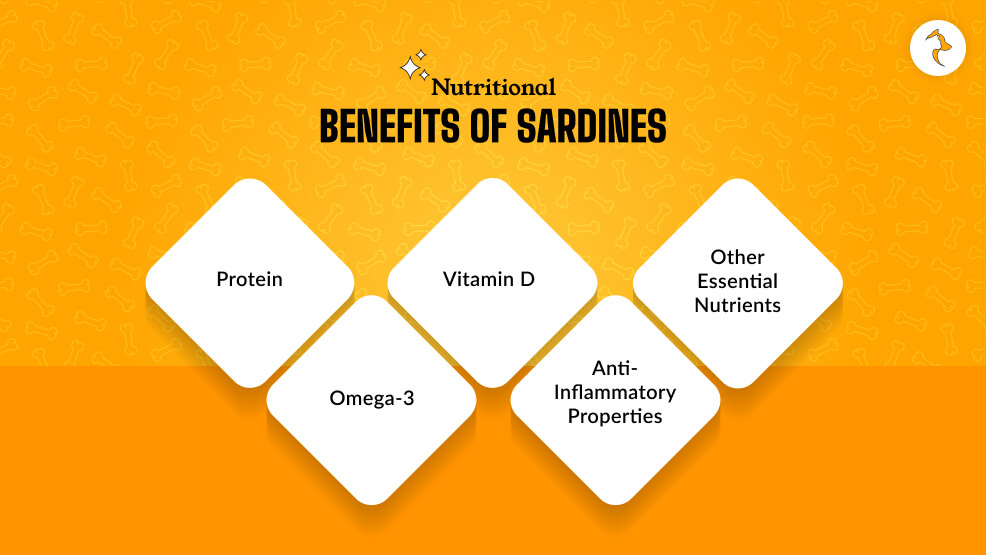
Are sardines healthy for dogs? Yes, it is quite nutritious and offers numerous benefits as well. Here are the benefits mentioned.
- Protein: It is an amazing source of protein and is important for energy, muscle growth, and maintenance.
- Omega-3: This is a powerful and rich fatty acid that is necessary for brain functioning, cardiovascular health, promotes healthy skin and coat, and joint health.
- Vitamin D: This is essential for strong teeth, bone health, and immunity.
- Anti-inflammatory Properties: This supports various health conditions like sensitive skin, stomach, and joint problems like arthritis.
- Other Essential Nutrients: Sardines are a good source of vitamins and minerals. It contains copper, calcium, manganese, vitamin B12, zinc, selenium, and phosphorus to support their overall health.
Reasons To Serve Your Dog Sardines
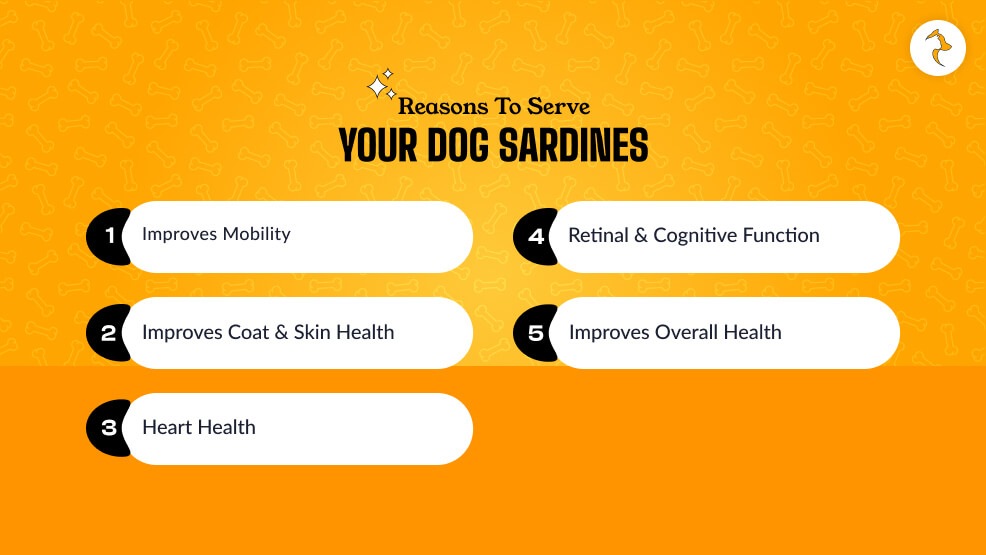
There are various health benefits of adding sardines to your dog’s diet. There are a lot of vitamins and minerals present in sardines. Here are some positive impacts.
1. Improves Mobility
Various large dog breeds, like the German Shepherd and Great Dane, are prone to joint issues. Sardines for dogs can reduce inflammation that causes joint pain. It has phosphorus and calcium, which help support the skeletal structure.
2. Improves Coat & Skin Health
Are sardines ok for dogs? They are. It contains omega-3 fatty acids that benefit their skin and coat. This reduces inflammation on their coat and skin, and alleviates dog hot spots and itchiness caused by seasonal changes and allergies.
3. Heart Health
Sardines also have coenzyme 10 or ubiquinol. This is an antioxidant that is already present in a dog’s body. Feeding them sardines boosts the level and supports their heart function. This is helpful for pets who have a congenital issue.
4. Retinal & Cognitive Function
Among the omega-3 fatty acids, one is DHA, which is present in sardines. This is necessary for eye health and cognitive function. DHA is important for all dogs, especially seniors and puppies. This supports their growth and reduces signs of ageing.
5. Improves Overall Health
Sardines also contain proteins, meaning that it has all the essential amino acids that a dog needs to maintain a healthy system. All these nutrients support proper functioning, including organ health and digestion.
What Sardines Are Good For Dogs?
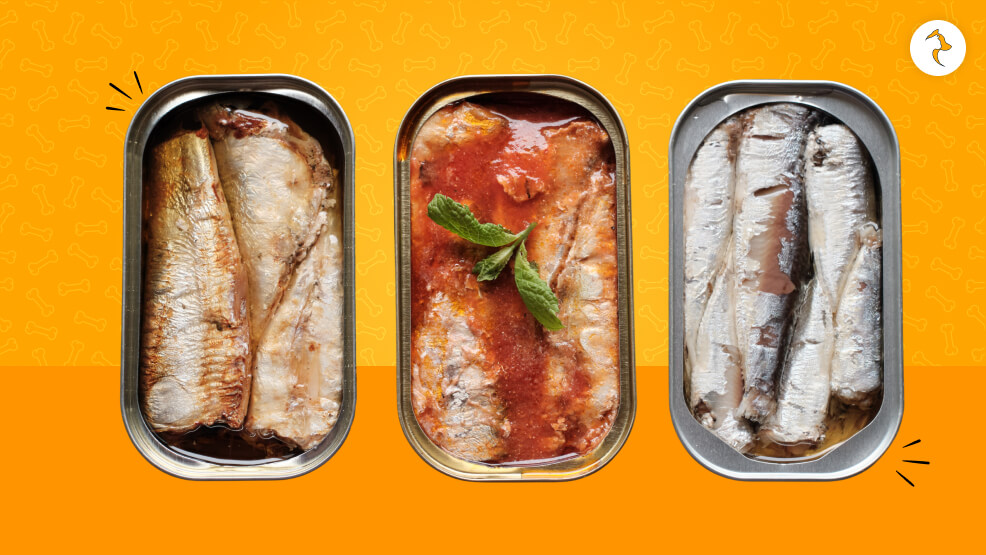
It is obvious that fresh foods are always a good source of nutrients, but fresh sardines are not a cost-effective option, and are not even widely available in the market. So, what kind of sardines can dogs have?
1. Canned Sardines
Canned sardines for dogs? Are they safe? They are. Dogs can eat tinned or canned sardines, but in small portions.
This is an oily fish, and oily food tends to cause digestive issues and stomach upset. It can cause obesity as well. So, it is best to choose sardines packed in spring water and not in coconut or olive oil.
2. Sardines In Tomato Sauce
It is best not to give them sardines that have been prepared in tomato sauce. Also, if you are getting canned sardines, avoid those packed in tomato sauce.
Canned sardines for dogs do not have any harmful ingredients, but tomato sauce contains a lot of salt and other seasonings that can upset their stomach and cause intestinal issues. It is best to get them fresh sardines or those canned in spring water.
3. Raw Sardines With Bones
Well, it depends on the sardines. Some have soft bones that do not cause any potential harm. Moreover, fish bones have a lot of nutrients.
But large bones can cause choking hazards, and you should always avoid these. If you are getting the fish from the market, ask the vendor about the bones beforehand. Moreover, you can ask them to remove the bones.
4. Frozen Sardines
If you have fresh sardines and they have been frozen, then it is safe for dogs. However, make sure you defrost it completely before serving.
Also, if you are not sure about the bone content, check the fish before you serve it to them. If possible, remove the bones and do not add any salt or seasonings.
How Much Should You Give Them?
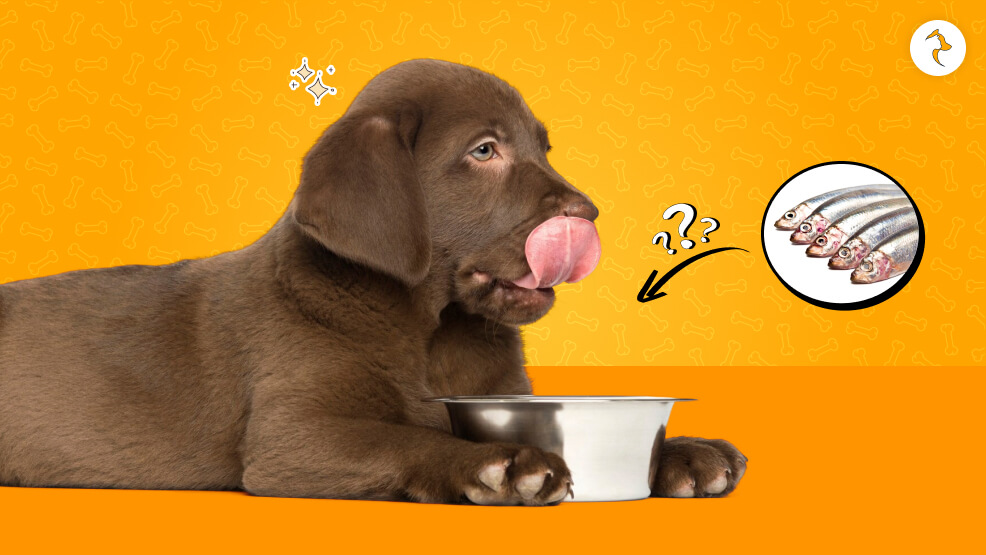
Sardines have both nutrients and calories. A small one can have up to 25 calories, mostly half from the protein sources and half from fat. Feeding them too much can cause obesity along with stomach issues.
So, if you are giving them sardines, ensure that you balance the extra calories in your diet. Here is a guideline that you can follow if you are giving them sardines.
- Weight less than 5 lbs: 2 sardines or ¼ of a can
- Weight between 6-15 lbs: 4 sardines or ½ of a can
- Weight between 16-25 lbs: 5 sardines or ⅝ of a can
- Weight between 26-50 lbs: 8 sardines or 1 can
- Weight more than 51 lbs: 14 sardines or 1 ¾ of a can
Again, when you are introducing something new, do it slowly. Try smaller portions to give them time to adjust.
Tips For Adding Sardines To Their Diet
Here are some of the simplest ways you can give them sardines, no matter if it is dried, frozen, or canned.
- If you want to give them something to chew on, you can give them whole, bite-sized sardines. However, ensure that you remove the backbone.
- You can add a bit of spice to their other means by chopping up some sardines or adding the water from the can. This adds nutrition and spice.
- Moreover, you can add sardines to their favorite homemade treats. You will be able to make a grain-free, low-calorie dog snack.
- If you want to add some extra omega-3 fatty acids to their diet, you can add sardine oil.
- For canned sardines, remove them and dry them if they were packed in oil. Drain the excess oil and dry them well before giving them.
Can Sardines Make Dogs Sick?

There are some obvious reasons why sardines can make them sick. Here are some of those mentioned.
- If the sardines you gave them are not fresh, it can make them sick.
- If the sardines are drenched in brine, oil, or sauces, it can cause diarrhea or vomiting. They find it hard to digest.
- Moreover, if your dog has pancreatitis, then sardines can make them sick. It is a fatty food, and their sensitive stomach finds it difficult to process.
- Also, if your dog is allergic to sardines, it can make them sick. You will notice symptoms like itching, swelling, vomiting, bloating, lethargy, and difficulty in breathing.
The Myth About Mercury & Sardines
Larger fish have always been a topic of conversation about mercury toxicity. The point is mercury is in the ocean, and every organism absorbs it. Larger fish and fish oils have a high quantity of mercury, but dried sardines have a very low mercury content.
They are placed quite low in the food chain, and thus, the mercury content is lower. Larger fish like king mackerel and salmon have a higher mercury content than fish like anchovies and sardines.
So, if you are thinking of preparing sardines for dogs, use them in small portions. So, even the smallest amount of mercury will pass through their waste and urine.
Frequently Asked Questions
Here are some of the questions people commonly ask when thinking of preparing sardines for dogs.
Yes, dogs can have tinned or canned sardines, but in small portions. However, it is best to get those that are canned in spring water and not oils. Oily food can upset their stomach.
It is better to serve dogs with small fish. Larger fish like tuna, salmon, and mackerel are best avoided. Sardines are a safer choice.
Dried sardines are good for dogs and are filled with various nutrients like vitamins, minerals, proteins, and omega-3 fatty acids. It supports their immune system, joint health, and shiny coat.
Yes, there are some risks of feeding dogs sardines. This is because of the high fat content in their saucy and oily versions. It can cause choking hazards and risk of ingesting parasites and mercury toxicity as well.
Pregnant dogs can eat sardines, but again, in moderation. But you should give sardines that are packed in water and not in sauce or oils. These have to be free of salt and seasonings.
Share









Leave A Comment