
Why Is My Dog Breathing Heavy? Causes, When to Worry & What to Do


Dogs often breathe heavily after you have taken them out for a run, a walk, or after their training session. This is normal. However, if you find your dog breathing heavy even when they are just lying around, or inside an air-conditioned room, then that is a sign of concern.
There might be some underlying condition that is causing them problems. Dogs are high on energy and generally breathe heavily after a session of training and exercise. But if they are breathing heavy apart from that, it could be because of asthma as well.
It could be a sign of congestive heart failure, or something temporary like allergies or infections. You need to be aware of this so that you can avoid any big issues.
When Heavy Breathing Is Normal Vs. When To Worry
If you want to know when your dog is breathing heavily, you need to understand their normal breathing or what their normal breathing looks like. All dogs pant, mostly when they are feeling hot or just after they have exercised.
They typically breathe 15 to 30 times per minute. If you find them breathing more than 30 breaths per minute, then you need to get them checked once. The moment you see their belly rising and falling rapidly, you need to keep count of their breaths.
Dog Breathing Heavy: What Could Be The Possible Causes?
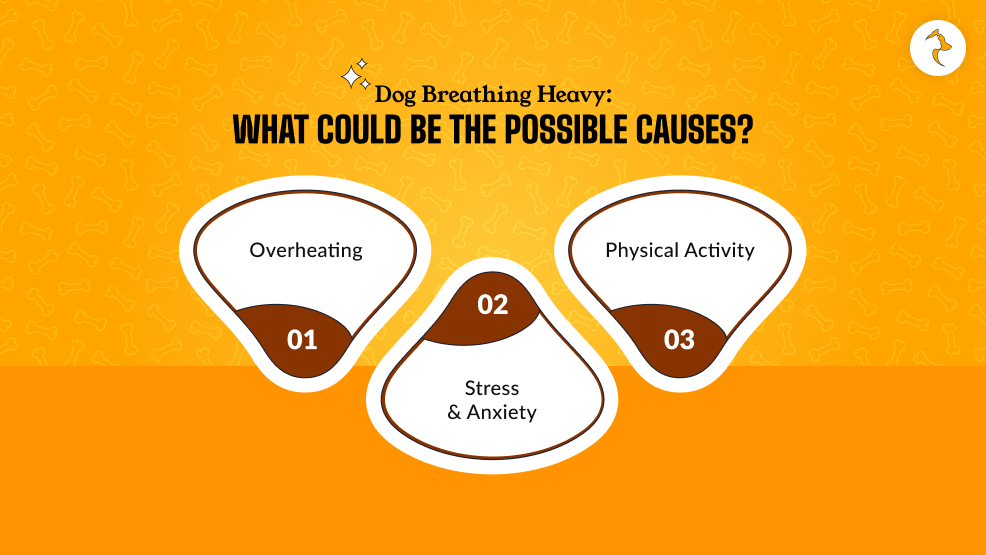
There could be various reasons behind a dog breathing heavy. There are certain medical conditions that can cause this, and in addition, there are other reasons as well.
Knowing the actual reason behind their heavy breathing can help you understand whether you need to take them to a vet or not. Here are some common reasons behind it.
1. Overheating
Dogs often breathe heavily when they want to cool down or reduce their body temperature. However, if you find them breathing heavily even in an air-conditioned room, then there is a good chance they are suffering from heatstroke. This means they need immediate attention.
2. Stress & Anxiety
Dogs also breathe heavily when they are anxious. Separation anxiety, unfamiliar environment, or loud noises can trigger this. You will have to understand dog anxiety to identify it and learn how to minimize these stressors to keep them calm.
3. Physical Activity
After a good session of exercise, it is normal that they will breathe more to meet their increased need for oxygen. However, in this condition, they will get back to normal breathing in a few minutes.
There is nothing to be concerned about, but if this heavy breathing continues even after a while, then you would want to take a closer look at them and get them medical attention.
What Are The Medical Issues That Can Cause Heavy Breathing In Dogs?
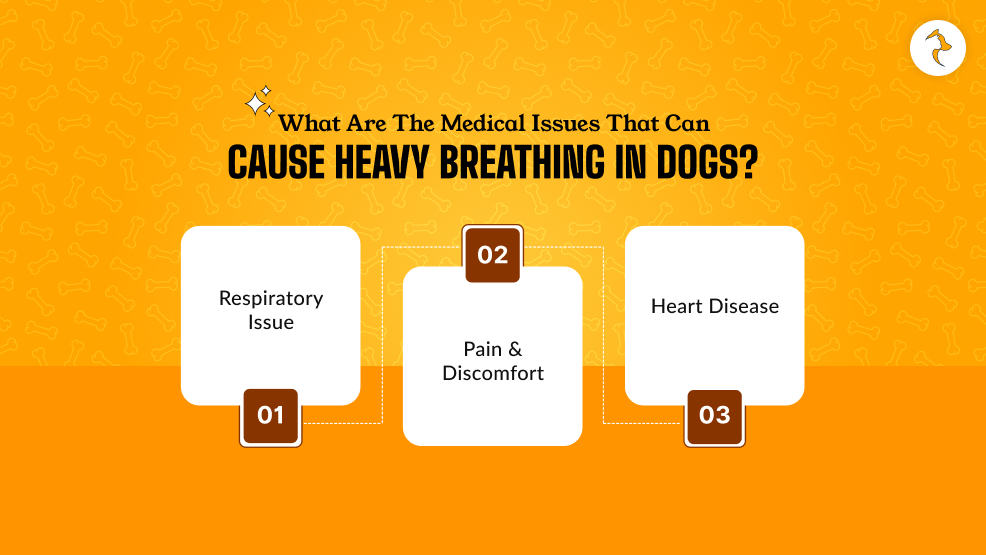
It will be difficult for you to figure out the medical cause behind their heavy breathing if you do not take them to a vet.
It is recommended to take them to a vet if they are breathing heavily for a long time, or having episodes of heavy breathing, even when they have not exercised.
1. Respiratory Issue
Different respiratory issues like asthma, kennel cough, infections, or lung disease can cause heavy breathing. You will notice different symptoms like nasal discharge, coughing, and wheezing. The moment you suspect a respiratory issue, you should take them to a vet.
2. Pain & Discomfort
When a dog is in pain, they breathes heavily. Arthritis, injuries, or any other painful condition can lead to them breathing heavily.
You need to keep an eye out for signs of pain, such as reluctance to move or limping. This can confirm that they are in pain or some kind of discomfort.
3. Heart Disease
Heart disease can be a major cause of their condition. Congestive heart failure is a heart condition that reduces the efficiency of the heart, which can lead to this. Look out for some common signs like exercising, lethargy, and coughing.
When Should You Take Them To A Vet?
Some of the causes of heavy breathing are not so concerning, while others are serious. These are the issues that need immediate medical attention from a professional.
If your dog is breathing heavily and you notice some other signs with it, like a change in their appetite, coughing, or lethargy, then you should contact a vet immediately.
Moreover, if you find their gums turning blue or pale, or if they collapse, you need to take them to a vet without any delay.
How Do Vets Diagnose Heavy Breathing?
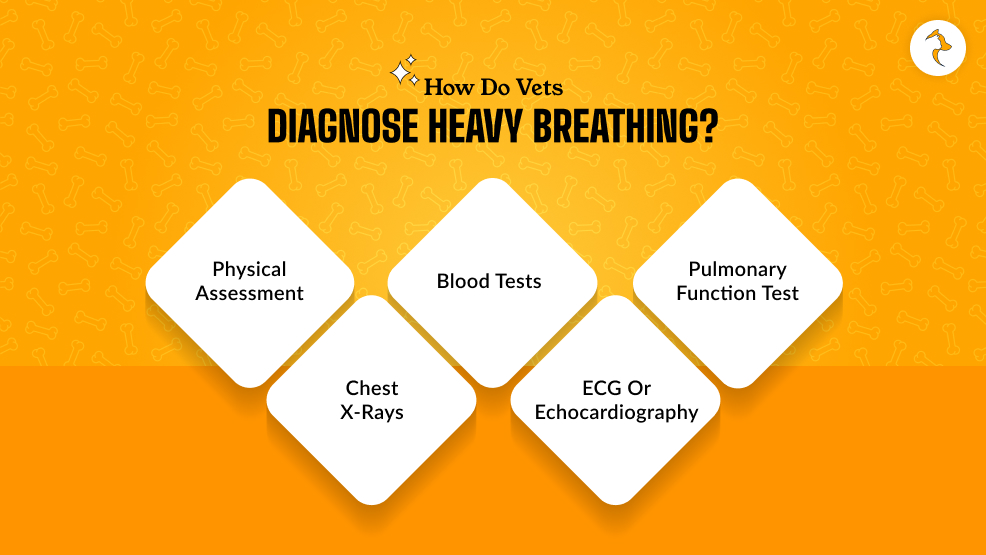
Vets generally diagnose heavy breathing by conducting a combination of physical exams and diagnostic tests. They also ask about their medical history and look for signs of stress or anxiety, which can also be a contributing factor. Here are some of the common ways:
- Physical Assessment: The vet does a physical exam and checks the lungs, heart, airways, and other affected areas. They also inquire about previous illnesses.
- Chest X-rays: Imaging or X-rays provide an internal image of their abdomen, heart, and lungs that can cause problems like heart enlargement, broken ribs, and lung tumors.
- Blood Tests: This typically includes a CBC (complete blood count), a chemistry panel to assess organ function, and other tests to evaluate their acid-base status.
- ECG or Echocardiography: This is essentially an ultrasound of the heart, providing all the information a doctor needs about its function and structure.
- Pulmonary Function Test: This measures the lung capacity and airflow. This often involves a mask that is fitted to their nose while conducting the test.
Also Read: Why Is My Dog Breathing Fast? Common Causes, Symptoms and Remedies
Treatment Options And Recovery
It is the cause behind their heavy breathing that determines the treatment. Veterinarians often suggest intravenous fluids along with pain relief medications to rehydrate them quickly so that they can heal quickly. This will help even more if this is something temporary.
Other treatments include temporarily putting them on oxygen to give their lungs the much-needed rest. Moreover, they often offer steroids, which help reduce anything that causes inflammation in their respiratory system.
At-Home Comfort And Monitoring
If your dog is breathing heavily, here are some of the steps you can take to keep them comfortable and monitor their condition.
- Keep the environment cool and calm. Keep them in a well-ventilated area, away from activity and noise. Always get them fresh and cool water to keep them hydrated.
- If you think your dog is overheating, use a fan or move them to an air-conditioned room. Moreover, you can use damp towels on their head and paws, but don’t cover them completely. You can also use cooling mats for dogs in this condition.
- Keep them in a sooting environment. Play soft music, dim the lights, and you can also use a calming pheromone diffuser. When they seem uncomfortable, offer them a massage, then gently approach them, only if they seem comfortable.
- If you feel their trachea is collapsing, elevate their head slightly, and this will help with their breathing.
- Use a humidifier to add some moisture to the air. This will soothe their airways, especially if they have congestion.
Chronic Heavy Breathing And Long-Term Care
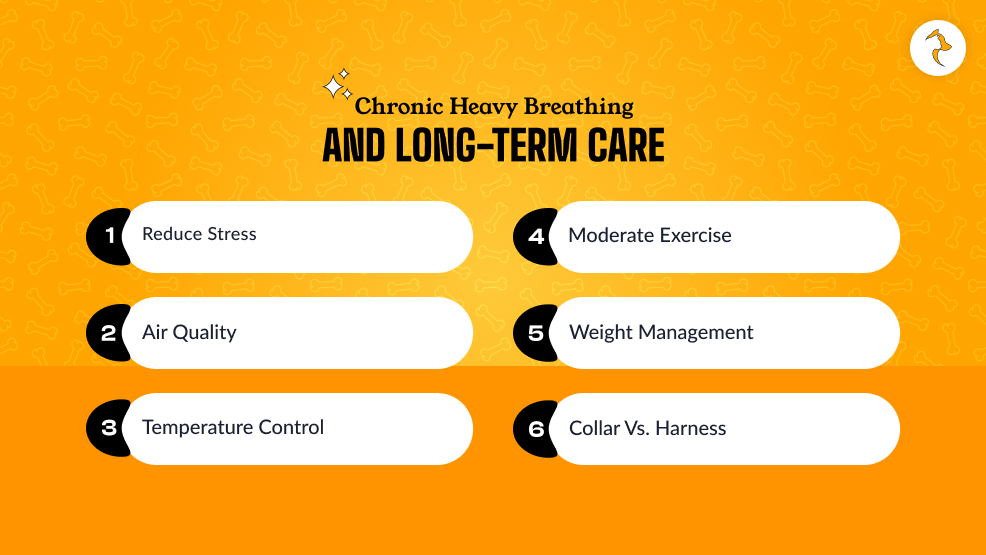
If your dog has a chronic breathing condition, then you will need long-term management at home to maintain a healthy quality of life. Here are some of the things you can try at home.
- Reduce Stress: Provide a calm and quiet environment for your dog. Anxiety can make things worse for them and increase their heart rate.
- Air Quality: Avoid exposing them to dust, pollen, and tobacco smoke. Use a humidifier or air purifier to keep them safe.
- Temperature Control: Do not overheat them. This can trigger heavy breathing. Keep them in an air-conditioned room when it is hot.
- Moderate Exercise: Always avoid excessive exercise. Consult a vet and follow their recommendations. Manage their activity levels.
- Weight Management: If you have an overweight dog, you will need to provide them with mild exercise and a controlled diet. This is important to reduce the stress on their lungs and heart.
- Collar Vs. Harness: It is recommended to use dog harnesses for them and not a collar. This will avoid putting pressure on their windpipe and neck.
Tools And Visuals
If their condition is serious or chronic, your vet will prescribe some specific tools to manage their condition and keep them in check.
- Monitoring Apps: There are various apps, like Pet Breath Counter and Cardalis, that monitor the respiratory rate of a dog when they are resting.
- Humidifier: This adds moisture to their air and helps them breathe if they have congestion.
- Cooling Tools: If your dog is breathing heavy because of heat heat-related issue, you can use cool water on their belly and paws. Or take them to an air-conditioned room.
Prevention Tips & Safety Guidance
Heavy breathing in dogs is caused by various reasons, and some of those can be prevented if you are proactive. Some cases can be prevented, while others cannot.
However, those that cannot be prevented can be treated if proper care is taken and regular checkups are received. Here are some tips that can help prevent episodes.
- Do not take them out for exercising in extreme humidity and heat.
- Maintain a healthy body weight.
- Do not exercise them all at once. Give them time to adapt to a new schedule.
- Keep all their medical conditions under check.
- Never give them human medication and keep them away from toxins of all kinds.
- Get them regular checkups by a vet.
Help Them Get Better
Regardless of whether the reason is temporary or chronic, their respiratory system needs rest and time to recover. Keep them hydrated as it speeds up the recovery process. Also, keep them in a cooler temperature as soon as possible to get them relaxed.
If the doctors have prescribed medication, you need to finish the course to prevent any other episode. These episodes take a toll on their body, and while they are recovering, you need to take good care of them and consult a vet immediately when you have a concern.
If you ever feel your dog breathing heavy, you need to take precautions. Before the situation worsens, take them to a vet and have them checked.
Frequently Asked Questions (FAQs)
Here are some of the common questions people ask about a dog breathing heavy.
A dog breathing heavy is an emergency if their heart rate goes over 60 breaths per minute. Additionally, if there are other signs and symptoms, such as excessive drooling or open-mouth breathing, it is an emergency.
Dogs can breathe heavily at night when they are dreaming or when they are getting warm. These are some harmless causes, but there could be some serious health issues like respiratory problems and heart diseases as well. Get them checked by a vet.
Yes, this can happen from poisoning as well. This can happen if they have ingested poison or inhaled toxins. This can affect their respiratory or cardiovascular systems.
Keep an eye on them for 10-15 minutes and see whether they are getting better after taking them to a cooler environment. But if the situation does not get better or worsens, then you need to take them to a vet immediately.
Yes, some dog breeds, particularly brachycephalic breeds like Shih Tzus, Pugs, and Bulldogs, are prone to getting breathing issues.
No, heavy breathing in dogs is not contagious. But this can be a symptom of some serious contagious illness.
Share









Leave A Comment