
How long can dogs hold their pee? What Are The Factors Contributing?

If you are a first-time pet parent, it is important that you know about their basic needs. You will have to train them in various fields. Also, when basic needs are concerned, you will need to take them out for urination and defecation, if you have not potty trained.
If you are someone who works long hours, you might miss out on some walks. That means they will miss their routine as well. So, have you ever wondered how long can dogs hold their pee?
What if they accidentally pee inside the house? You need to know everything to avoid any accidents inside the house while keeping them safe as well.
How Long Can Dogs Hold Their Pee?
How long can dogs hold their pee? Moreover, how long is too long? While discussing bathroom needs, you need to know how long you can leave them alone at home. Even though they can hold their bladder for a long time, you need to be aware of their limits.
For instance, let’s say you have a healthy, well-built adult dog. They will be able to hold it for almost 8 hours or more than that. However, various other factors affect this timing. Let’s take a look at what those factors are.
Age
Age is one of the major factors that affects how long a dog can go without peeing. Puppies, who are not yet potty trained, will find it difficult to hold their pee as long as an adult. This is because of their underdeveloped and undersized urinary tract system and bladders.
You need to potty train a puppy to avoid any accidents inside the house. It is not just about the holding capacity. The bladder muscles contract to hold and release the pee, but this takes time to develop.
Moreover, senior dogs can start to lose muscle control with age. Kidney function, liver function, and mobility issues also contribute to frequent bathroom needs. Here is an age-wise chart and how often they will need to pee to help you understand it better.
| Age | Bathroom Breaks |
|---|---|
| Puppies between 2 and 5 months | 1-3 hours |
| Puppies above the age of 5 months | 2-6 hours |
| Healthy adult dog (daytime) | 4-6 hours (maximum 8) |
| Healthy adult dog (nighttime) | 8-11 hours |
| Senior dogs/Dogs with some health conditions | 5-6 hours |
Size
The size of a dog is also an important factor. A toy breed or any small dog will have a small bladder compared to a larger one. However, this does not mean that all large dogs will have the capacity to hold their urine for a longer duration.
On average, a dog pees 10-20 ml per pound of their body weight. So, if a dog weighs 5lbs, they will pee around 1.7 to 3.5 oz. This is not a lot, but their tiny bladders may not be able to hold much.
However, you should remember that every dog is different, and their bathroom needs and habits are different, too. This is a general estimate, and your dog’s specific needs might not fall into these. You have to monitor them to understand their needs.
Health
Health conditions are a major contributor to their urinary habits. Diabetes, urinary tract issues, obesity, and kidney stone issues can also influence their need to pee.
Moreover, medicines play an important role as well. Some medicines can encourage frequent urination. So, if you are concerned that your dog is peeing a lot, then you can consult a vet. It could indicate some underlying health issues as well.
Diet
The kind of food your dog eats plays an important role in their urinary health as well. If they are consuming a lot of wet food, they are getting water through their food as well. This can increase their frequency of peeing.
So, if you think that the dog is not drinking water, but peeing as they should, it means they are getting water through their food. A moisture-rich diet can get rid of bacteria and toxins and help with digestion as well.
When you keep them on a strict diet, like dry dog food, they might pee less. Also, the colour of their pee indicates dehydration.
Risks Of Not Having A Consistent Bathroom Routine
Young dogs can hold their pee longer than adult and senior dogs. When needed, they can hold it for about 10 to 12 hours.
For instance, if you are leaving them alone for a long while, young dogs will manage quite well, but if this is something that happens regularly, it might put them at a lot of risk.
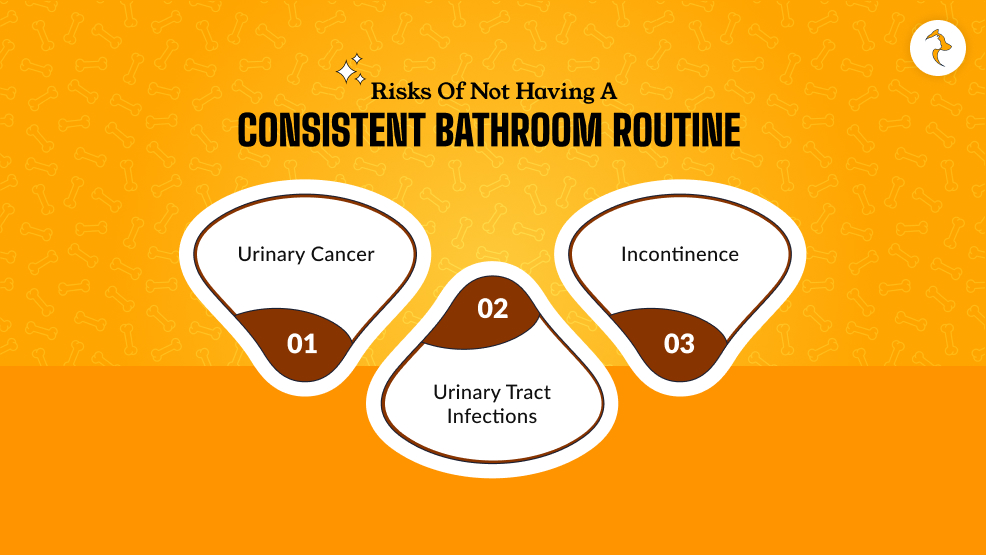
- Urinary cancer: The longer their urine stays in the bladder, carcinogens will have more time to interact with the cells. This is not quite common, but something you should consider.
- Urinary tract infections: The urination cycle helps flush out toxins and bacteria from the urethra, kidneys, and bladder. When they hold their urine for a long time, bacteria grow and can form stones or crystals, which can often turn out to be life-threatening.
- Incontinence: This can happen to dogs of all ages, but more often in senior dogs. When they often hold their urine for a long time, it can damage their surrounding tissues and muscles and can cause leaks. This is something irreversible.
Tips To Maintain A Balance Between Their Needs & Your Schedule
If you have a busy schedule, and your dog stays home alone for a long time, more than 8 hours a day, there are various options available that will take care of their urinary health. Here are a few options mentioned.
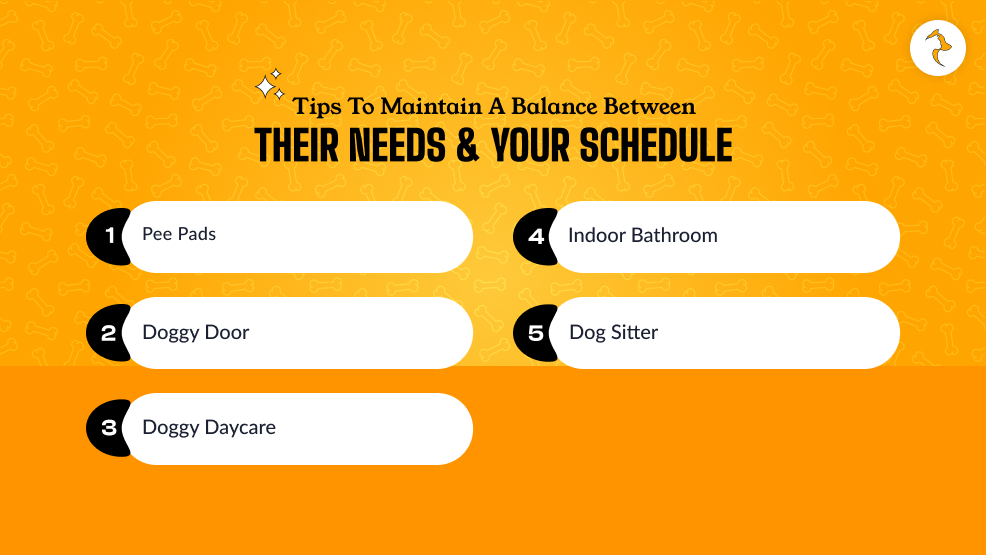
- Pee pads: This is helpful if you have a puppy or dog that is kennel-trained.
- Doggy door: If you have a fenced backyard, you can install a doggy door. They can leave and come back when they want and take their bathroom breaks whenever necessary.
- Doggy daycare: If you cannot leave them alone at home, or if they need constant attention, then choosing doggy daycare seems like the best choice. Trained professionals will take care of them the entire day while you work.
- Indoor bathroom: If your dog loves to roam around freely, then you can set up an indoor potty training system. They will be able to relieve themselves whenever necessary. Or you can use dog litter boxes as well.
- Dog sitter: You can hire a professional to check on them and take them for a walk during the middle of the day. This will also prevent boredom and anxiety.
What Can You Do If They Are Unable To Hold Their Pee?
Now that you have an idea about how long can dogs hold their pee, you need to monitor them if you think there is something unnatural about their frequency of peeing. If you find your dog peeing more than normal, it is time to consult a veterinarian.
The vet will test the dog for some underlying issues or signs of infection. Moreover, you will have to monitor their elimination habits when you take them out for a walk.
In general, all mammals, no matter what their size, take around 20 seconds to empty their bladder. If they are taking longer than that, it could mean there is some unlying issue that needs to be addressed.
Frequently Asked Questions
How long can dogs hold their pee? Here are some of the common questions people ask while discussing the topic.
It is not recommended to wait them out for such a long time. They can hold their urine for 8 to 10 hours, but going more than that can cause a lot of health issues.
Adult dogs need to be let out atleast 3 to 5 times in a day. The break should never exceed 6 to 8 hours. They poop once or twice, and mostly after meals.
Adult dogs often sleep through the night without peeing. They can hold it for almost 8 to 10 hours, especially if they have relieved themselves before bed and when they are well-exercised.
It is best to let them out for a bathroom break every 4 hours. However, if they hold their urine for a long time regularly, they are exposed to developing health problems like inflammation or infection in the urinary tract, anxiety, and cystitis.
When a dog needs to pee immediately, you will notice signs like scratching at the door, restlessness, whining, circling, pacing, and smelling the ground.
Share




Leave A Comment