
How To Deal with Fully Embedded Ticks On The Skin Of Your Dog?


Ticks are a very common issue for dog owners during the warmer months. Moreover, these tiny parasites can cause several problems if not properly addressed. You should take immediate action for ticks.
While I was petting my dog, Peanut, my Labrador, I found several dark, small, swollen bumps on its body.
Initially, I did not understand. However, after a few searches online, I eventually figured out that the reason for these things was, unfortunately, ticks.
I found that the peanut was excessively scratching. Moreover, Peanut kept scratching specific areas. Hence, soon certain parts of his body turned pink under the coat.
All these things gave me chills down my bones. I was unaware of the condition, and hence, I had to struggle a lot as a pet parent.
Thus, I have decided to share my first-hand experience of dealing with embedded fully ticks on dogs. Thus, read the article till end to get a much clearer picture.
Learn when it becomes necessary to seek professional help while dealing with an “embedded fully ticks on dogs” situation.
Understanding The Behavior Of Ticks And Their Nature
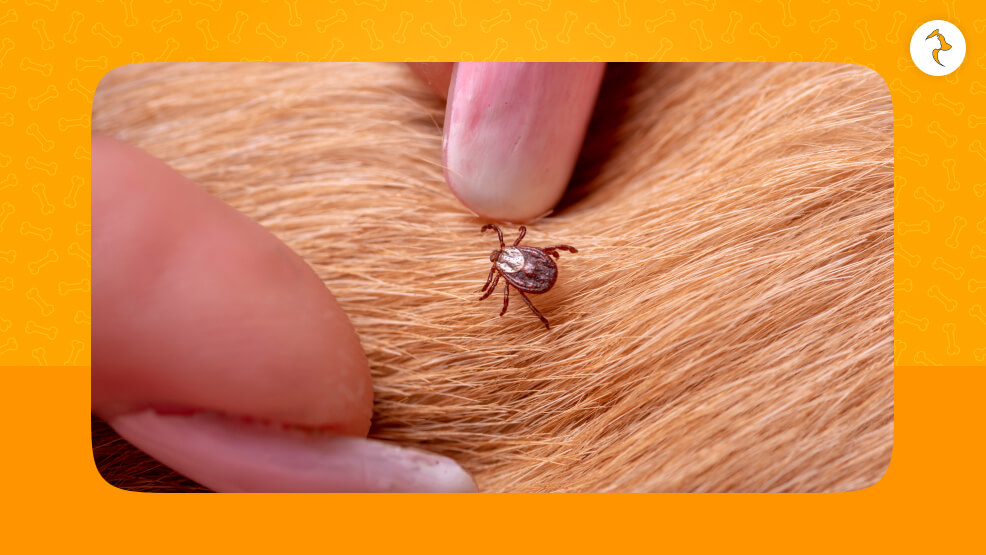
Ticks belong to the arachnid family. Hence, they are very closely related to spiders. These parasites generally live in wooded areas with tall grasses.
Moreover, these places have abundant wildlife. Ticks generally attach themselves to hosts like dogs to feed on blood.
Moreover, the ticks remain embedded for many days after getting attached. Hence, they draw nutrition from your dog while sucking up its blood.
What Is The Life Cycle Of A Tick?
Ticks generally have four stages of life. Hence, this includes eggs, larvae, nymphs, and adults.
Moreover, ticks generally require a proper blood meal at each life stage. This enables them to move on to the next stage of life.
A proper understanding of the tick life cycle helps to reduce the infestation of ticks in your dogs.
How To Identify Embedded Fully Ticks On Dogs?

When Peanut got ticks, I realized that an early detection could have made things much easier for us. Ticks generally transmit diseases.
Hence, you should detect them and remove them as soon as possible. This will ensure your dog’s health.
1. What Does An Embedded Tick Look Like On The Dog’s Skin?
A fully embedded tick on a dog generally varies in appearance. Moreover, this depends on how long ther tick has been sucking blood from the dog.
Initially, the tick often looks like a very small flat speck. However, you’ll notice them over time when they keep feeding from the dog.
The tick becomes further more noticeable when it keeps feeding from the dog.
a. Size And Shape Of A Tick
A tick generally starts from the size of a nigella seed. Moreover, as it keeps sucking blood from the body of your dog, it becomes the size of a lentil or can even become larger.
b. What Is The Color Of Tick?
Ticks are generally reddish, black, or brown. The embedded fully ticks on a dog that is engorged generally appear to be like a lentil.
c. Where Do We Find Ticks In Dogs?
Ticks generally attach themselves to hidden areas, such as the ears, under the collar, and between the toes.
2. What Are The Major Signs Of Embedded Fully Ticks On Dogs?
You will notice certain behavioral signs in your dog when it gets infested by ticks. When Peanut got infested with ticks, he behaved in a certain way.
Moreover, my Peanut was constantly scratching and biting on the side where the tick was attached.
Certain areas, like behind the ear and several other places, became excessively red and swollen.
While petting, I noticed that certain areas of Peanut’s skin had developed scabs and crusty patches.
What Are The Major Risks Associated With Tick Bites?
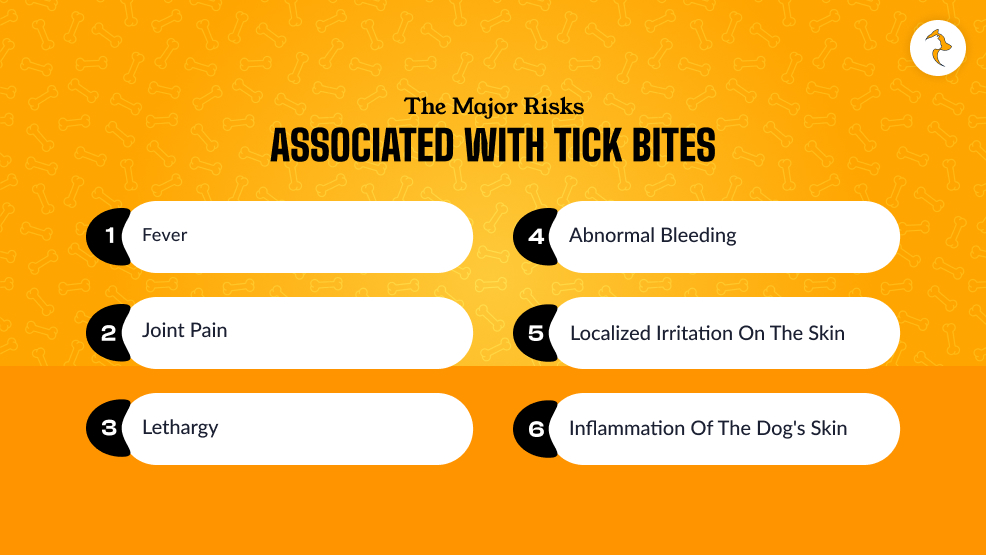
Tick bites generally lead to various health-related issues in dogs. Thus, you should always detect the signs early and search for professional veterinary care.
1. Transmission Of Various Types Of Diseases
Ticks often serve as vectors for several types of diseases. Hence, this includes Lyme Disease. Lyme Disease is generally caused by the bacterium Borrelia burgdorferi.
Hence, this disease often leads to joint pain, fever, and lethargy in dogs. On the other hand, ticks often also cause Anaplasmosis.
Anaplasmosis also causes fever, joint pain, and lethargy in canines. Furthermore, dogs can also suffer from Ehrlichiosis, transmitted by ticks.
Ehrlichiosis causes fever, pain, lethargy, and abnormal bleeding in the dogs. Hence, you should immediately rush to the vet when you notice symptoms of these diseases in your dog.
2. Localized Inflammation
Tick bites often cause localized irritation on the skin. Hence, these symptoms include skin infections at the bite site.
Furthermore, consistent biting often causes granulomas in the bite area. Hence, this often leads to visible inflammation of the dog’s skin.
How To Prevent And Control Ticks In Dogs?

The best way to prevent tick-borne diseases is to prevent tick bites in dogs. Moreover, here are some of the best strategies that I use for Peanuts.
Peanut loves to go out for walks. Hence, I conduct regular tick checks on peanuts after we return from a walk.
I specifically check the hidden areas of peanut-like areas under the collar and ears. Furthermore, I generally use specialized tick-prevention products recommended by vets.
This includes applying topical medications to a dog’s skin and coat. You can also use oral medications on your dog.
I have also ordered tick collars to help repel and kill the ticks on the dogs. Furthermore, proper and regular grooming can help you control ticks on dogs.
Maintaining the backyard’s condition and the quality of the grass can also be equally helpful. You can also fence the backyard to prevent wild animals from entering.
Wild animals often carry ticks. Hence, your dog can get ticks while playing in the backyard.
When Should We Get Veterinary Help?
You should definitely seek professional help from a veterinarian when you find an embedded tick on the dog.
Incorrect removal can lead to problems in the dogs. Hence, professional advice from a veterinarian can be very helpful.
Veterinarians generally use specialized equipment and resources to remove ticks completely and safely.
The vets also check for all the signs of tick-borne diseases. Hence, they. Take all the precautionary measures beforehand.
Share









Leave A Comment