
How Much Benadryl Can I Give A Dog? Know The Right Dose For Your Dog


As a pet parent, I have discussed the right dosage of Benadryl for dogs and how you can administer the medicine safely.
However, this is not a substitute for medical attention from a vet. If your dog faces similar allergic reactions, you must take them to a vet and give them the medicine based on the dosage recommended by the vet.
So, your dog is sneezing, and it has rashes on its body.
These, along with hives and swelling, are the common symptoms of allergies in your dog.
Now, diphenhydramine or Benadryl is a common over-the-counter drug that I can give my pup. Her vet has approved of it.
However, the vet has also asked me to keep two important things in mind.
Firstly, Benadryl prevents histamine from triggering the H-1 receptors of the body. Thus, it alleviates all the irritations caused by allergies. So, your pup becomes calm when it has Benadryl.
However, this is never a cure for the reason causing allergies.
Secondly, you have to know the right dosage.
So, how much Benadryl can I give a dog? Here is a detailed discussion. However, before that, let us understand what Benadryl is and how it works.
What Is Benadryl Or Diphenhydramine? How It Functions For Your Dog?
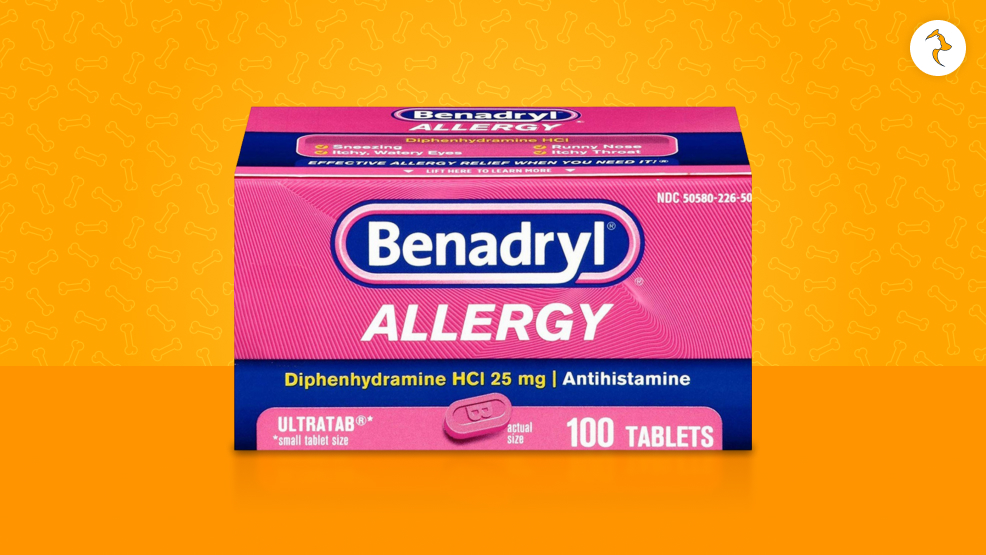
Diphenhydramine HCl or Benadryl is an antihistamine of the first generation.
It works on the histamine that the dog’s body produces and alleviates allergic symptoms such as sneezing, swelling, and itching.
Furthermore, Benadryl is helpful for a dog who is experiencing nausea or the one who is vomiting. Benadryl offers relief from these problems, as it can cross the blood-brain barrier.
However, before giving Benadryl to your dog, you have to consult the vet, as Benadryl can have contraindications with several underlying conditions.
I will talk about them in detail in a while. However, first, let me share how much Benadryl can I give a dog.
How Much Benadryl Can I Give A Dog?

The vet of your dog will diagnose the health condition of your dog and guide you on how much Benadryl you can give your dog.
However, according to the Merck Veterinary Manual, you can give 2-4 milligrams of Benadryl for one kilogram of body weight of your dog.
That also means that a dog weighing 1 pound can have a Benadryl dose of 0.9–1.8mg.
So, practically, you can give 1mg of Benadryl for 1 pound of body weight of your dog.
Furthermore, your dog can have Benadryl two to three times a day. Have a look at the table below for a clear understanding.
| Types of Dog | Average Weight | How Much Benadryl Can I Give A Dog? |
|---|---|---|
| Small Breeds | 10 Pounds | 10 to 18 Mg |
| Medium Breeds | 25 Pounds | 25 to 45 Mg |
| Large Breeds | 50 Pounds | 50 to 90 Mg |
Moreover, if your dog is facing mild symptoms, you can start with a lower dose.
Furthermore, once you give Benadryl to your dog, they can feel sleepy. However, drowsiness will differ from one dog to another.
How Often Can I Give Benadryl To My Dog?
You can give Benadryl to your dog every 8 to 12 hours. So, they can have it 2 to 3 times a day.
However, the vet of your dog will suggest the right frequency of the doses based on their health condition.
What Are The Main Uses Of Benadryl For Dogs?
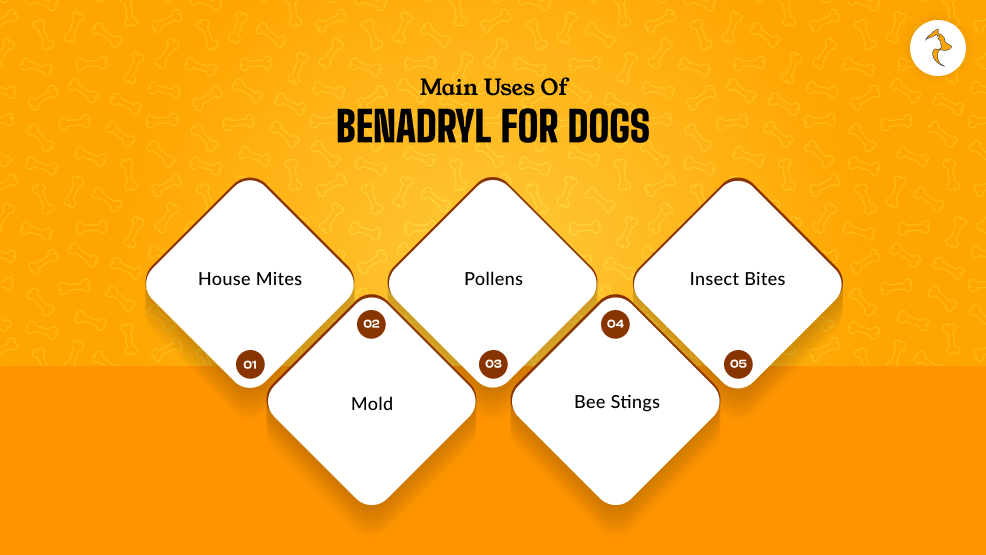
The main use of Benadryl for dogs is to treat allergic symptoms. Furthermore, it often helps dogs to fight motion sickness or nausea when traveling.
1. The Use Of Benadryl In The Treatment Of Allergic Reactions
Benadryl helps alleviate allergic symptoms caused by house mites, mold, and pollens. It can also offer comfort in allergic triggers such as bee stings or insect bites.
Furthermore, if you know some vaccines will cause allergic reactions in your dog, you can give them a mild dose before, with approval from the vet.
However, if the allergic symptoms become severe and there are acute problems, such as the swelling of the face, your dog will need holistic allergic treatment with epinephrine and steroids.
You can even try some natural remedies, such as an oatmeal bath, for some relief from itchiness.
2. Does Benadryl Help Dogs With Anxiety?
No, Benadryl does not help dogs with anxiety.
So, when there is a thunderstorm or sudden fireworks, you can give Benadryl to your dog as it will make them feel sleepy or calm for a while.
However, this medicine does not end the anxiety in dogs.
What Are The Side Effects Of Giving Benadryl To A Dog?
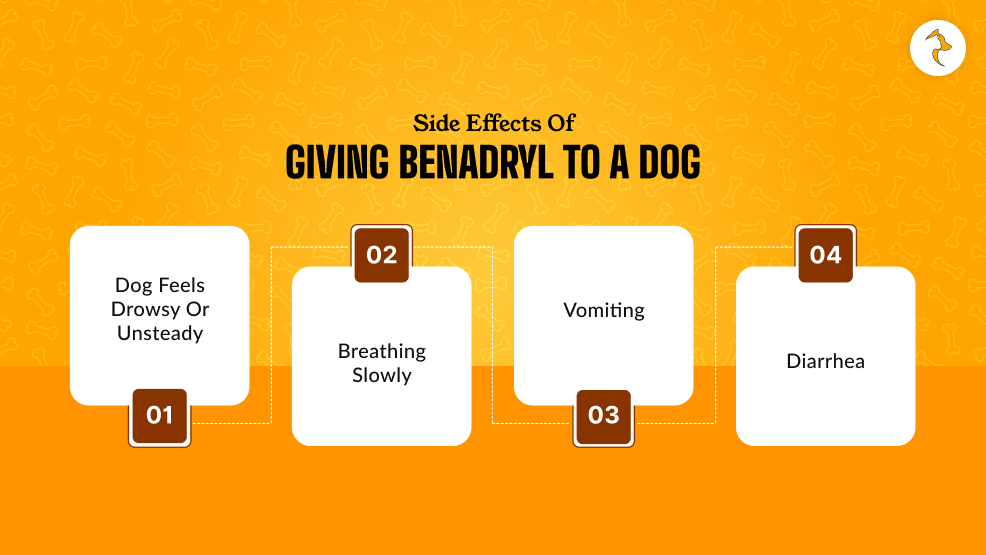
It is normal if your dog feels drowsy or unsteady on their feet after having Benadryl.
However, if the sedation is more pronounced or the dog is agitated, you must consult the vet immediately.
Furthermore, if your dog is breathing slowly or vomiting, these can be severe side effects of Benadryl administration.
Moreover, diarrhea is a common side effect of having Benadryl among dogs.
Is Benadryl Safe For All Dogs?

Benadryl is safe for most dogs if you know how much Benadryl can I give a dog. However, if your dog has a history of cardiovascular diseases, liver diseases, severe lung conditions, or kidney problems, you must not give them Benadryl without consulting the vet.
Moreover, if your dog is pregnant or is suffering from glaucoma, Benadryl may not be safe for them.
Also, Benadryl interacts with certain medications such as “monoamine oxidase inhibitors” or some fungal infection medicines.
How Much Benadryl Can I Give A Dog? Frequently Asked Questions (FAQs)
Here are the frequently asked questions and answers about how much Benadryl I can give a dog.
Most diphenhydramine tablets or capsules come in a dose of 25 or 50 mg. So, you can give your dog 1 or 2 tablets/capsules based on the right dose and the body weight of your dog.
Furthermore, if you have a small dog, you can get them chewables or Benedryl syrup for children.
A chewable tablet has just 12.5 mg of diphenhydramine, and the syrup has 2.5mg of diphenhydramine per ml of Benadryl.
Yes, there are alternatives to giving Benadryl to your dog. If your dog is feeling itchy or has rashes due to allergic reactions, you can use medicated lotion or shampoo for them.
Furthermore, if the allergic reactions are severe, your dog may need a steroid treatment.
Yes, Benadryl will make your dog feel sleepy. However, the level of sedation will differ from one dog to another.
Also, if your dog is showing agitation or very intense sedation, leading to disorientation, you must consult a vet immediately.
Share







Leave A Comment