
Signs Of Fleas On Dogs: How To Tell If My Dog Has Fleas And How To Treat Them?


Fleas are more than just a topical nuisance or something that causes itching. If the fleas are not treated, they can lead to severe health problems.
Furthermore, these parasites grow faster in number. So, you have to detect flea infestations really early.
So, in this article, I will discuss the signs of fleas on dogs, the preventive measures, and the treatment.
What Are The Early Signs Of Fleas On Dogs?
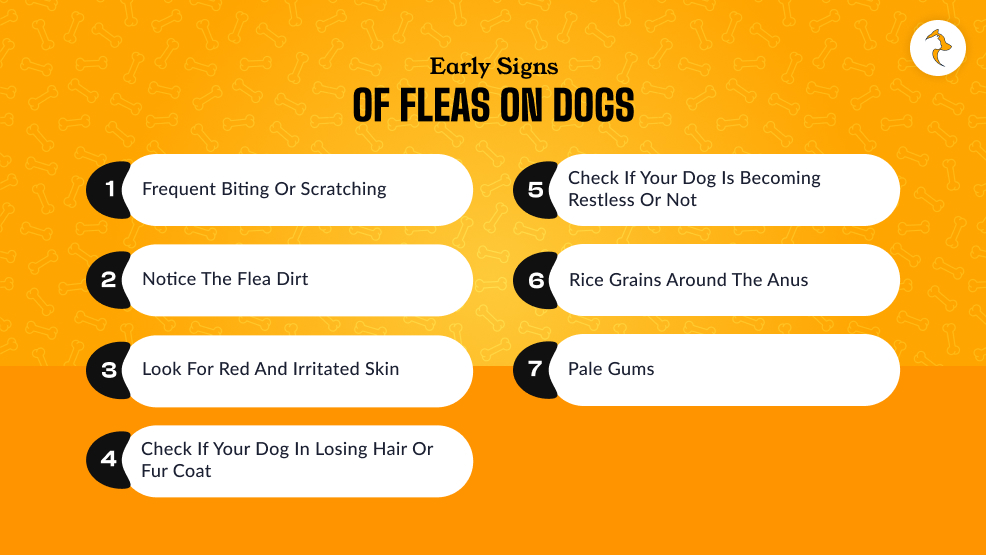
You may not always detect the fleas with your open eyes. However, as a first-time pet parent, you can watch out for the following symptoms of flea infestation.
1. Frequent Biting Or Scratching
A sudden increase in scratching, biting, or licking is often an early indication of a flea problem.
Fleas commonly infect your dog in areas that are hard to reach, such as the groin, armpits, and the base of the tail.
When a flea bites your dog, it injects saliva into the skin, which triggers the immune response of your dog.
For dogs that have Flea Allergy Dermatitis (FAD), even one bite of a flea can cause extreme localized itching and excessive grooming.
2. Notice The Flea Dirt
Flea “dirt” is flea waste, primarily made of blood that has been digested by the flea.
Flea “dirt” appears as tiny black pepper-type grains or dark specks on the dog’s skin.
To determine whether it is flea dirt or dirt, put the dark specks on a white paper towel and put a couple of drops of water on them.
If the specks dissolve and turn reddish brown, this confirms that you have fleas.
3. Look For Red And Irritated Skin
Another indication that fleas are present is to part the hair on your dog and look for red, raised bumps or reddened areas of the skin.
The constant scratching from flea bites and chemical irritation of the skin from flea saliva will produce “hot spots” and/or a secondary infection of the skin.
Typically, the most prominent lesions are located on the belly or inner thighs.
However, the lesions that appear to be infected, thick, crusty, and have an oozing wound are likely to require veterinary intervention due to the advanced severity of the flea infestation.
4. Check If Your Dog In Losing Hair Or Fur Coat
Alopecia, caused by flea diets, is usually a secondary symptom.
Flea infestation causes severe itching, and dogs try to find some relief by itching or biting their fur. Thus, they lose hair or fur coat.
You will especially notice these bald spots near their neck or at the base of their tail.
5. Check If Your Dog Is Becoming Restless Or Not
A dog with a flea infestation can be perennially agitated due to the constant itching and irritation on their skin.
Furthermore, if the infestation is severe, they can pace back and forth or suddenly jump as if they are being poked.
6. Rice Grains Around The Anus
Fleas are the primary intermediate hosts for tapeworms. So, fleas can be one of the major reasons why you see worms in your dog’s poop.
If a dog swallows a flea, it can cause tapeworm infestation in the intestine.
Moreover, the rice-grain-like things you notice around the anus of your dog are actually proglottids, or egg-filled segments of the tapeworm.
Also, when you notice these rice-grain-like structures around the anus of your dog, you need to take your dog to the vet immediately for the treatment of external fleas and internal worms.
In addition, if the worms in your dog are not treated on time, they can be fatal.
7. Pale Gums
If there is a flea infestation in your dog or puppy for longer, it can lead to flea-bite anemia.
Fleas survive by consuming the host’s blood. Hundreds of feeding insects can actually deplete a dog’s red blood cell count.
Check your dog’s gums, and they should be a healthy bubblegum pink.
If they appear pale, white, or grayish, your dog may be anemic and requires immediate, emergency veterinary care to restore their health.
Why Are Fleas A Bigger Problem Than We Think?
Dr. Michael Dryden, Professor of Veterinary Parasitology at Kansas State University, says that flea allergy dermatitis is most common in dogs.
He further adds that even if a dog does not have a full-fledged flea infestation, it can suffer from severe itching and skin inflammation with a single flea bite.
These irritations and inflammation can even last for weeks.
Moreover, fleas spread rapidly throughout your home. So, if you do not get the fleas treated on time, they will affect you and your family members.
What To Do If You Notice Signs Of Fleas On Dogs?
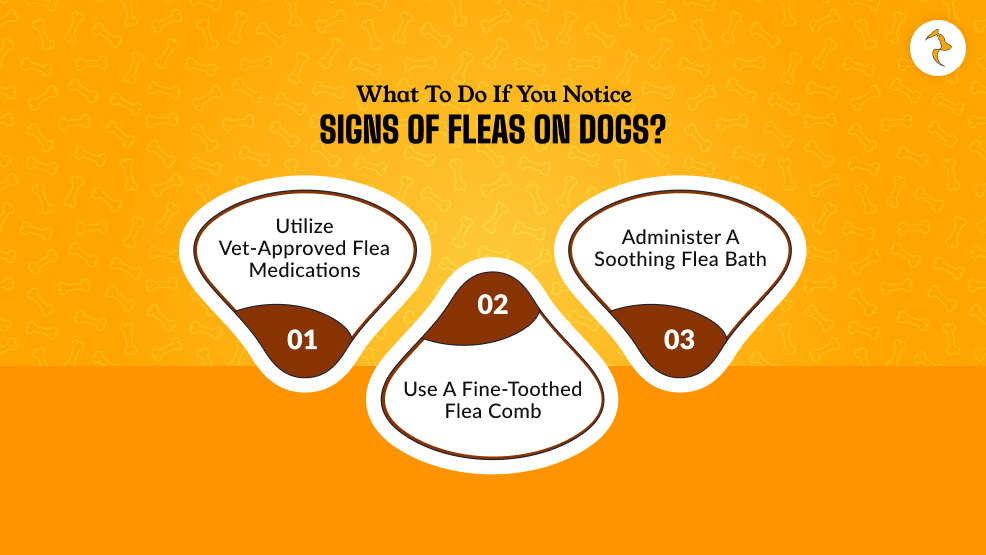
Eliminating fleas requires a multi-pronged approach that targets both the adult parasites on your pet and the eggs lingering in your environment.
Here is how to effectively clear an infestation based on expert guidelines.
1. Utilize Vet-Approved Flea Medications
Professional treatments best break this flea life cycle.
These products are made to kill fleas fast and frequently offer a “residual” effect that prevents new eggs from hatching.
Oral Medications
When it comes to oral options, chewable GDL such as Simparica Trio provide internal protection and are often preferable for dogs with sensitive skin or frequent swimmers.
Topical (Spot-On) Solutions
Products like Bravecto are applied directly to the skin, typically between the shoulder blades, where they absorb into the oil glands to provide long-lasting defense.
Medicated Collars
High-quality collars like Seresto offer a “set it and forget it” option, repelling and killing parasites for up to eight months.
2. Use A Fine-Toothed Flea Comb
Medications do most of the work, but a metal flea comb is one of several physical tools used when blasting live bugs and debris.
The Technique
Target “hot spots” (base of the tail, neck).
Do this in the bath or on a white surface so you can see what you are getting rid of.
The Dip
Have a bowl of soapy water beside you.
After every few passes, submerge the comb to drown the fleas.
Otherwise, they may jump right back onto your dog.
Consistency
In the case of a live outbreak, you must run the comb through fur daily to catch any new fleas that emerge from pupae in your home.
3. Administer A Soothing Flea Bath
Bathing offers a quick but short-term relief from flea attacks.
A proper bath can wash away a large number of adult fleas and the flea dirt.
You can use a regular oatmeal shampoo or a medicated flea shampoo prescribed by your vet.
Start with a ring of soap around the dog’s neck.
This prevents fleas from scurrying upward toward the ears and eyes when the rest of the body gets wet.
How To Minimize The Chances Of Flea Infestation On Your Dog?

Remember this when you notice signs of fleas on dogs.
As only 5% of a flea population actually lives on your dog, the other 95% (eggs, larvae, and pupae) are hiding in your home.
1. Aggressive Vacuuming
Use a vacuum cleaner every other day on all carpets, rugs, and upholstered furniture.
Vacuuming can gently vibrate flea pupae awake from their cocoons, increasing the chance that treatments can kill them.
2. Laundry Protocol
Put your dog bed, blankets, and any detachable couch covers in hot water.
Drying at high heat in a dryer is a very effective way to get rid of fleas and ticks at all life cycle stages.
3. Waste Management
Dump your vacuum canister or bag directly into a sealed outdoor trash bin. So fleas cannot crawl out and infest the room again.
Share








Leave A Comment