
My Puppy Won’t Stop Biting Me I’ve Tried Everything: Is This Just Bad Behavior?

One of the most common things you will hear from a pet parent is that “my puppy won’t stop biting me I’ve tried everything.” Initially, it might be difficult to decide the reason behind their constant biting, but with time, you will understand them better.
Puppies bite for various reasons, and it is also based on how you train them. Initially, it will be solely about the joy of getting the little fur baby home, but they require training and attention.
You need to teach them various dog commands, but before that, you need to know why they are showing such behavior.
My Puppy Won’t Stop Biting Me I’ve Tried Everything: What Could Be The Reasons?
No matter what breed of dog you have, all puppies explore everything with their mouths and noses, especially when they are going through the teething process. So, if this is the reason and you are wondering when do puppies stop biting, then it is within a few months.
Moreover, with their curious mind and need to explore, they often start chewing on your arms, legs, clothes, and furniture. You have to be considerate. Understand they are not doing it deliberately. There could be various reasons behind this behaviour.
- They are scared, frustrated, or bored with something
- They want attention
- Teething
- They are just exploring their environment
- They are playing
- Something has triggered this behavior
How To Stop Puppy Biting?
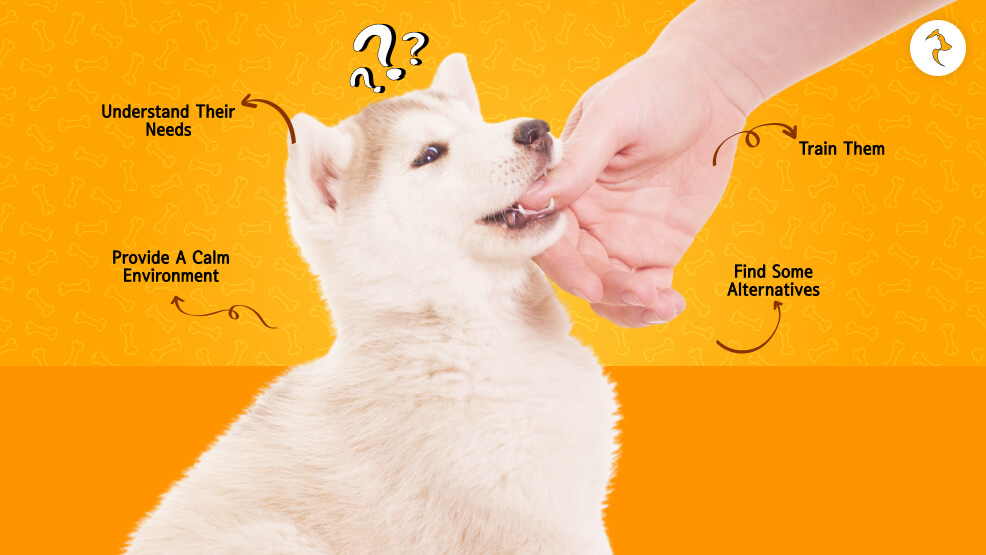
Chewing on things is their natural instinct, and there is no way to just remove it. How to stop a puppy from biting? You can give them chew toys to play with to relieve them of their desire to chew. Here are some of the things you can try.
1. Understand Their Needs
Know what your pup needs. Ensure they are getting enough sleep and space when they need. Do not crowd them or lift them up. Try to get on the floor with them. Moreover, try to be gentle with them and whenever they need, give them some space.
2. Provide A Calm Environment
Do not overindulge. Give them short cuddles and play with them in a calming environment. Try not to get them too excited around them. Having children around them or vigorous play are some of the common triggers that can make them bite.
3. Train Them
Make a rule of “no teeth on skin” around them and ensure to follow it every time. Whenever they bite your skin, remove yourself from the situation. Do not react, do not say anything, just put your attention elsewhere.
This will send a signal to them that if they are rough, you will not play with them. When they calm down, get over to them and use a gentle tone to talk to them.
4. Find Some Alternatives
If your pup is chewing to relieve some pain because of teething, it is best to get them some chew toys. Get them some appropriate toys that they can chew on, like a pizzle stick or a frozen carrot.
Specific Biting Scenarios
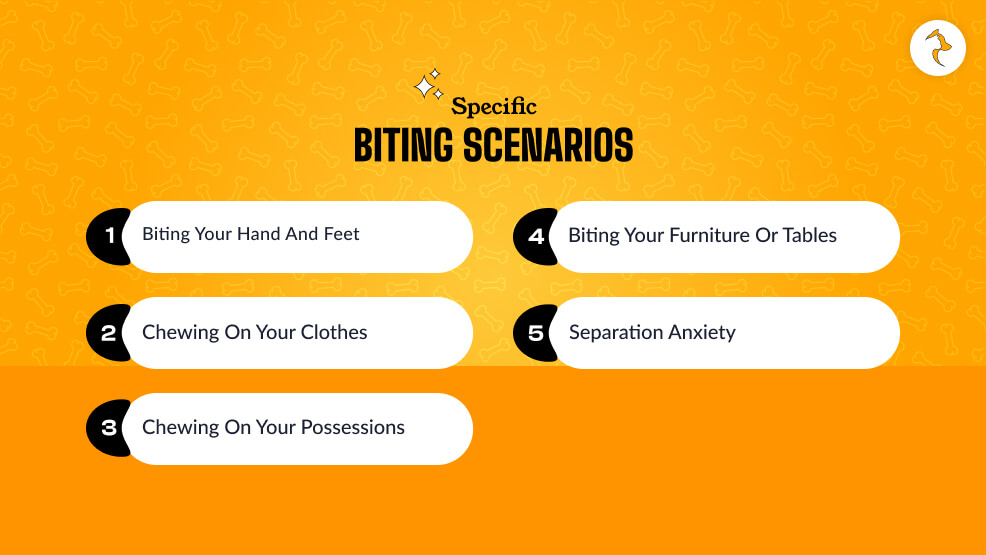
There could be something specific or a pattern about their biting. If your pup bites on your hands and feet, or just your clothes, or once you get back from work, you can help them. But you will be able to help once you understand the reason behind this.
1. Biting Your Hand And Feet
My puppy won’t stop biting my feet. If your puppy jumps on your feet the moment you walk by, then give them a little space. Ask your kids and other family members to be gentle around them. If they run by, it might incite play behavior.
2. Chewing On Your Clothes
“My puppy won’t stop biting me and my clothes,” What to do? To begin with, stand still when they are around. If you do not want them to bite you, do not make eye contact with them.
Take their mouth off the clothes and step away. Take a while and then come back with a gentle message. When your puppy is around, try not to wear clothes that will flap.
3. Chewing On Your Possessions
Puppies can chew on anything. They explore the world not just with their nose, but through their teeth as well. If you do not teach them anything else, they will keep doing it.
Moreover, if you do not want them to engage with something, get them to you and keep them busy. Also, you can try to keep things out of their reach.
Praise them for their good behavior. Positive reinforcement actually works. Get them some toys to make sure they stay busy with those.
4. Biting Your Furniture Or Tables
If they are teething, they will chew on anything they find. If they start biting on a table, get them to you and try engaging them in other activities. Give them something else to soothe their gums.
If you chase them to get off an item that you like, they will think of it as a game and will do it more. So, stay calm and involve them in other games to distract them from that object.
5. Separation Anxiety
If you are working and have to leave them alone at home for some time, start weaning them from your undivided attention. The change should not be drastic. Leave them in a safe room where they will get enough space and feel secure as well.
Make sure they have had their meal, gone to the washroom, and had a walk. Leave them when they are about to rest. Moreover, you can leave on soft music to keep them calm while you are away. This helps with dog anxiety.
This Would Gradually Stop
Steffi Trott, founder of Spirit Dog Foundation and a professional dog trainer, told Nowfresh, “Many puppies are used to also playing rough with their littermates, where biting is often a successful way for puppies to get attention or instigate play with their siblings.”
So, if you are wondering why my puppy won’t stop biting me I’ve tried everything, let me tell you, you have to be patient with them; this is not just bad behavior. Address the reason behind their act, try positive reinforcements, and you will be good.
Frequently Asked Questions
When discussing “my puppy won’t stop biting me I’ve tried everything,” these are some of the common questions people ask.
Puppies generally outgrow this habit within 3 to 6 months of age. Mostly, this habit is associated with teething, and you must set some ground rules and boundaries during this time.
There could be various reasons why an 8-month-old puppy bites. This could be because of overexcitement, playfulness, or teething. You have to remember that these are normal puppy behaviors, but you have to guide them better.
Whenever your puppy bites, act as if you are hurt and limp a bit. This will catch them off guard, and they will stop mouthing you. This will help you momentarily, but you will have to train them. Moreover, positive reinforcements might work as well.
This can be the reason for their exploration. They could be teething. Moreover, this could be because of frustration, fear, or lack of socialization. You have to understand the context to determine whether this is normal or a sign of a problem.
If you want your puppy to stop biting you, you will have to focus on bite inhibition and manage their environment. Also, redirect their biting behavior. Positive reinforcement and consistency are the keys to success.
Share






Leave A Comment