
How To Make Balanced Homemade Dog Food: Recipes, Safety & Costs

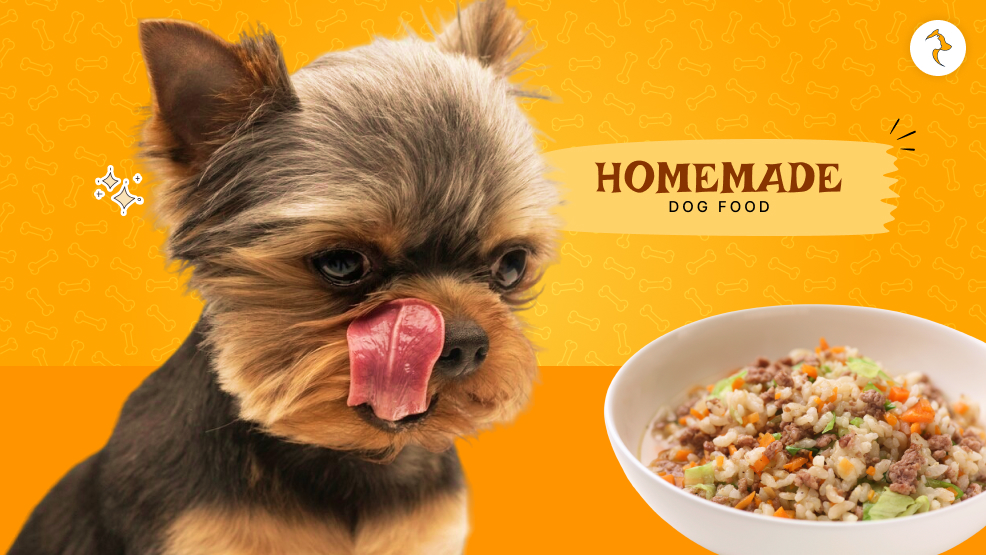
Dog parents these days are trying to shift their pet food preference from commercial to homemade. There are various dog foods available on the market that are specifically formulated to meet their needs, but there have been some controversies.
However, preparing food for your pup is not like preparing a meal for yourself. There are various rules, dos, and don’ts that you have to follow to keep them healthy and happy. You have to take care of their nutrients as well.
If you have the proper ingredients with you and know how to make it healthy and tasty for their palette, you can prepare it at home without any difficulty.
Is Homemade Dog Food Right For Your Dog?
Homemade dog food is gaining popularity because you can control the ingredients and eliminate the risk of food recalls. Many dog parents want ther dog to have a healthy meal with good, fresh ingredients, not those commercial dog foods.
Homemade food sounds appealing because it uses whole foods, which they often consider a healthier option than processed wet or dry dog food.
However, this is not suitable for everyone, and it is not a viable option for all households. Here are some of the factors that you should consider before switching to homemade foods.
- Ensure you use a recipe that is balanced and complete. It should contain all the nutrients they need for proper growth.
- You need to measure the ingredients and prepare their food with care. Moreover, you can schedule time to prepare their meal with care.
- Homemade dog food is more expensive than kibble but less expensive than commercially prepared dog food.
- Moreover, if you have a picky eater, you will have to prepare different recipes using multiple sources to change their diet in intervals to keep them interested.
Nutritional Basics Of Dogs
Dogs have nutritional needs, and you have to meet those to keep them healthy. However, their nutritional needs differ from those of humans, and you cannot just give them the food you prepare for yourself.
Your food will not have the nutrients they need, and they will suffer from deficiencies. Dogs need a lot of calories to meet their energy needs. Their calorie need depends on what stage of life they are in and their activity level.
This is why, when you decide to make a shift to homemade food, you should consult a vet to get a proper diet chart and meet their nutritional needs. It should have an appropriate balance of fat, protein, fiber, and carbohydrates.
You should definitely add vitamins and minerals to their food to ensure it is balanced. Here is a brief guideline to help you understand their needs.
- Protein: 10% (lean beef, chicken, fish, and turkey)
- Carbohydrates: 50% (potatoes, rice, and pasta)
- Fiber: 2.5-4.5 % (from different vegetables like carrots, green beans, and peas)
- Fat: 5.5% (this you can get from vegetable oil)
- Also, use vitamin and mineral supplements
But it is best to consult a vet before giving them homemade food. They can recommend recipes tailored to your dog’s specific needs. Or you can consult a veterinary nutritionist specializing in canine nutrition.
Transitioning From Commercial To Homemade Food
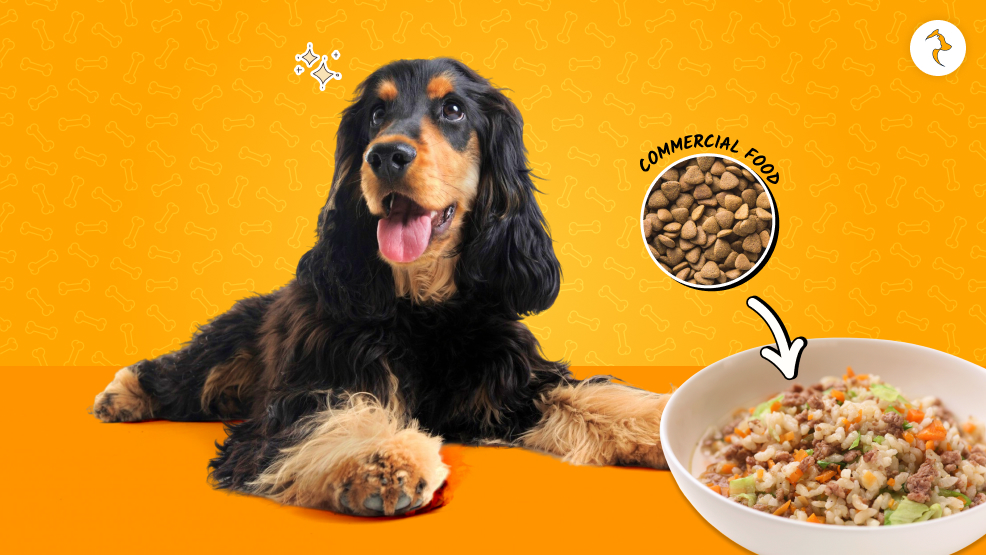
When you are transitioning to homemade food, you need to monitor your dog closely. Stay connected to your veterinarian about the changes and what you should notice; it could be good or bad.
For best results, keep a record of their weight and body condition over time. Weigh them once a week and contact your vet immediately if you notice unintended weight gain or loss.
Look out for signs like diarrhea or vomiting, which can occur if they are allergic or sensitive to some ingredients. Also, mention any other signs of illness you have noticed in your dog.
How To Prepare Homemade Food For Dogs
When preparing a diet for your home, it is important to follow a recipe to ensure your dog gets a balanced meal. Once you have figured out an appropriate recipe, you can start preparing.
- You need a food scale, pans, pots, food processors, bags, or containers to prepare exact portions of food.
- Get high-quality, fresh ingredients that are not heavily processed, seasoned, or canned.
- Have a separate, clean area in the kitchen free of ingredients that can harm a dog. This way, you will not mistakenly use anything that can damage your pup.
- Use a food scale to measure the ingredients for accuracy.
- Prepare their food as mentioned in the recipe.
- Mix supplements and food using a food processor.
- Keep the food in containers and store it in a freezer or refrigerator.
Sample Recipes For Homemade Dog Food
You can make homemade dog food with a few ingredients. But all you have to do is meet their nutritional needs. Here are some of the sample recipes.
1. Bone Broth
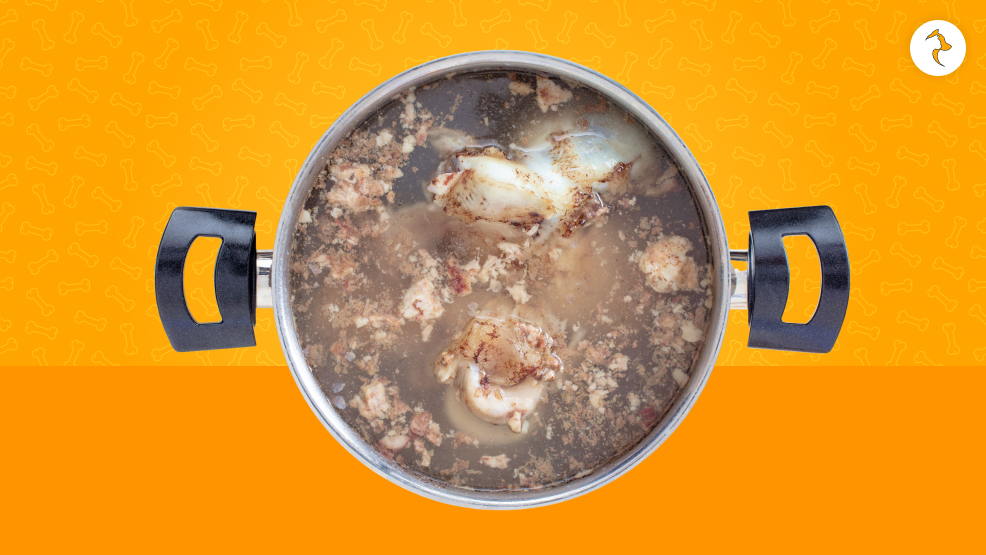
Well, dogs can have bone broth, but the recipe is quite different from how we prepare it for us humans. They are sensitive to some ingredients that we humans add to a broth, like onion and garlic.
Ingredients
- Olive oil: 2 tbsp
- Ginger: 3 inches (peeled)
- Raw bones with marrow: 3½ pounds (chicken, pork, beef, turkey, rabbit)
- Celery: 6 stalks
- Carrots: 6 slices
- Apple: 1 (sliced)
- Parsley: 1 cup
- Mushrooms: 8 ounces( portabella or button)
Instruction
Put all the ingredients together in an Instant Pot, stockpot, or slow cooker. If you are using an Instant Pot, ensure he ingredients and liquid do not surpass the line. If your Instant Pot is small, cook it in two different batches. Place the lid on and cook on high pressure for 4 hours.
If you are using a stovetop, bring all the ingredients to a boil, then cook over low heat for 12 hours, stirring occasionally. Moreover, if you are slow cooking it, place the lid on and cook it on low heat for 24 hours.
Storage
Cool the broth completely, then strain the bones and any other solids through a strainer. Keep the strained broth in a refrigerator and let the fat rise to the top as it cools. The fat will rise to the top; skim it off and store it.
2. Rice, Egg & Meat
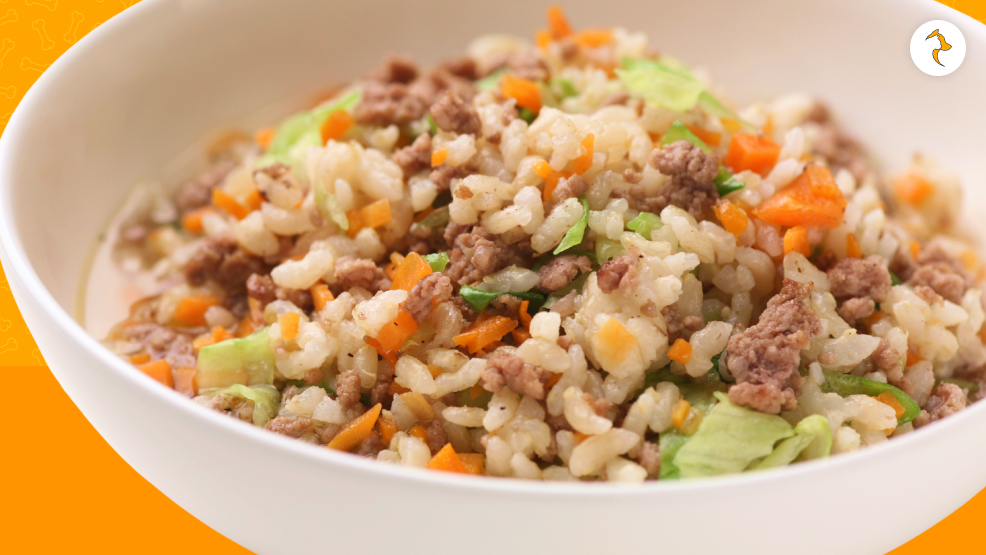
This is something you can prepare for your dog when you don’t have much time but don’t want to compromise on their nutrition.
Ingredients
- Brown rice: 6 cups if cooked, 3 cups if uncooked
- Lean beef: 2 pounds
- Eggs: 4(hard boiled, peeled and diced)
- Carrots: 3 (medium-sized)
- Sunflower/olive oil: 3 tbsp
- Parsley: ¼ cup (minced)
Instructions
You need to prepare everything separately. Cook the rice, egg, and meat without any seasoning. Then combine everything in a container and stir until completely combined. Then serve in proper portions and store the rest in a freezer in a tightly sealed pack.
You need to combine 790 grams of organic brown rice with 700 grams of lean beef, four hard-boiled eggs, some carrots, and parsley.
Food Safety And Storage
Refrigerated food stays fresh for around 3-4 days, and frozen dog food stays fresh for around 2 months. However, do not give homemade dog food that has been frozen for more than 6 months.
Many pet parents choose to prepare large batches of food and freeze it in portioned containers. This is an amazing idea if you want to save time and money.
But if this is your first time preparing food for them, start making it in smaller quantities and check how things are going for your pup.
Frequently Asked Questions (FAQs)
Here are some of the common questions people ask about homemade dog food.
It is ideal to give them 2-3% of their body weight to maintain their health and activity levels. If you have a 50-pound dog, you need to provide them with 16-24 ounces of homemade food daily.
Yes, you need to add supplements to their homemade food to ensure they get all the nutrients they need. Even with high-quality materials, it is not possible to meet all their dietary needs. That is why you need to add supplements sometimes.
No, you should not give them raw food. It is considered unsafe, and there are risks of bacterial contamination, which can cause imbalances or nutritional deficiencies and harm them.
If their diet is imbalanced, you will notice signs such as poor skin and coat, vomiting or diarrhea, and an unusual change in their weight. Moreover, they might even get lethargic and have poor nail growth.
If you are making a shift from kibbles to homemade food, make sure the transition is slow. Allow 7 to 10 days to introduce it slowly to avoid upset stomach. Mix the new ingredients with the old ones slowly and see if they are liking
Share









Leave A Comment