
The Ultimate Dog Grooming Tips Guide: How To Groom Your Dog At Home Like A Pro?

Grooming your dog is not just about making them look good or smell nice. It is about their regular maintenance and keeping them away from painful health issues involving their teeth, fur, and skin.
Many pet parents want to leave the task to professional groomers. However, this can be costly, and there are not enough certified groomers in the area.
It is necessary to give them a proper bath at regular intervals to remove the unpleasant odor caused by accumulated dirt. With the right dog grooming tips, you will be able to take care of them at home, all by yourself.
Top 10 Surprising Benefits Of Grooming Your Dog At Home
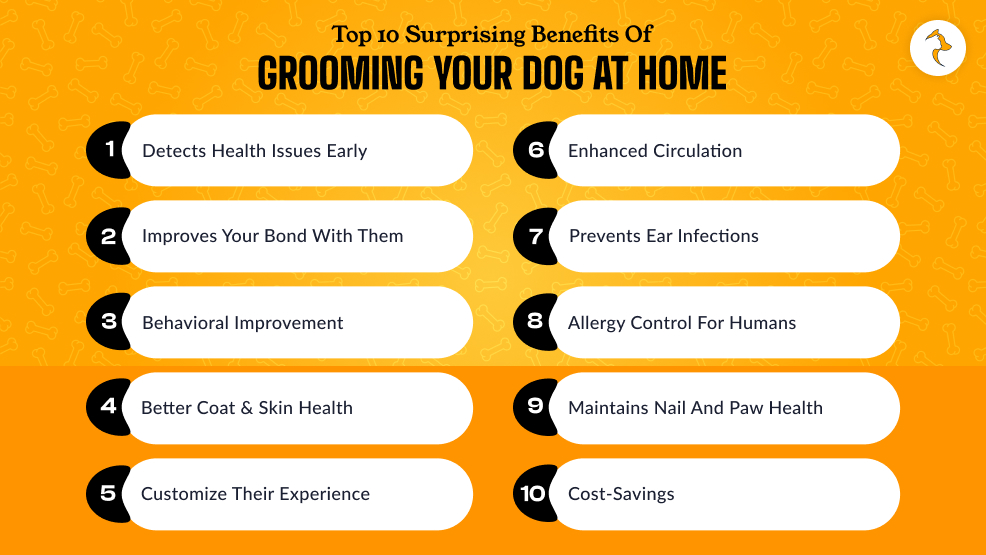
Grooming your dogs is not just limited to keeping their appearance clean. Moreover, it is about their emotional and physical well-being. Here are 10 benefits of grooming your dog at home.
- Detects health issues early: Regular grooming lets you inspect their body for skin abnormalities, injuries, rashes, and unusual lumps, enabling prompt veterinary attention.
- Improves your bond with them: This one-on-one time you spend grooming them gives you a chance to communicate with them and helps you build a deep emotional connection with your pet.
- Behavioral improvement: Groom in a safe, familiar environment at home, which will reduce stress and anxiety that can increase in an unfamiliar grooming salon.
- Better coat & skin health: Brushing their coat removes dead skin cells and distributes natural skin oil throughout their coat. Moreover, it keeps their skin hydrated and their coat healthy and shiny.
- Customize their experience: Nobody knows your dog’s preferences and needs better than you do. At home, you can customize their experience, ensuring it is comfortable for them.
- Enhanced circulation: Massaging and brushing their coat and skin improves their blood flow. Moreover, it supports their overall vitality and health.
- Prevents ear infections: Cleaning their ear remove debris and wax buildup. This will prevent ear infections, which are especially necessary in breeds with floppy ears.
- Allergy control for humans: If you have someone who is allergic to dogs or allergic in general, regular grooming will reduce loose fur and dander. This reduces the allergic reactions.
- Maintains nail and paw health: Clean paws and trimmed nails protect their posture and prevent joint strain that is caused from overgrown nails or from matter fur.
- Cost-savings: By investing in high-quality grooming tools, you will save significantly compared to the cost of frequent visits to a professional.
Top 5 Dangers of Not Grooming Your Dog Regularly
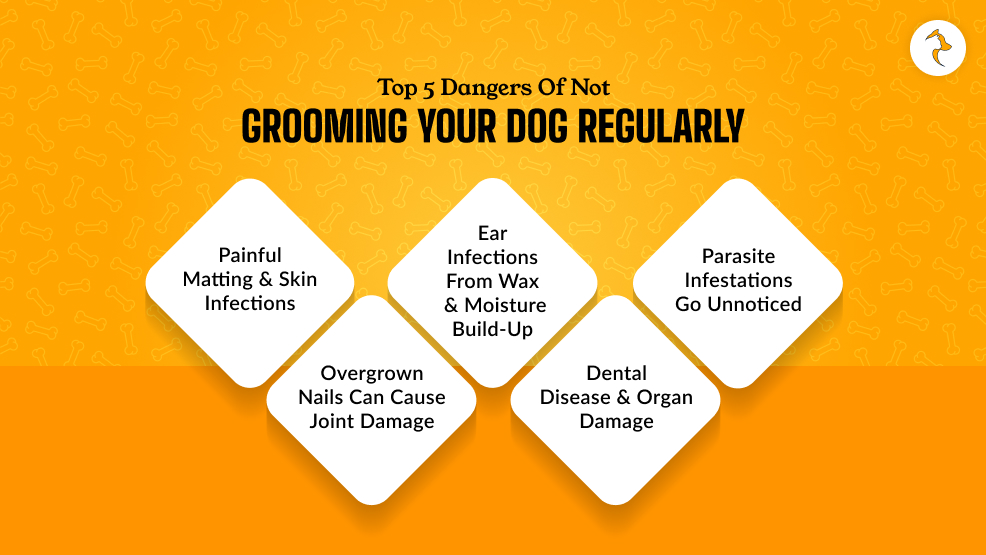
Grooming your dog is necessary. There are various threats that your dog might have to face if you don’t regularly take care of their coat and skin health. With regular grooming, you can catch the issue early and take the dog to a vet before it becomes serious.
1. Painful Matting & Skin Infections
If you don’t groom your dog regularly, dust, dirt, and dead hair will accumulate in their skin and cause painful mats. Afterwards, pulling at the skin can cause pain, irritation, and infection.
An unhealthy coat holds moisture and dirt, creating a suitable environment for skin infections. Moreover, regular brushing helps remove dirt and dead skin, which can irritate the skin.
2. Overgrown Nails Can Cause Joint Damage
This is something people often don’t realize: regular grooming helps keep joints healthy. If you ignore some of the most important parts of grooming, like clipping their nails, they will change their gait, which can make them walk in an unhealthy way.
And in a few extreme cases, it can cause arthritis and joint issues. Some dogs don’t like their nails clipped, but if you give in to their wish and they don’t wear them down, it can cause severe problems with their joints.
3. Ear Infections From Wax & Moisture Build-Up
Ear infections are common in dogs, but breeds like Border Collies, Spaniels, and Basset Hounds are particularly prone to them.
A good bath can prevent ear infections, which can be extremely uncomfortable for a dog. If you take them to a groomer they will cut their hair around the ears to avoid any further infections.
4. Dental Disease & Organ Damage
Regular dental care is also a part of regular grooming. It is necessary to prevent plaque buildup, tooth loss, and gum disease.
If you keep neglecting their dental health, it can cause bad breath. Additionally, bacteria from the mouth can enter the bloodstream and damage vital organs such as the kidneys, heart, and liver.
5. Parasite Infestations Go Unnoticed
Regular grooming is important as it gives you a chance to check them for ticks, fleas, and other parasites. It is helpful if you spot and treat them before they cause a huge problem.
Without regular grooming, parasites will multiply, cause skin disease and anemia, and transmit other dangerous infections, such as Lyme disease.
Essential Grooming Tools for Every Dog Owner
Grooming your dog at home does not have to be difficult. Before getting into dog grooming tips, here are some of the essential tools that you should get for them.
| Tool | Purpose |
|---|---|
| Slicker brush | This detangles the hair and removes loose fur. |
| Nail clippers | This helps in trimming their nails. |
| Ear cleaner | These cleaners prevent infections. |
| Dog shampoo | Clears out dust and dirt without causing any irritation. |
| Grooming scissors | This trims their fur around the sensitive areas. |
| Dog toothpaste & toothbrush | Oral hygiene plays a crucial role in their overall health. |
| Blow dryer & towel | Dries their coat after their shower session. |
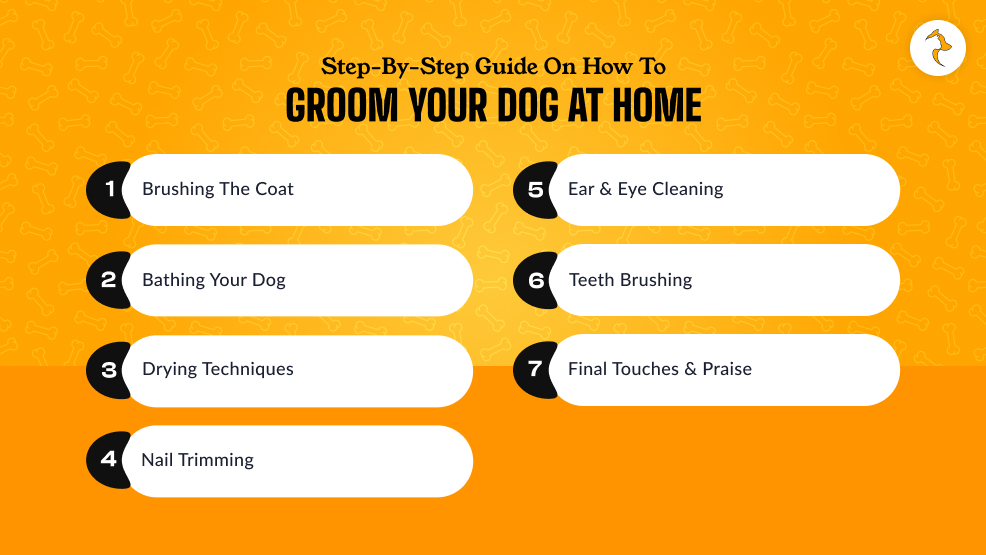
Step-By-Step Guide On How To Groom Your Dog At Home
According to the American Kennel Club (AKC), “Grooming is just as important as nutrition and exercise. It helps maintain your dog’s skin, coat, nails, ears, and teeth, and allows early detection of health issues like lumps, parasites, or infections.”
Good grooming will help your pup look and feel their best, and you need to have a routine grooming session. Here is a step-by-step guide to grooming your dog that will help you better care for them.
Step 1: Brushing The Coat
A number of brushing sessions will keep your dog clean, but it is better to brush them every day. Brush through their skin; this will stimulate blood circulation and remove dandruff flakes from their skin and coat.
Here is a list of equipments you will need depending on the length of your dog’s coat and texture.
- If you have a long-haired dog breed like a Shih Tzu, you will need pin brushes with long, round-ended chrome or stainless steel-plated pins.
- For short to medium-coated breeds, you will need bristle brushes.
- For removing dead hair and mats, use a slicker brush. To remove dead hair and polish their coats, use a rubber curry comb.
While brushing, always check for burrs and mats which often form under their legs, and behind their ears. Also, check for scrapes or cuts.
Step 2: Bathing Your Dog
Giving your dog regular baths is essential, but not frequently. This depends on their coat type and breed. Bathing them often will wash off the natural oil, and their coat will become harsh and dry.
Whenever needed, use a mild dog shampoo. Get them into the tub or a basin, and put cotton balls in their ears. Also, you can put a few drops of mineral oil in their eyes, but it is recommended to consult a vet before doing so.
Get your dog wet and then apply the shampoo from their neck to their back. Lather and scrub thoroughly, and then wash it off. Use a towel to blot up the water, then blow-dry if necessary.
Step 3: Drying Techniques
You can use a dog-drying towel or a hair dryer. Microfibre dog towels are lightweight and easy to use. These absorb more water than any regular towels.
Do not rub the towel vigorously, as that might develop tangles and mats in their fur. Press the towel gently, and that will soak up the water. However, if they have thick fur, you will have difficulty drying them with towels.
Dryers will help remove excess water from their skin and fur and prevent skin irritation. But make sure you do not use your human blow dryer on them. Get a dryer that is specifically made for dogs. Avoid using heat on their fur.
Step 4: Nail Trimming
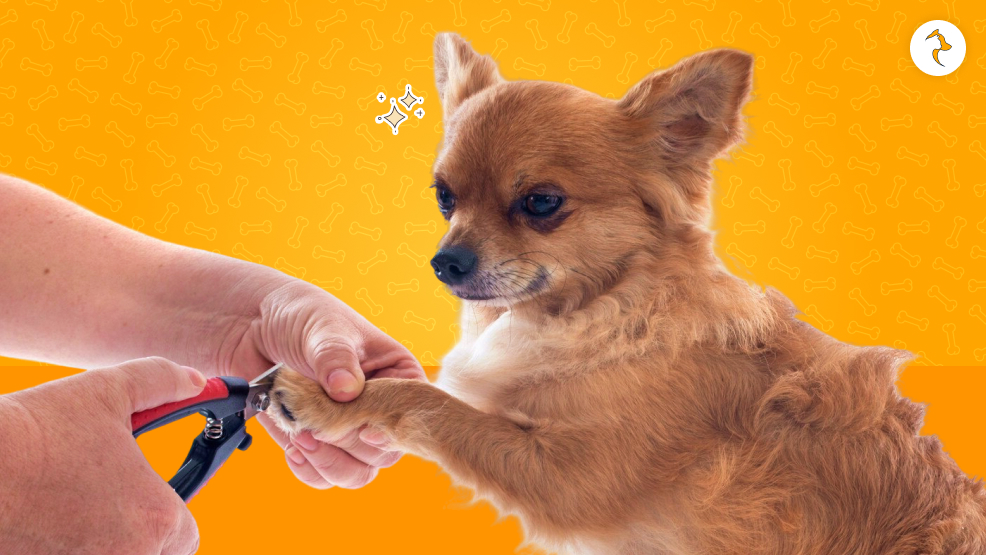
You need to trim your dog’s nails to keep their feet healthy. If they have long nails, it will affect their gait, and they will walk in pain. These can break at the base, where nerves and blood vessels are located. If you hear their nails clicking on the floor, trim them short.
Use a nail clipper specifically designed for them. However, make sure you trim the end without getting close to the blood vessels inside the nail. Just clip the hook-like part that bends down.
Step 5: Ear & Eye Cleaning
As a pet parent, make it a routine to clean your pup’s ears once a month. However, you have to do it more if they are prone to getting ear problems. Use a cotton ball or a wet cloth soaked in mineral oil to clean the outer ear.
Moreover, ask your vet whether you need to pluck hair from inside your dog’s ear, as some dogs need it. Look inside their ear and smell the inside of their ear for any foul smell. You will notice signs of discharge, redness, swelling, and debris if there is an infection.
While cleaning their eyes, check for any signs of irritation or redness. Wipe any discharge gently with a soft washcloth or a cotton ball with warm water. Ensure you do not rub it directly over their eye and use a dog-specific product only.
Step 6: Teeth Brushing
Clean their teeth frequently with dog-specific toothpaste and a toothbrush. If they are uncomfortable with using a brush, then rub their gums and teeth with your finger. Then slowly introduce the toothpaste and toothbrush.
Moreover, you can give them chew toys or dental treats to clean their teeth. With age, tartar buildup can occur, and it needs to be cleaned by a veterinarian. It is best to brush their teeth daily, but if you can’t, at least a few times a week.
Plaque buildup happens after 48 hours. You can wrap your finger in a washcloth or gauze, massage their gums, and wipe their teeth. Dental problems can lead to something big like kidney disease or heart disease.
Step 7: Final Touches & Praise
After you finish cleaning them, trim their fur if needed. However, you have to be careful and slow with them. Use a round-tip clipper with a guide comb and cut the hair covering their eyes and near their sanitary parts. Do not miss the hair between their paw pads.
If your dog needs it, give them an overall trim, but keep the blades away from their skin. After you are done, do not forget to praise them. Positive reinforcement is the key.
According to the Hidden Brook Veterinary Clinic, “Veterinary experts emphasize that grooming is a preventative measure. It helps detect health issues early, reduces infection risks, and strengthens the bond between pet and owner.”
Dog Grooming Tips By Coat Type & Breed
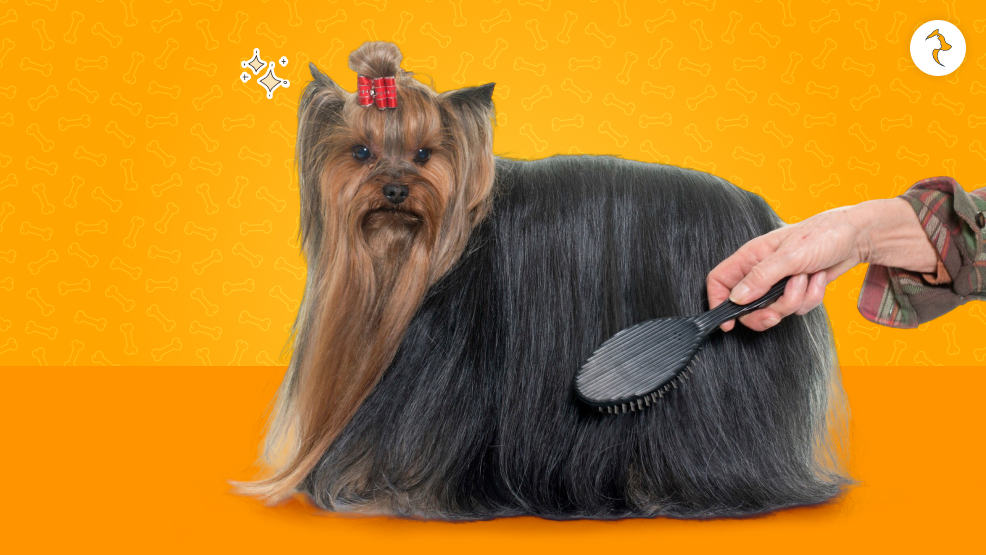
Different coat types require different levels of care and essentials. Here are a few dog grooming tips that will help you take care of your pup in the best possible way.
1. Smooth Coat
A smooth coat needs very little grooming, but that does not mean you should neglect it. Breeds like Dachshunds have short hair that is close to their bodies and need regular brushing and bathing. Here are a few dog grooming tips for a smooth coat.
- Take a bristle brush and brush their coat against the lat. Use a hound glove or fine-toothed coat to remove dander from their skin, and it will keep their coat shiny.
- Then brush thier hair once again in the direction of the hair growth.
- After that, use a shampoo and a conditioner to keep their coat clean and shiny. If they shed a lot, use a de-shedding shampoo.
- First, dry their hair with a towel, and then blow-dry.
2. Double Coat
Breeds like Corgis, Newfoundlands, and Siberian Huskies have a double coat with a soft undercoat that insulates them. Their tough topcoat shields them from dirt and repels water.
However, this double coat can be long or short-haired and requires more grooming than breeds with other types of fur. Here is how you can maintain it.
- Use a pin or sticker brush when starting with the undercoat on double-coated, short-hair dogs.
- If they are long-haired, make sections and brush them. Moreover, you can use an undercoat rake to detangle them.
- Brush outward toward the topcoat to remove any loose or stray hair.
- Then use a wide-toothed comb and brush their undercoat. If there are knots, use a detangler to remove them.
- Give them a bath with shampoo and conditioner.
3. Long Coat
Dogs with a long coat, such as Havanese and Irish Setters, need daily brushing and combing. More so during the shedding season. Here is how you can maintain it.
- When bathing a dog with a long, coarse, or silky coat, use a detangling shampoo to avoid pain.
- Moreover, use a conditioner to add shine and strength to their fur.
- If you can, use a dryer after bathing them.
- After you are done, brush out their coat once again.
4. Wire Coat
Various Terriers and Irish wolfhounds have wiry coats, and these are prone to tangles. Wire coat, also known as broken coat, requires regular grooming.
Some dogs with a thick undercoat may need a stripping comb to stimulate new coat growth. Here is how you can maintain it.
- Take a stripping comb to thin the fur. Run it along their back.
- If needed, use a detangler to remove the mats.
- Moreover, brush the fur out with a slicker brush from the skin.
5. Curly Coat
Curly-coated dogs like Bichon Frises or Poodles have soft, thick curls that rest close to their body. You need to trim their curls as they grow and tangle quickly. Here is how you can maintain it.
- Use a soft slicker brush to comb their coat.
- Use a dog-specific shampoo and conditioner made for curly coats.
- Clean them thoroughly, dry them with a towel, then blow-dry.
- After you are done, brush their coat from the skin out.
Common Grooming Mistakes to Avoid
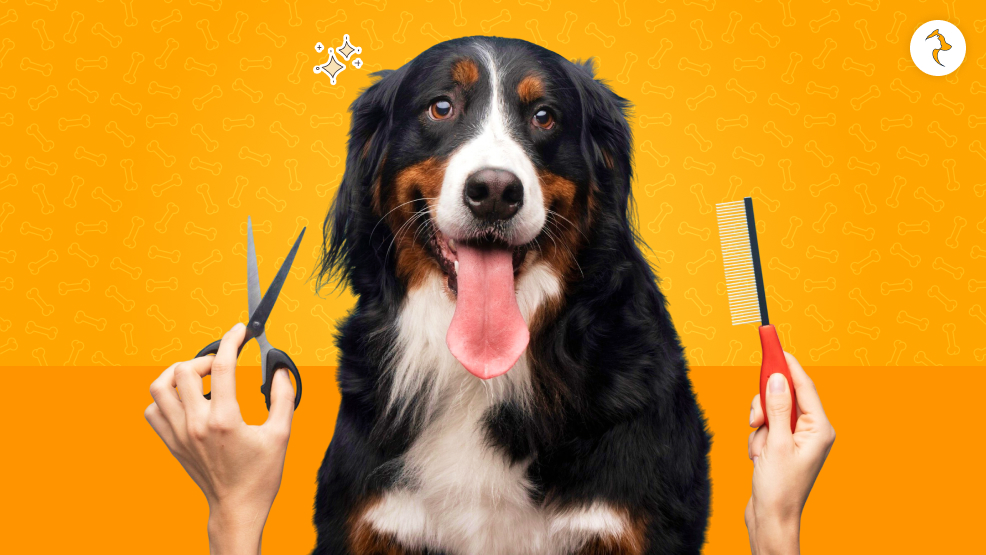
Before you groom your dog at home, you need the right tools. Also, with the right dog grooming tips, you can better care for your dog. However, even with the tips, people still make some mistakes. Here are some of those common mistakes that you should avoid.
- Never use human shampoo on your dog; it can irritate their skin.
- Remember not to cut their nails too short, as it can damage the blood vessels near the nail base.
- People often avoid cleaning their ears, but this is a must. Otherwise, they can get ear infections.
- Bathing them too frequently can dry out their skin. Consider their coat type and discuss the frequency with a vet if needed.
- Moreover, people often bathe their dogs without brushing their coats beforehand. Ensure you brush their coat and detangle their hair, then wash them.
When to Seek Professional Help
Not every case can be handled at home, and you might need help from a vet or a groomer. Also, a professional can offer breed-specific styling. Here are some of the instances where you will need to take them to a professional.
- If you notice sore skin or redness, consult a vet to have them checked out.
- Also, severe matting could be the sign of an underlying issue. Get them checked immediately.
- If they exhibit behavioral issues during grooming, consult a professional; they have experience handling even the most extreme cases.
- While brushing them, if you notice any parasite growth or unusual lumps, get them checked immediately.
10 Expert Tips & Things To Watch Out For While Grooming Your Dog At Home
Here are a few dog grooming tips to keep in mind when caring for your dog at home.
- Take things slow initially. Make the grooming sessions short until they are used to it.
- Ensure you use only dog-specific products, not any of your products. Those can cause an allergic reaction and can also be toxic to them.
- You need to brush their coat before bathing them. This will detangle their hair and remove all the loose fur.
- Ensure you trim and clip just the tip of their nails.
- Use vet-approved solutions to clean their ears and check for a foul smell or discharge.
- Get them dry completely after a shower. Use both the towel and the dryer. Damp fur can cause fungal infections.
- People often don’t thoroughly check their pup’s skin, which can lead to missed skin abnormalities. These could be an early sign of illness, so check carefully.
- Also, ensure you use the right brush for their coat type. Using the wrong kind of tools can irritate their skin or damage their coat.
- Don’t keep the tools dirty. After every use, clean the tools; otherwise, they can cause infections.
- If your dog is showing any signs of discomfort, stress, or aggression, do not force them.
Frequently Asked Questions (FAQs)
While discussing dog grooming tips, here are some of the common questions people ask.
The frequency of grooming a dog depends on the breed, coat type, and the dog’s lifestyle. However, for most breeds and most dogs, you need to brush them weekly and bathe them monthly.
No, you should never use any human shampoo on your dog. Always stick to a dog-specific shampoo; otherwise, it can irritate your dog.
For heavy shedders like Labradors and Huskies, use a de-shedding tool or an undercoat coat for maximum benefit.
If your dog is anxious or nervous, start with short grooming sessions, use calming treats, or take a break. However, if their anxiety persists, get professional help.
Share





Leave A Comment