
Dog Limping Front Leg: Common Causes, Treatments, Prevention Tips

Disclaimer: The advice provided in this post is intended for informational purposes and does not constitute medical advice regarding pets. Please make an appointment with your vet to accurately diagnose your pet’s condition.
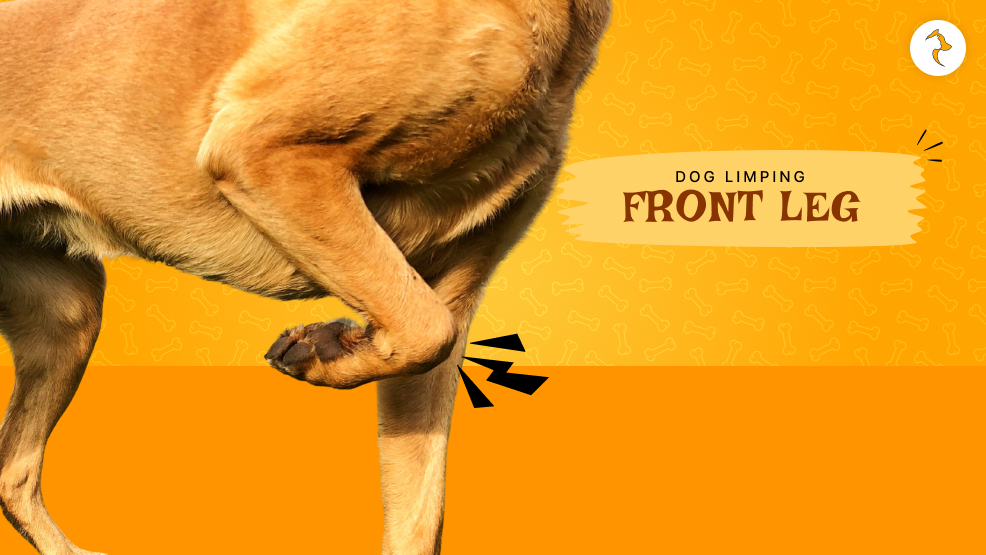
Today’s topic: dog limping front leg.
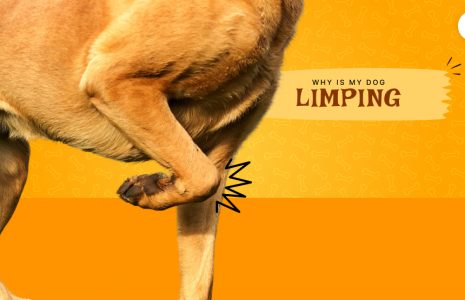
Out of the blue, your dog is limping – and that too with their front leg. It’s a very common symptom of injury – but how would you even know about the severity of the situation?
Moreover, it is also possible that it’s a ‘dog limping but not in pain’ kinda situation – or is your dog in a lot of pain?
It is natural to worry and get anxious about your pet. And that is precisely why I am here to help you understand:
- The most common causes behind your dog’s limping.
- How to identify if something is wrong?
- Whether or not you should go to a vet?
- How to prevent limping in the future?
- Alternative treatment options.
Stay tuned.
Why Is My Dog Limping: What Causes Limping In Your Dog’s Front Leg?

Limping in your dog’s front leg can arise from different conditions – some of which can be resolved with proper rest, while others might need immediate attention.
As a result, understanding the most common causes will help you take control of the situation. Moreover, it is vital to be aware of the situation’s severity.
On that note, let’s check why your dog’s front leg is limping:
- Injuries: Fractures, sprains, or other injuries from accidents or falls can cause limping in your dog. The worst part is that these issues are not really visible.
- Joint Issues: Conditions such as hip dysplasia or arthritis can lead to pain and, if left untreated, to limping. Moreover, older dogs are more likely to fall prey to this.
- Paw Problems: Cuts, stones, or thorns on your dog’s paws can even make walking a painful experience. You should always check your doggo’s paws frequently for any injury.
- Infections: Any infection in your doggo’s legs or paws can cause limping. Generally, limping caused by infections is accompanied by warmth, redness, and swelling.
- Bone Diseases: Certain bone diseases, such as bone inflammation (panosteitis) or bone cancer (osteosarcoma), can cause limping. Such conditions are serious and will need extensive tests, including X-rays, to find the exact cause behind the pain.
Dog Limping Front Leg? How To Identify If Something Is Wrong?
Pay close attention to your dog’s behavior and check for any changes.
Is your dog limping specifically after some activity? Is there tenderness, heat, or swelling in the impacted leg? Such observations can actually help your vet diagnose any underlying issue. Also, it’s best to keep track of when the limping starts and what other symptoms accompany it.
While your vet is physically examining your dog, they will look for signs of swelling, abnormalities, or pain. Moreover, they will also try to find the source of pain and discomfort to determine an effective treatment plan.
In addition, diagnostic tests like ultrasound imaging, blood tests, or X-rays will help your vet determine if your dog is suffering from any infection, fracture, or bone disease.
These tests will offer more clarity about what is actually happening inside your doggo’s front leg and subsequently guide you to the right course of action.
Dog Limping On Front Leg? Do You Need To See A Vet?

Sometimes it becomes very clear that your puppy needs to visit the vet. But then there are times when it becomes very difficult to find out. For that reason, I’ve highlighted symptoms that clearly need immediate attention:
- Persistent Limping: If your puppy keeps limping for more than 24 hours, contact your vet immediately.
- Severe Pain: If your puppy keeps whining, cannot move around normally, or avoids putting any weight on the leg, consult your vet as soon as possible.
- Visible Deformity: Obviously, if you find any obvious sign of visible injuries like dislocation or broken bones, then take your doggo to the vet immediately. For instance, if your dog’s leg faces the wrong direction, then it needs immediate attention.
- Warmth or Swelling: These can easily be symptoms of inflammation or infection.
- Behavioural Changes: If your dog shows behavioural changes such as aggression, lethargy, or decreased appetite, it indicates discomfort and pain. So, if you see these changes and limping together, it’s best to consult your vet.
How Vets Diagnose And Treat Limping?
When you take your dog to a vet for limping in the front leg, they will do a thorough examination to find out the exact cause. This includes:
- Physical Examination: The vet will check for different pain points and try to find the motion range in the front leg.
- Blood Tests: The vet will do these tests to identify diseases or infections that could have caused the limping.
- X-Rays: The vet will do this to identify issues or fractures in the joints.
Treatment for limping usually depends on the actual diagnosis. But it might also include medications for rest, inflammation, pain, and in certain cases, surgery.
How To Prevent Limping Issues In Your Dog’s Front Leg?
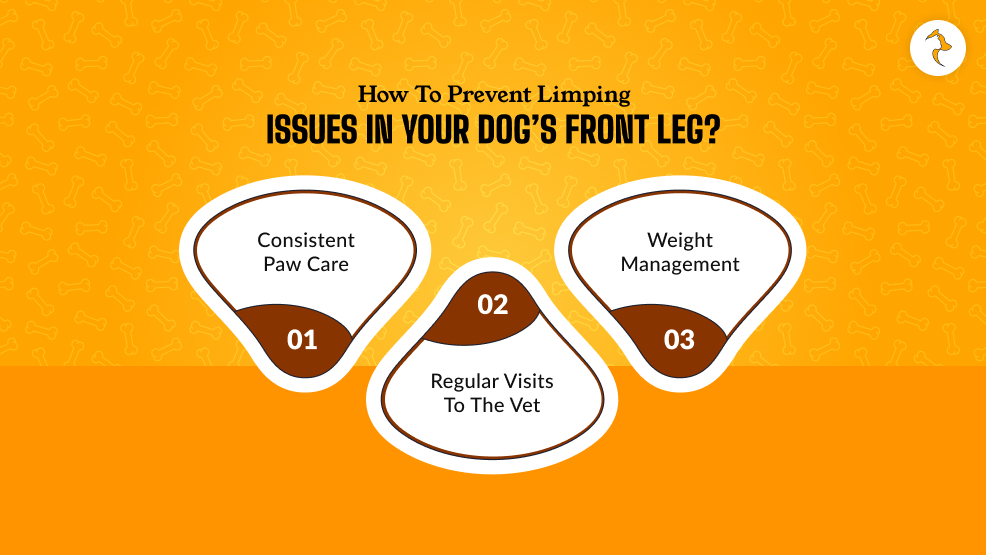
While you cannot prevent limping permanently, there are certain steps that you can take to reduce risks for your doggo:
- Consistent Paw Care: You have to ensure that you are giving your dog’s paws the care they need – trim their nails and clean their paws from debris to protect them from injuries.
- Regular Visits To The Vet: Take your dog to the vet for routine check-ups, even if they are healthy. This way, you will be able to track if anything crops up, like arthritis, so you can easily manage and take care of your dog.
- Weight Management: This is important. You have to ensure your dog’s weight is appropriate, as proper weight management can reduce stress on their bones and joints.
Dog Limping Front Leg? Alternative Treatment Options
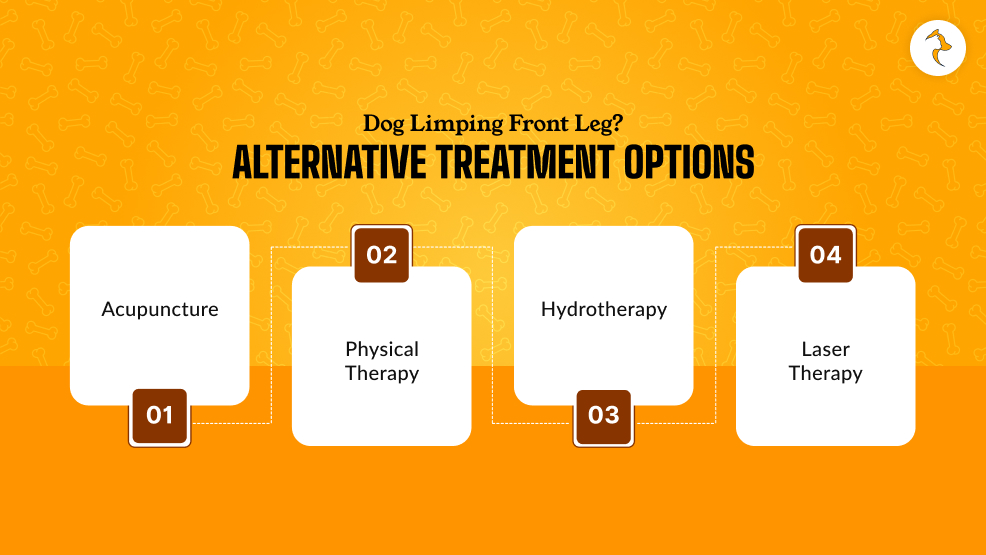
Of course, consulting with your vet is always the best idea. Having said that, here are some alternative treatment options that you can consider for your dog and discuss with your vet:
- Acupuncture: This treatment aims to relieve your dog from pain and improve mobility in their legs, especially if your dog has musculoskeletal problems and joint issues.
- Physical Therapy: This treatment aims to strengthen your dog’s muscles, support their joint health, and increase flexibility.
- Hydrotherapy: This treatment is about letting your dog exercise in water. It is great for reducing stress, which in turn will relieve them from painful joints and increase strength.
Laser Therapy: This treatment is good for reducing pain and inflammation. Also, it can improve the recovery period for injuries like ligament tears or muscle strains without any invasive procedure.
Share







Leave A Comment