
What To Do With Stressed Cats? The Story Of Sher Khan

The cat parents often wonder what to do with their stressed fur balls. They literally do not understand what needs to be done with them. The stressed feline usually acts in the most unique ways. They can stop eating or can even hide in spaces for hours.
However, I have the most unique recovery story to share with you. I will tell the story of Sher Khan. Then I shall share all the tips with you that worked with Sher Khan.
But first, let me introduce you to Sher Khan. Sher Khan is my South Asian house cat from Kolkata, whom I had rescued when I went on my India trip. The kitten was chased by two dogs, who missed him just by a whisker. The kitten leapt on the bonnet of my cab taxi while I was trying to take a picture of the iconic vintage yellow Ambassador Taxi of the city.
I immediately caught him in my arms and felt the kitten’s rapid heartbeat. Then I took him to my hotel, but could not feed him for at least three days. Suddenly, Sher Khan was at the center of the entire trip.
My travel entirely came to a halt as I was busy with Sher Khan all the time. Being a cat person, I always stay connected with some of the best vets in my home city. I immediately called my vet to understand what needed to be done with Sher Khan at the moment.
This article seeks to inform our readers about the symptoms of stress in cats and how we can determine the level of stress in the feline, as stress is not always about fear. It can also be a medical condition. Read the rest of the blog to understand what happened to Sher Khan.
What Is The Traffic Light System And How Does It Help To Identify The Level Of Stress While Observing The Stressed Cat Symptoms?
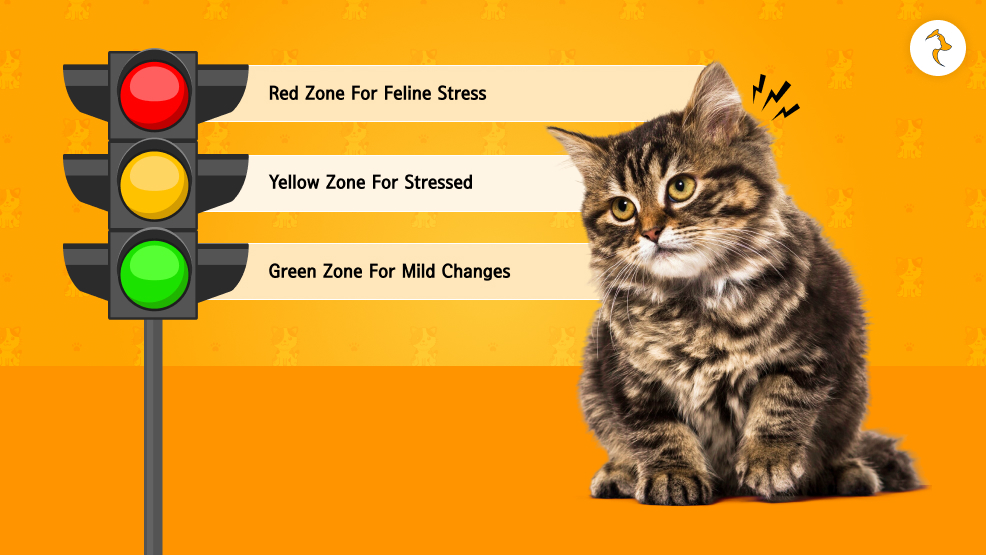
The level of stress in the feline should be categorized based on its severity. Moreover, this allows people to determine the treatment and the required promptness.
The traffic light model to observe and analyze the stressed cat’s symptoms had really helped me at the moment in dealing with my little Sher Khan.
I came to learn about the traffic light assessment from the blogpost shared by International Cat Care.
The traffic light assessment categorizes the stressed cat’s symptoms into three levels. One is the green light, the other is the yellow zone, and the final one is the red zone.
1. Which Of The Stressed Cat Symptoms Fall In The Green Zone?
Your cat generally belongs to this zone when you see certain mild changes in your cat. These issues can include temperament around people. Other problems, like getting aggressive with the kids.
The cat can become possessive of its belongings. Additionally, the cat can even show certain other behavioral patterns, like hiding in certain places. Hiding for long hours and several others.
2. The Yellow Zone For Stressed Cat Symptoms
The yellow zone generally consists of certain casual, subtle behavioral changes that the owner often finds difficult to detect. The subtle symptoms of stress include not eating adequately, always being afraid or reluctant to notice things in one’s surroundings.
Internal health issues in cats often lead to behavioral changes. These health issues may include worms, digestive problems, diarrhea, and others. A mild fracture or subtle pain in some broken limb or others can also cause terrible issues in the felines.
3. What Is The Red Zone For Feline Stress?
The feline stress also has a red zone. Moreover, the red zone implies severe stress. The felines show stressed cat symptoms like giving up on eating and not moving much, reflecting immense distress. Not trusting anyone and several other things. Taken together, these stress signals indicate that the cat’s parent should immediately take the animal to the vet.
Why Is My Cat Stressed? Identifying The Reason For Feline Stress

The situation with my Sher Khan was quite similar. The kitten had lost faith in everyone after being chased by two massive dogs. The chasing had caused immense trauma to the kitten.
Additionally, Sher Khan had stopped eating. Hence, this was one of the most severe stress cat symptoms. I called my Vet back home immediately. The doctor received the call and suggested checking for additional symptoms in the cats. I checked for additional symptoms like vomiting, yellowing of the eyes or the gums, inability to urinate, breathing difficulties, and others.
Moreover, I found Sher Khan to be breathless at times. It was in December, although Kolkata tends to have a warmer climate. However, a 9 °C temperature was not ideal for an infant.
We tried to seek Sher Khan’s mother, but we could not find her anywhere. I think Sher Khan was possibly abandoned by his mother, based on the cat’s weak symptoms.
I examined Sher Khan for breathlessness and let my Vet know about this symptom. The Vet over the phone suggested that Sher Khan may have a lung infection or pneumonia caused by the severe, harsh weather at night.
Additionally, the kitten may not have received breast milk for days. Thus, this had caused dehydration.
1. How Did My Sher Khan Start Eating?
It had become really difficult to treat everything offered on the phone for my Vet in LA. Thus, I had to go to a local vet in India. The local vet observed all the stressed cat symptoms and stated that the cat was suffering from pneumonia.
My cab driver had taken me to a local vet in the Gol Park region of Kolkata. The Vet examined Sher Khan and figured out that he was suffering from pneumonia.
He prescribed a combination of Clavamox, Doxycycline, or Enrofloxacin for Sher Khan. He suggested providing Sher Khan with small doses of the medicine with warm milk. I faced several challenges when initially feeding Sher Khan, as he was not eating at all.
However, later the doctor suggested forcing the medicine to the cat while putting it directly in its mouth.
2. How To Understand The Reason Behind Stressed Cat Symptoms? Which Are The Three Pillars Of Feline Anxiety?
There are three major pillars to determine the stress factors in a cat. Moreover, identifying the triggers allows a cat parent to understand the nature of stressed cat symptoms and potential treatment for the actual cause.
Here are the three major pillars to understand the main trigger behind any health issue in a feline.
1. Environmental Triggers
The cats often get spooked by sudden changes in their surroundings. Rearranged furniture, a new environment, and several others.
Moreover, Sher Khan started eating and became completely normal in Kolkata after taking the medicines. But, he began showing mild stressed cat symptoms when I took him to LA with me, as the surroundings had drastically changed.
He was finding it difficult to deal with the new environment, was not accustomed to the litter box, and various types of noises, like that of the washing machine, the AC going on, and others, were very unfamiliar to the stray cat.
2. Social Triggers
Social triggers are a common cause of most stressed cat symptoms. The cats really find it difficult to get accustomed to new feline companions when they are introduced. I am a cat person. Hence, I already had another one at home.
When I took in Sher Khan, Bagheera found it difficult to make friends with Sher Khan. Bagheera is my two-year-old Bengal Cat.
He became really possessive of all his belongings. Little Sher Khan was now growing, so he was trying to explore other types of food besides just milk. Thus, Bagheera would agitatedly react whenever Sher Khan would try to get a little share from Bagheera’s bowl.
This agitation between the two resulted in a whole new episode of stressed cat symptoms. Initially, Sher Khan remained submissive because Bagheera was a massive Bengal Cat, but eventually the growing house cat feline began to retaliate with angry hisses and other sounds.
Soon, the conflict turned into a physical scuffle from verbal abuse. However, over time, the two grew accustomed to each other and were at peace.
The cat parents should always understand that the cats are solitary animals. Thus, introducing them to the other cats at a later age often triggers insecurity.
3. Physical Triggers
The cats often act cranky due to pain, illness caused by food intolerance, or internal health issues. Additionally, the cats often suffer from hormonal issues. Moreover, during the breeding season, cats can often be seen doing bizarre things.
We keep the domesticated cats confined to limited spaces. Thus, we often deprive them of all mating needs and requirements. Therefore, this triggers stressed cat symptoms. They usually behave in a frustrated manner in these situations.
What Are The Signs That Show That Your Cat Is Stressed? How To Help It In Such Situations?
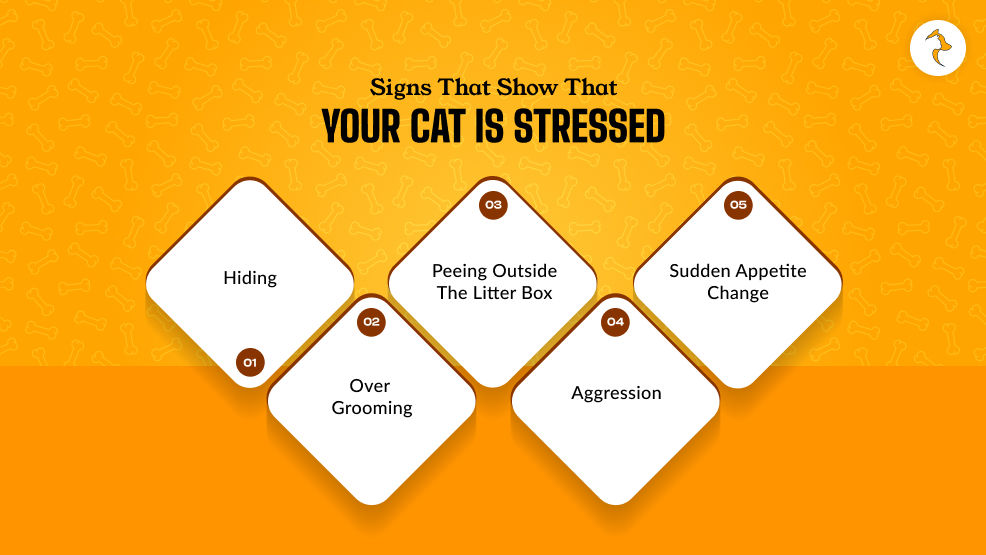
Stressed cat symptoms can be easily detected in cats. Hence, here are some of the main signs that can easily detect stress in cats.
Behavior-Specific Solution Table
The felines show several behavioral signs and stressed cat symptoms to show distress. Hence, look for these factors to understand the main reasons behind the stress.
1. Hiding
The cat often tries to hide when it is in distress. When I took Share Khan to LA, he had found out a very special spot for himself. He used to mostly hide there. I realized that a hiding spot was helping him calm down.
Thus, I set up a Basecamp for him so he could easily hide without any problems or added tension.
2. Over Grooming
The cat often overgrooms itself on a specific spot. Always understand that it must be going through some kind of problem in that particular spot.
The cat’s parents should definitely examine that spot and touch it to see how the cat reacts. They often groom specific areas due to pain, irritation, and other discomfort.
3. Peeing Outside The Litter Box
The felines often pee outside their litterbox. We usually consider it misbehavior on the cat’s part. However, sometimes the cats urinate outside the litter box more frequently. Thus, this behavior often indicates some feline health issues.
This behavior acts as one of the strongest stressed cat symptoms in felines. Thus, the symptom can indicate conditions such as idiopathic cystitis.
The feline parent should go to the clinic immediately. MEMO (Multimodal Environmental Modification) is a necessary step in case of such situations.
4. Aggression
Aggression often acts as one of the major stressed cat symptoms. Thus, the owner should not always discipline the cat without understanding the underlying reason for the cat’s behavior.
The aggressive behavior can result from territorial behavior or an internal health issue. However, stress acts as a common factor.
5. Sudden Appetite Change
Sher Khan often shows this behavior while dealing with stress. Moreover, he usually gives up on eating when he is under immense stress. He also becomes finicky about his food choices. It mostly happens due to environmental changes, such as shifting.
I give him time to get accustomed to the new environment. I also try out different types of food so that it does not become mundane for him. This works in most cases.
6 Mistakes That Make Cat Stress Worse
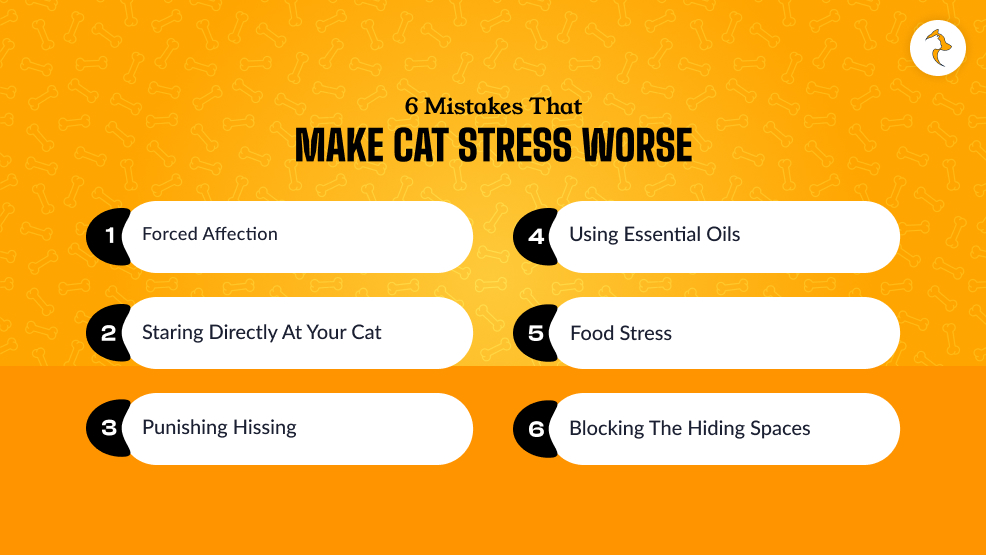
Cat owners often make some of the most bizarre mistakes when dealing with stressed cats. Here are the main mistakes you should definitely avoid when dealing with your stressed felines.
1. Forced Affection
The cat parents often try to cuddle or coercively try to touch their cats. Even though you consider touching to be a sign of affection. Your cat actually does not really believe it to be affectionate at all. For the cat, the touch might seem to be irritating at the moment.
2. Staring Directly At Your Cat
The felines generally tend to stare at each other when there is a confrontation. Thus, a stare can simply refer to an expression of agitation and a call for a tussle. Your cat can thus consider you to be an immensely large threat.
Cats do not typically communicate with vocalization. Thus, a glare or a frown can be ways to communicate subtle tension. Moreover, in this situation, if you try to pet your feline friend while staring at it, they can become even more stressed.
3. Punishing Hissing
Punishing for hissing. Cats typically express fear and anxiety by hissing. Thus, further punishment for making a hissing noise can often overwhelm the feline with more stress and anxiety.
4. Using Essential oils
The cat’s parents often rely on non-scientific home remedies. These unscientific remedies usually use several essential oils harmful to cats, including Ylang-ylang, Sweet Birch, Citrus (d-limonene), Wintergreen, Pine, Peppermint, Cinnamon, Pennyroyal, Clove, Tea Tree (Melaleuca), Eucalyptus, Thyme, Oregano, and Lavender.
5. Food Stress
A sudden change in the diet can be a major stress factor for cats. Moreover, the cats have comfort diets. Touching the bowl while the cat eats can trigger it in multiple ways.
6. Blocking The Hiding Spaces
The cats often tend to hide when they are anxious or scared. Thus, they tend to hide in their comfortable spaces. People should avoid blocking their comfort zones. You may not want it to hide, but you will have to understand that hiding provides it with the comfort that it needs.
Signs That Show Confirm That Your Cat Needs To Go To The Vet
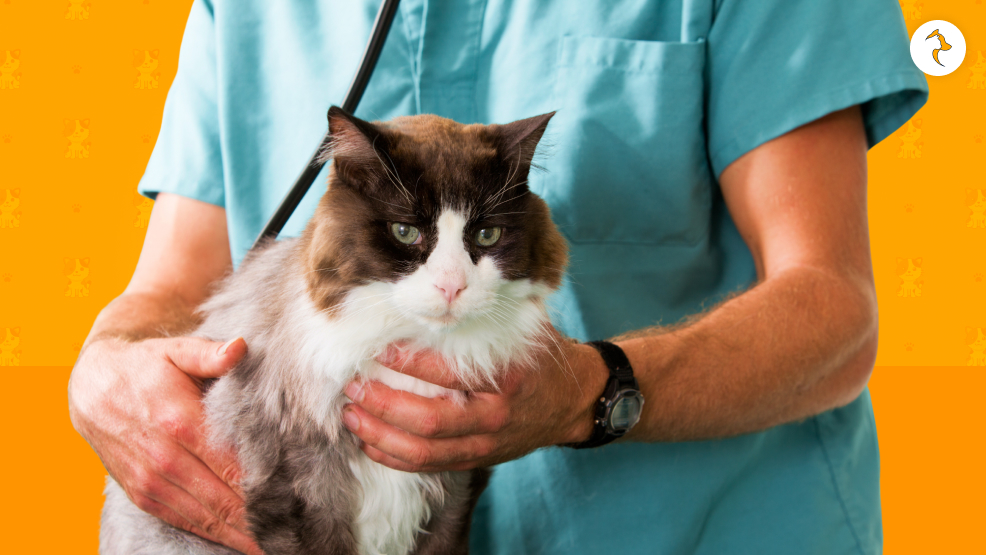
Do not experiment with any remedies if you find that your cat has stopped eating. See if your cat has stopped eating for more than 24 hours. When your cat stops eating for more than 24 hours, this means there is something seriously wrong with your cat. Rush to the vet immediately to prevent any severe issues.
Hiding is a natural feline behavior. However, this should not be continuous. Consistent hiding can imply serious stress in felines.
Furthermore, when the cat starts breathing through its mouth, this can be a sign of breathlessness or any respiratory issues in the feline. Thus, the cat’s parents should simply take it to the veterinary clinic.
The cats often show signs of severe aggression. Normal aggression based on its mood is fine. However, serious aggression can indicate health issues in the cat.
Bloody urine is one of the most serious situations. Can red urine imply a plethora of things, including bladder/kidney stones? Feline Lower Urinary Tract Disease. And some of the most reliable options
Rapid weight loss is also a major issue in cats. Thus, it becomes important to meet the nutritionist as soon as possible.
Things To Remember While Dealing With A Cat Who Is Stressed
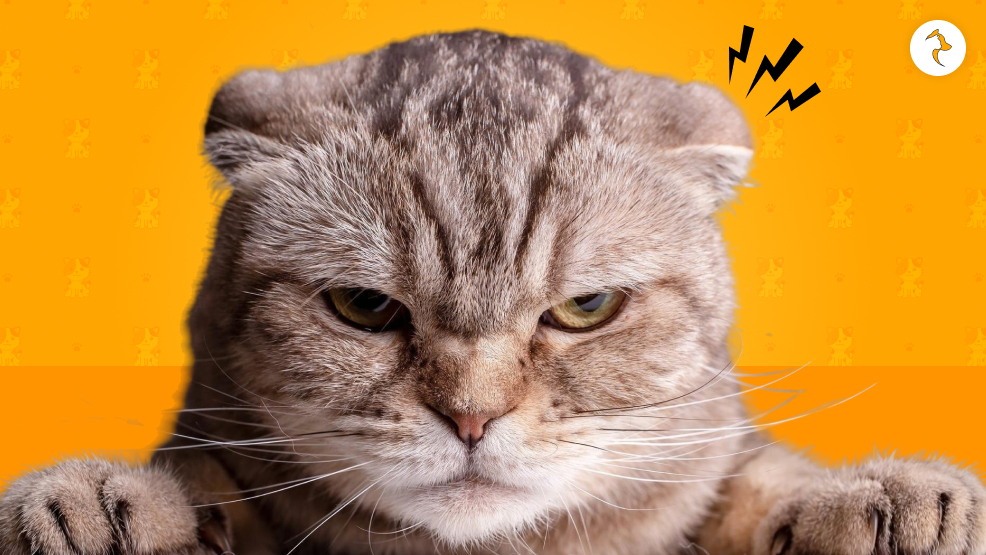
Emotional reassurance can be helpful in such situations. Never interpret stressed behavior as being naughty. Sher Khan is now 2 years old.
Sher Khan and I have been through several ups and downs. However, I have always tried to understand my cat’s emotional needs and requirements. Cats have personalities, and stress remains a very common factor in their lives. Thus, people should not be scared when they find stressed cat symptoms in their feline companions.
Understanding the proper reason and acting on it promptly should help the cats cope with the distress.
I always encouraged Sher Khan with small, positive changes. I was consistent with my efforts. Moreover, cats can not get rid of stress overnight. The calm presence of the cat parents really matters to them.
Frequently Asked Questions (FAQs)
Here are the answers to some of the most commonly asked questions about stressed cat symptoms.
The cat parents should look out for diverse types of stressed cat symptoms. Moreover, these symptoms include things like hiding, urinating outside the litter box, and excessive grooming on specific spots.
The stress mostly depends on the cause of the issue. The milder issues can be resolved within days. However, stress related to severe reasons can last more than a month.
Stress related to a changed habitat and other problems can definitely create stress. Moreover, these stress factors can mess with the dietary schedules and other things of the cat and can cause severe long-term problems.
Share








Leave A Comment