
Rabbit Proofing Your Home: A Room-By-Room Guide For Renters


The teeth of rabbits always grow. I mean, it never stops growing. So, naturally, we need to chew all the time. Therefore, they may chew wires, furniture, walls, and other household items.
However, the security deposits and the rabbits should be protected by the rentals very carefully at the same time.
Thus, rabbit-proofing a home is a thing that needs to be safe, removable, and without damage to the house, which is rented.
Protect wooden furniture and wires from chewing, and also block the corners. And the small objects that a rabbit might swallow need to be removed from the house.
Then, make a space for the rabbits where they can move freely and safely. Meanwhile, use maths or covers to protect the floors without causing permanent damage.
Finally, this well-planned setup will keep all the rabbits safe as well as your home protected so that you can carry on enjoying a happy, worry-free, roam-free environment.
The “Big Three” Hazards (And How to Fix Them)
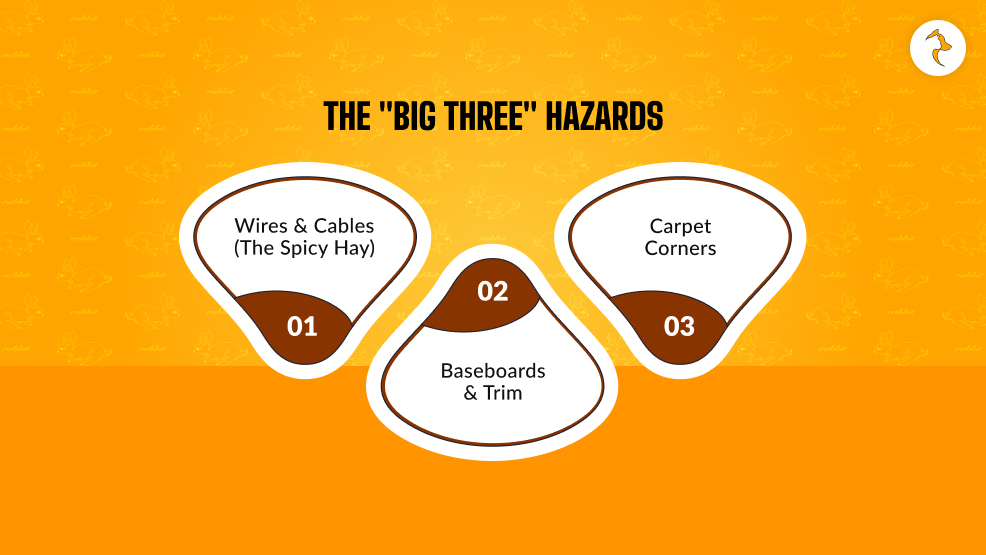
There are three main hazards that can be easily fixed by rabbit-proofing the home. Hence, here are the three main hazards.
1. Wires & Cables (The Spicy Hay)
Rabbits chew wires because the wires feel like natural roots to them. Therefore, the cables that are exposed are very dangerous for them.
So, using split loom tubing to cover wires for better protection is a correct approach. Alternatively, thick PVC pipes can also keep cables safe.
2. Baseboards & Trim
Rabbits chew baseboards easily, risking damage. Use clear corner guards or C&C grids for safe, removable protection.
Your bunny would not munch on it. Hence, this will enhance the safety of your house.
3. Carpet Corners
Rabbits often corner the carpets for their natural instinct, which is burrowing. To make it stop, the ceramic bowls and plastic mats can be placed in corners.
This prevents damage at the same time, keeping your rabbit safe as well as your carpets.
The Toolkit: What to Buy Before You Start
Before you start rabbit-proofing, gather key tools: cable ties, ½-inch split loom tubing, Command hooks, and C&C grids. The Bitter Apple spray can be used to deter chewing.
These items help you to protect your home more easily and also make it safe for your rabbit.
Room-by-Room Proofing Guide
While rabbit-proofing your home, you should not forget that every room has its own needs and requirements.
1. The Living Room (Wire Central)
The living room is the central home for the wires. So block cables behind TV consoles in this room.
After that, cover the undercut caps to make the rabbit stop chewing the inner linings of that.
2. The Bedroom (The Dust Bunny Zone)
The bedroom is a “dust bunny zone.” So you need to protect underweight areas with boxes like storage boxes, for barriers.
Afterwards, switch the phone charger to braided cables, which are very tough for a rabbit to chew. It will help you to protect your belongings and, at the same time, keep your rabbit safe.
3. The Kitchen & Bathroom
In the kitchen and bathroom area, block all the spaces behind the fridge to keep the rabbit from being stuck.
Additionally, cover the cabinet and corners to prevent sewing so that both your pondicher and rabbit get protection.
Hence, the barriers are just the safe option that ensures the safety of both the home and the rabbit, to keep the environment rabbit-friendly and at the same time your home damage-free.
Protecting Your Furniture (Legs & Upholstery)
The rabbits have the habit of nibbling on wooden furniture. Moreover, they can nibble on the legs of wooden furniture and other objects.
1. Table Legs
To protect table legs, cover them with sisal rope, like cat scratching posts. This is a stylish combination. Hence, at the same time, it prevents rabbits from chewing and damaging the woods.
2. The “Dig Box” Distraction
Rabbits need an outlet for chewing; otherwise, they might destroy your entire home. Therefore, you gotta create a cardboard dig box with some safe materials in it.
Add shredded paper, hay, or small toys to keep them entertained. You need to place that box in a corner of the home so that they can frequently encourage healthy digging habits.
This would help to protect your furniture and also satisfy your rabbits with one of their natural instincts.
Breed-Specific Destructive Habits

Different breeds generally have very different destructive habits. In the chart below, we have mentioned the main destructive habits of different rabbit breeds.
| Breed Category | The Destructive “Superpower” | Specific Proofing Gear Needed |
|---|---|---|
| Giants (Flemish/Continental) | Height & Weight. They can stand on their hind legs to reach coffee tables/desks. They can also knock over light barriers. | Gear: Weighted baby gates (pressure-mounted). Clear off all low tables. |
| Dwarfs (Netherlands/Polish) | Squeezing. They can fit into 1-inch gaps behind bookshelves or recliners (crush hazard). | Gear: Solid wood planks or tightly packed books to block gaps. No wire gaps larger than 1 inch. |
| Rex & Satins | Carpet Digging. They are high-energy burrowers and will strip carpet to the subfloor in seconds. | Gear: Low-pile area rugs (jute/sisal) to cover rental carpets. Plastic chair mats in corners. |
| Lops (Holland/Mini) | Baseboard Chewing. Lops are notorious “woodworkers” and will gnaw trim while bored. | Gear: Clear plastic corner guards (with adhesive backing) or lining the room with ceramic tiles. |
Damage Control: What to Do If They Chew?

You have already learned about how to prevent damage. However, it is important to understand how to fix things once your bunny has already caused damage.
1. Fixing Chewed Wood (The Walnut/Wood Filler trick).
If rabbits chew wood, don’t panic. You can repair small damages by using walnut pieces or wood filler easily.
Walnuts help blind scratches naturally, and at the same time, fillers fill deeper gouges effectively.
After applying this, put some sand lightly and let them finish to match the original wood. This method helps to restore furniture and keep your home neat, clean, and damage-free.
2. Patching Carpet (Trimming Loose Threads To Prevent Unraveling).
If the rabbits pull carpet threads, trim loose ends immediately to prevent further unraveling. Additionally, you can use carpet patches or double-sided tape for small damaged areas.
This helps to keep your carpet safe and decrease the risk of bigger damage over time.
FAQs (Frequently Asked Questions)
Here are the answers to some of the most commonly asked questions about rabbit-proofing a home.
Answer: 50/50. There are some rabbits who hate it, and there are some who actually like the taste. Don’t think that it is the only thing to defend.
Answer: Yes. One chomp is all it takes. It is an electrocution risk. Always cover exposed wires immediately.
Answer: Use “C&C Grids” zip-tied together, or else you can use under-bladed plastic storage bags to make a wall.
Answer: Get a heavy ceramic bowl or tile box and place it directly over the spot. Redirect their digging behavior with a dedicated dig box.
Answer: Not really. It starts slowing down, but the instinct to chew the wood always stays with them, and it never goes away.
Answer: A normal medium-sized rabbit can reach approximately 2–3 feet when they stand. Keep important items above this height.
Answer: Spider plants and Boston Ferns are usually safe options for them. But the lilies and Ivy can be toxic.
Answer: Eventually, yes. But it buys you time to prevent them before they chew the wire. Inspect tubing regularly for bite marks.
Share









Leave A Comment