
Dog Pooping Blood: Understanding The Causes, Prevention And Treatment


Dog pooping blood with a jelly-like texture indicates a serious health concern.
Even if it’s a common health issue, it means that there is serious inflammation in the gastrointestinal system of your dog.
So, it needs immediate medical attention and diagnosis, as different colors of blood in a dog’s poop indicate different parts of the gastrointestinal system getting affected.
Now, while there is no alternative to rushing to a vet in cases of your dog pooping blood, as a pet parent, you must also be aware of the usual causes, prevention, and treatment.
Why Is My Dog Pooping Blood? Red Poop Does Not Always Mean Blood
The color of your dog’s poop says a lot about their gastrointestinal health.
However, while a dog pooping blood is scary, it is not always blood that makes the poop red.
Certain medicines, such as amoxicillin, can alter gut flora, and Pepto-Bismol, due to the presence of bismuth subsalicylate, can make a dog’s poop red.
Furthermore, if you have given them a red-dyed treat or beetroot, the poop will be red.
Or, simply, the pup may have chewed and eaten a red crayon.
Now, even in these benign conditions, you need to consult a vet. As pet parents, it is not always possible for us to determine the cause when the dog’s poop is red.
Why Is My Dog Pooping Blood? Is It Hematochezia Or Melena?
As I just mentioned, the color of blood in your dog’s poop is important to detect the reason.
For example, two different conditions can happen when a dog is pooping blood.
One condition is called hematochezia, in which you will notice bright red blood in the stool of your dog. Hematochezia indicates bleeding in the colon or the lower digestive tract.
On the other hand, melena is the condition in which the stool is tarry or black. Melena is the result of bleeding in the upper intestinal tract or stomach.
In this, the blood is black or looks like coffee grounds because the dog has partially digested the blood.
What Are The Reasons Of A Dog Pooping Blood?
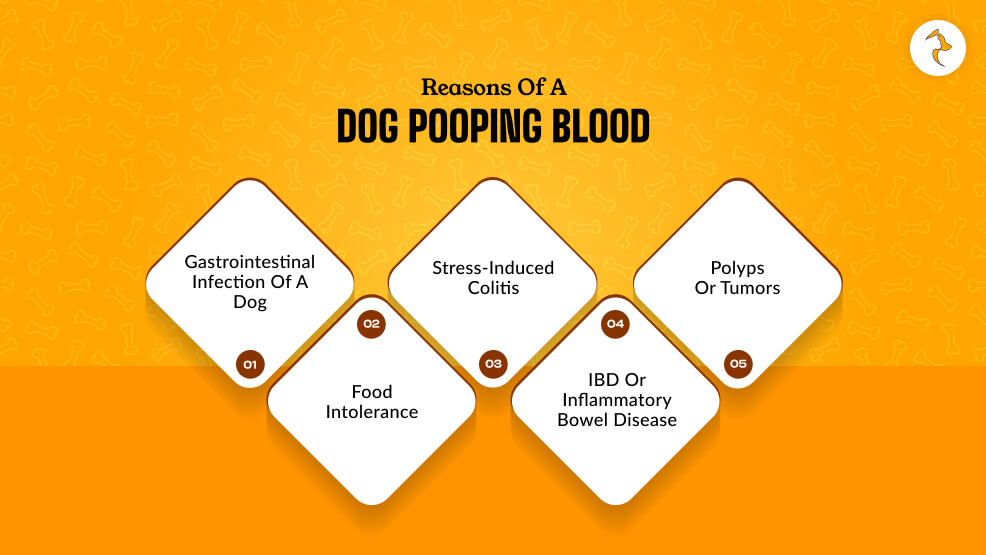
Irrespective of the diagnosis of hematochezia or melena, there are some common reasons behind a dog pooping blood.
There can be parasitic infections where, along with blood, you can also see worms in your dog’s poop.
Again, it can be due to food intolerance or even the presence of a polyp or tumor. Let’s delve into the possible causes.
1. Gastrointestinal Infection Of A Dog
There can be irritation or damage in the intestinal lining of your dog due to bacterial, parasitic, or viral infections.
As a result, there can be inflammation or bleeding in your dog’s poop. Your dog will also suffer from diarrhea, abdominal pain, or vomiting when there is a gastrointestinal infection.
Types Of Gastrointestinal Infection In A Dog
Whipworms, roundworms, or hookworms are common parasites that irritate the intestinal lining of a dog and cause bloody stools.
On the other hand, parvovirus infection can happen in puppies and adult dogs. The result is serious bloody diarrhea. This is a highly contagious and fatal infection.
Moreover, Campylobacter, E. coli, and Salmonella are bacteria that affect the gastrointestinal health of a dog and cause bloody stools.
2. Food Intolerance
You leave a pup for a while, and they will know the world by chewing everything.
If they eat spoiled food, any foreign object, or food items they are allergic/intolerant of, there can be severe inflammation and a bloody stool.
In dietary indiscretion, the most common symptoms will be bloating, vomiting, or diarrhea. They can also suffer from abdominal pain.
3. Stress-Induced Colitis
If your dog is anxious for some reason, it can be anything, from loud music to a change in the routine; there will be inflammation in their colon.
This is called stress-induced colitis, and this results in your dog pooping blood.
Your dog can be anxious or stressed if there is a change of home or sudden loud noises due to firecrackers and thunderstorms.
Moreover, separation anxiety is a big issue for dogs. So, leaving a dog alone for a long period can also impact their gastrointestinal health and cause bloody pooping.
And when separation anxiety is the reason, you will notice the velcro dog behavior, in which a dog acts very clingy.
Here, you have to also note that many sedative medicines used to treat anxiety in dogs can also hurt the gastrointestinal system.
For example, Xanax for dogs can cause allergic reactions and thus can aggravate the condition.
So, even if you think that anxiety or stress is the reason behind the bloody poop of your dog, do not administer any medicine without consulting the vet.
4. IBD Or Inflammatory Bowel Disease
IBD is a chronic condition and an “abnormal immune response,” and diet or genetics can be the reason behind it.
Now, if a dog has IBD, they will suffer from vomiting, bloody pooping, or diarrhea intermittently.
A hypoallergenic diet can help alleviate the discomfort or reduce the frequency of diarrhea.
Boiled potatoes, boiled chicken, and pumpkin puree are also good foods for a dog suffering from diarrhea or IBD.
Moreover, a dog suffering from IBD needs immunosuppressants, anti-inflammatory medicines, and regular vet care to keep the flare-ups minimal and maintain their quality of life.
5. Polyps Or Tumors
Tumors or polyps in the rectum, colon, or anywhere in the gastrointestinal tract can cause a dog pooping blood.
Don’t panic, as a tumor or polyp is not always malignant.
Now, when a dog has a polyp or tumor in the gastrointestinal tract, they will not respond to treatments for diarrhea.
Also, there will be a significant loss of appetite and unexplained weight loss.
How Is A Dog Pooping Blood Diagnosed?
As you take your dog to a vet, they will conduct a diagnosis. There will be blood tests, fecal examination, and radiographs or endoscopy.
| Types of Diagnostic Tests | What It Detects |
| Blood Sugar, Liver Function, and Other Biochemical Tests | Electrolyte Balance Hydration Status A Rapid Overview of the Internal Organs |
| Packed Cell Volume (Hematocrit) | Hemorrhagic Gastroenteritis |
| Radiograph or Endoscopy | Physical Obstructions Tumors Ulcers Intestinal Blockages |
| Fecal Exam | The Presence of Bacteria, Virus, or Parasites in the Stool |
What Are The Treatments For A Dog Pooping Blood?
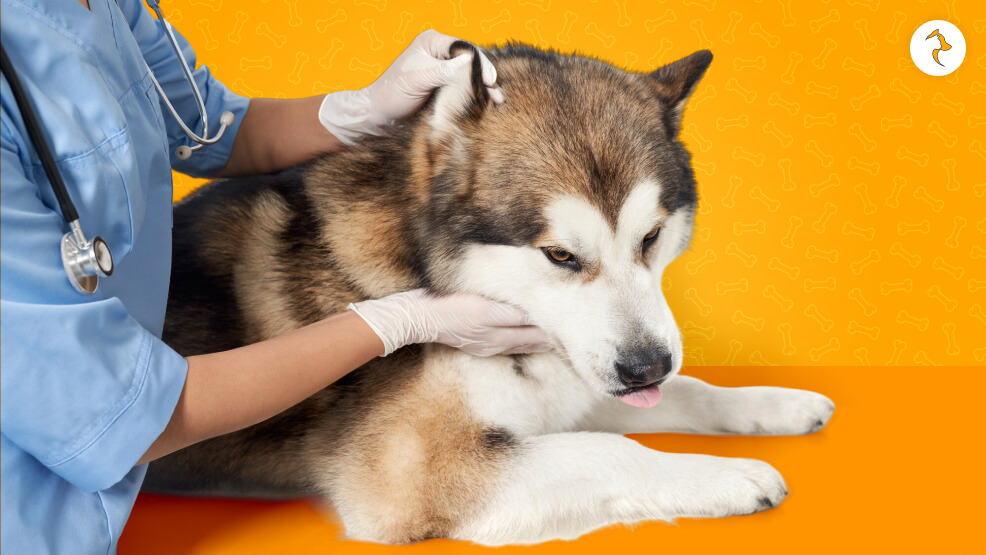
A vet prescribes medicines to alleviate the discomfort and inflammation in the intestine.
Furthermore, the dog will have to take Anthelmintics for parasitic infections and antibiotics for infections caused by microbial organisms.
Also, if the dog has hemorrhagic gastroenteritis, they will need electrolyte and fluid therapies.
In addition, if physical obstructions, tumors, or polyps are the reason behind your dog pooping blood, it will need surgical interventions.
How To Prevent Bloody Stools In Dogs?
Preventive measures can really help to stop the recurrence of bloody poops in dogs.
These are especially beneficial when infections, dietary indiscretion, allergies, or IBDs are the reasons behind a dog pooping blood.
Maintaining a clean home for a dog and following a vet-approved diet are the very basic preventive activities a pet parent can follow.
Also, keep in mind that your dog will be okay even if there is blood in their poop. In most cases, a modified diet solves the gastrointestinal problems behind a dog pooping blood.
Share








Leave A Comment