
Average Cat Heart Rate: What Are The Factors Affecting It?

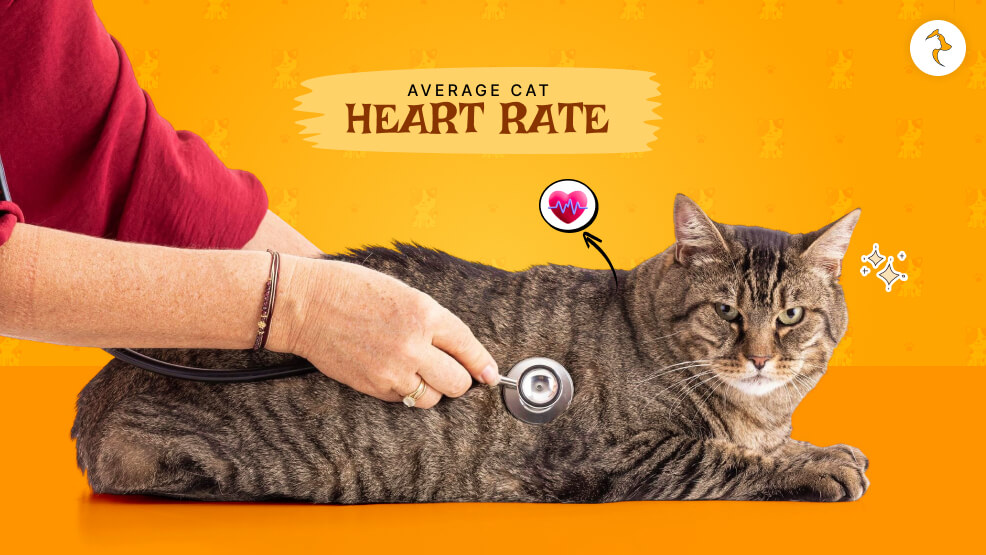
As a pet parent, it is natural that you will want your pet to be happy and healthy. However, it can be difficult to understand what they are going through if you are not attentive.
At times, when we are in distress, our heart rate increases. It can be the same for cats. Have you ever wondered what the average cat heart rate is?
You must be aware of this. An abnormal cat heart rate might be an indication of an underlying health issue. Moreover, it also indicates their current state of mind.
When they are anxious, stressed, or have recently engaged in some kind of physical activity, their heart rate might increase.
What Is The Average Cat Heart Rate?
The average cat heart rate varies, but generally ranges from 140 to 220 beats per minute. However, when they are relaxed, their heartbeats will be in the lower range.
When they are playing or stressed for some reason, their heart beat will increase naturally, and can even go beyond the natural range. Also, note that the heart rate of a kitten will be higher than that of an adult cat. Their heart beats at almost 300 beats per minute.
Adult Feline Heart Rate Chart
To have a clear picture of the normal heart rate of a cat, here is a chart defining the highs and lows.
| Extremely low (dangerous) | Below 100 bpm |
| Low | 100-140 bpm |
| Normal | 140-220 bpm |
| High | More than 220 bpm |
What Is The Resting Heart Rate Of A Cat?
The resting heart rate of a cat ranges from 140 to 200 bpm. The base heart rate of a cat is quite low when they are resting, as their body has fewer demands.
But when they are active and stressed, their heart rate will automatically increase. During this stage, it allows more blood to distribute around the entire body. Moreover, it supplies muscles with oxygen and energy, and removes waste, including carbon dioxide, from their cells.
But if the cat is suffering from some kind of disease, like any heart condition, their heart might beat a lot faster or slower than usual.
What Are The Factors Affecting Your Cat’s Heart Rate?
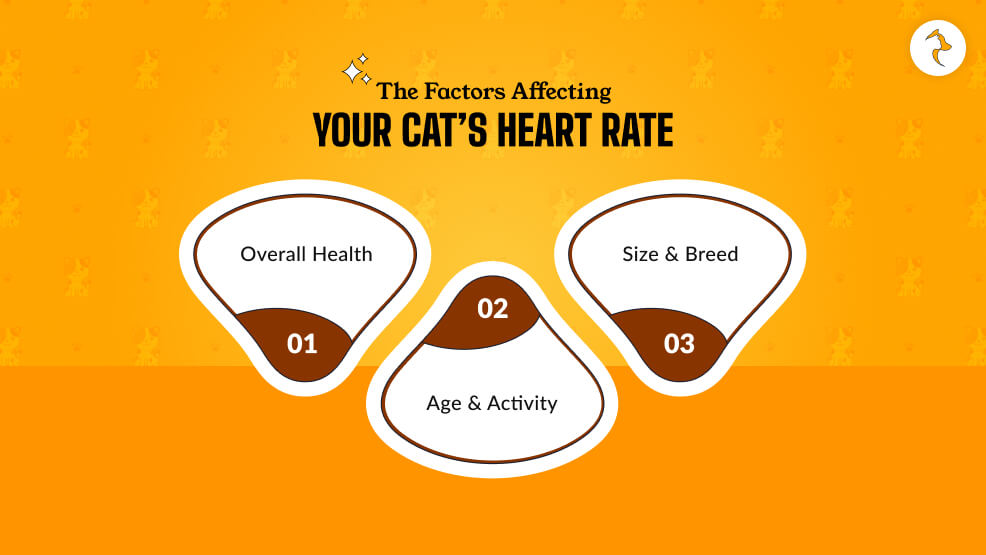
Various factors affect a cat’s heart rate. When you understand these, you will be able to interpret the numbers better, and you will know when it is time to consult a vet.
- Overall health: Stress, pain, illness, and other environmental factors can affect the heart rate.
- Age & activity: Younger cats and kittens often have higher heart rates. The same is applicable to cats when they are in a state of stress or excitement.
- Size & breed: Smaller cats and some specific cat breeds can naturally have faster heart rates, like the Maine Coon and Ragdoll.
How To Check Their Heart Rate?
Keeping a check on the heartbeat of your cat is one of the best ways to keep track of their health. You need to regularly monitor it along with some other signs. This will help your vet determine any health issues.
During times of emergency, it will help the veterinarian to assess the situation better. But, how will you check their heart rate? Here are some of the steps that you need to follow:
- Position them to their right side.
- Place your hand on their chest between their two front legs and then feel their heart beating.
- Count the number of beats you hear for 15 seconds. Then multiply the number by four to get the approximate heart rate. If your cat stays calm, you can count the beats for a whole minute to record the beats per minute.
You have to be gentle so as not to stress them out. If you stress them out, they will get anxious, and their heart rate will increase. You have to make sure that they stay calm during the entire process.
If you see that their heart rate is going higher or lower than usual, take them for a check-up. It might not be anything serious, but it is always recommended to get them checked if anything feels wrong.
Moreover, to keep track of their vitals, consider using a reliable pet camera. This way, you will be able to track their health 24/7, even if you are not home. You will be able to detect any signs and symptoms that may indicate they are not okay.
When Should You Take Them To A Vet?

Remember that a cat’s heart rate can change, and it changes depending on various factors. So, the normal heart rate varies from cat to cat, and you cannot compare them.
But, if your cat has a heart rate of 140 bpm at rest in general, but lately it is around 220 bpm, then you should consult a vet immediately, even though it is within the normal range.
Whenever in doubt, you should consult your veterinarian. They will check them out and decide whether things are normal for them. They will let you know if there is something unusual and if there is any need for treatment.
Here are some of the instances when you should immediately consult a doctor:
- If their heartbeat is consistently higher or lower than what they normally have, take them to a vet immediately.
- Also, if there are other symptoms like disorientation, crying in pain, or vomiting, then you need to book a visit immediately.
- If they are lethargic, have a decreased appetite, or show unusual behavior.
- If they are having difficulty breathing or fainting, take them to a vet immediately.
It is not normal for a cat to have a low heart rate. If their heart rate goes below 100 bpm, they might lose consciousness. This is an emergency situation, and you will need to take them to a vet immediately.
Why Is It Important To Monitor Their Heart Rate?
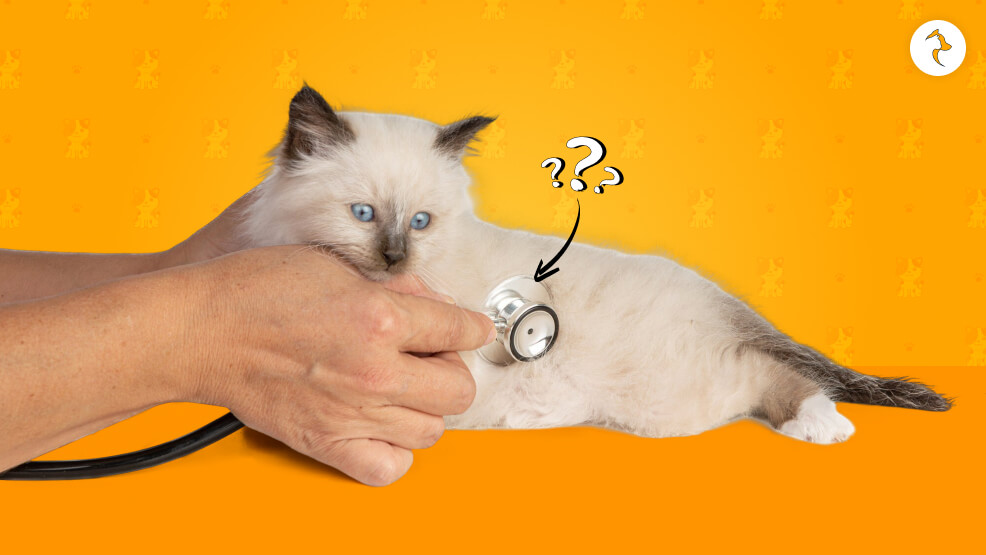
Now that you have an idea of the average cat heart rate and how to monitor it, you should also know the importance of monitoring. A heart rate that is too slow or too fast, or irregular, can be a sign of an underlying serious condition.
This will help you get them proper veterinary care in time, and prevent the condition from turning into something serious. Or even if it is serious, you will be able to help them in time.
Frequently Asked Questions
Here are some of the common questions people ask while discussing the average heart rate of a cat.
The normal heart rate of a senior cat ranges from 140 to 220 beats per minute. However, there are some sources that suggest that it is slightly lower, and ranges from 160 to 200 bpm.
A heart often beats abnormally and erratically in its last moments. This condition is known as an agonal rhythm. But the moment the heart starts to fail, it will stop beating altogether.
The average cat heart rate for an adult cat is 120 to 160 bpm when they are sleeping. However, some cats might have an even lower heartbeat, around 110 bpm, when they are in deep sleep.
Regardless of sex, the average heart rate of a female cat ranges between 140 and 220 beats per minute (bpm). However, there are different factors like stress, pain, and medical conditions that can affect their heart rate.
If your cat is resting, then 120 is not a normal heart rate. It should range from 160 to 220 bpm or 120 to 140 when they are sleeping.
Share








Leave A Comment