
Is Lavender Safe For Cats? What Are The Risks Associated?

If you want your house to have a positive, calming vibe, consider using lavender in various forms. However, you have to think it through if you have a feline friend at home.
Is lavender safe for cats? Well, no, and there are also potential risks. Although you may appreciate the pleasant smell, it is toxic to cats.
Moreover, you might be using a plant-based air freshener that contains lavender essential oil. But, is lavender oil diffuser safe for cats? Let’s find out.
Is Lavender Safe For Cats?
According to the ASPCA or American Society for the Prevention of Cruelty to Animals, lavender plants are toxic to cats when ingested. There are two natural substances, linalyl acetate and linalool, which cats cannot digest.
These can cause diarrhea and other gastrointestinal problems, and if ingested in significant quantities, they can cause serious issues. Although lavender essential oils are beneficial for humans due to their calming effects, they can be harmful to cats.
Cats are more susceptible to essential oils due to their small size and unique metabolism. This means that even a small amount of lavender or lavender essential oil can be toxic to them.
Lavender In Different Forms

Ingesting even a small amount of lavender can cause a cat to become ill. Moreover, if it comes into direct contact with their skin, it can irritate. Inhaling lavender oil can cause respiratory issues. Let’s check how lavender in different forms can affect them.
1. Lavender Plant
If cats ingest the lavender plant by mistake, it can be harmful to them, but the condition is manageable with immediate medical attention. However, if they ingest it in a significant amount, their condition can be serious.
Brushing up against a lavender plant does not cause any harm, but cats are curious creatures. They will soon nibble on them, and then it will make them ill. If you like lavender and want to keep it in your house, keep it where your cat won’t be able to reach.
2. Dried Lavender
Similar to the plant, dried lavender can cause mild irritation to the gastrointestinal tract if consumed in small amounts.
But it is toxic to cats and can cause serious problems when ingested in significant quantities. Keep these out of their reach. Moreover, keep any fragrance sachets away from them as well.
Additionally, some companies use cat toys infused with dried lavender, and there is no evidence that these toys are harmful. However, if they break it open and eat it, it can upset their GI tract.
3. Essential Oils
Lavender essential oils are also toxic to animals, whether applied on their skin, ingested, or just inhaled. It is a concentrated plant extract that is often used in diffusers to create a pleasant environment.
Essential oil is also used in soaps, perfumes, candles, and other personal care products. It is highly concentrated and is the most hazardous form of lavender to use around cats.
Moreover, if your cat has asthma, it can cause them respiratory issues when inhaled.
Additionally, there is no evidence to suggest that lavender has the same calming effects on cats as it does on humans. If necessary, alternative options are available.
Note: The ASPCA is strictly against using all kinds of essential oils, including lavender. It can be harmful to them when inhaled, ingested, or applied externally. It can cause them liver failure, gastrointestinal issues, seizures, and even death.
4. Lavender Soaps & Lotions
Lavender is also used in different lotions and soaps, and is less toxic to cats. However, it can have other products that can pose a threat to them.
Moreover, you should never use any human products on cats without consulting a vet. You should always use products that are vet-approved.
Symptoms Of Lavender Toxicity In Cats
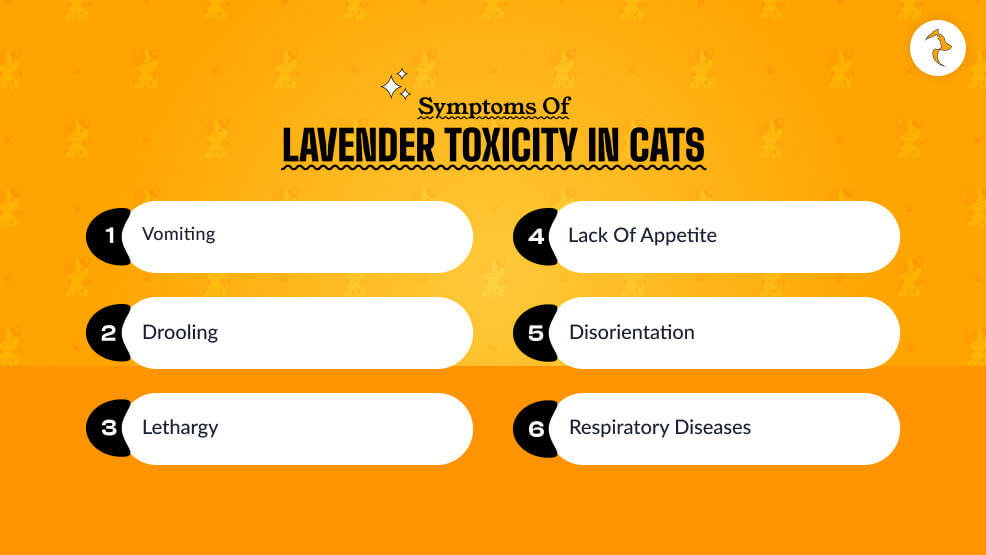
If your cat has ingested lavender or is exposed to it in any way, then you might notice a few of these symptoms. Here are the symptoms mentioned.
- Vomiting: This is one of the immediate signs. If they have ingested lavender, they might start vomiting as their body will try to throw out the toxins.
- Drooling: Cat drooling is another common response to ingesting anything toxic.
- Lethargy: If there are toxins in their body, they will become lethargic and inactive
- Lack of appetite: They might not show interest in food because of lavender poisoning.
- Disorientation: Cats often appear uncoordinated and struggle to move with normal coordination.
- Respiratory diseases: In some severe cases, individuals find it difficult to breathe, which is particularly common in cases involving concentrated essential oils.
What To Do If Your Cat Has Been Exposed?
If you are sure that your cat has been exposed to lavender plants or lavender essential oils and is showing signs and symptoms of poisoning, then take them to a vet immediately.
It is essential to act promptly, as it can prevent issues from escalating. After checking them out, and depending on the severity of the poisoning, I will recommend the treatment.
They often try induced vomiting, use activated charcoal to absorb the toxins, and provide intravenous medicines and fluids along with supportive care.
Moreover, if they are exposed to essential oils and somehow it has been applied to their fur and skin, wash it off immediately with soap and water.
How To Keep Them Away From Lavender?

If you use lavender-scented air fresheners and candles at home, try these methods to keep them safe and out of reach.
- Avoid keeping it in their favorite areas or around their food, litter box, and water bowls.
- Is burning a lavender candle safe for cats? Is lavender incense safe for cats? If you absolutely must, burn them in a larger room so that the oil has space to move.
- You can use mountable air freshener pods. This way, you will be able to enjoy it, but it will reduce the exposure to cats.
- If you have sprayed lavender in a room, keep your cat out of that room for a short time.
- Moreover, if you enjoy aromatherapy, consider exploring other methods.
Safer Alternatives to Lavender
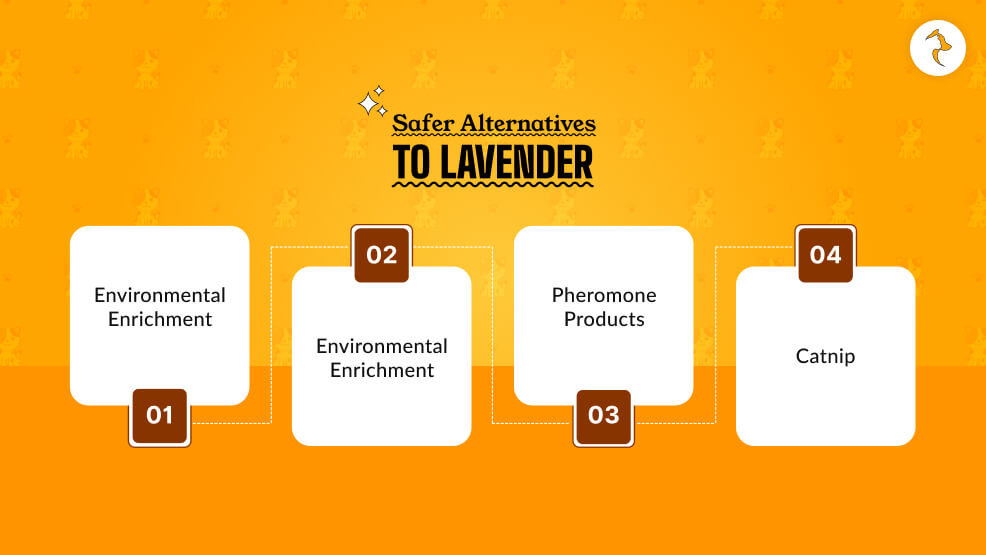
Is lavender safe for cats? Well, no. You have the answer now. However, you can try some of the alternatives.
1. Environmental enrichment
You can use high perches and scratching posts, and provide them with sufficient playtime and exercise so they can act on their instincts and reduce stress, potentially eliminating the need for aromatherapy.
2. Calming supplements
These supplements are specifically formulated for cats and should be used under the guidance of a veterinarian. These products are cat-safe and promote relaxation.
3. Pheromone products
These products help reduce stress and even manage unwanted behavior. These products are available in various forms, including sprays, diffusers, and collars.
4. Catnip
This is also known to reduce stress in cats. They enjoy the scent of it and experience euphoric effects, followed by a satisfying nap.
Frequently Asked Questions
When discussing whether lavender is safe for cats, here are some common questions people ask.
Yes, cats can be allergic to lavender, and it is toxic to them. Especially, lavender essential oil contains linalyl acetate and linalool, which they cannot metabolize, causing the toxicity.
If you are using a lavender oil diffuser, use it in well-ventilated areas and keep it out of their reach. If it is bothering them, remove them from the room.
The smell of lavender can also cause them respiratory issues. This can be serious if it is in the form of essential oils. They might be drawn to the smell of it, but it can cause various health concerns and is not safe for them.
It is not safe to use lavender-scented cat litter as it can cause them health issues. The scent can irritate their respiratory system, causing symptoms such as sneezing, coughing, and asthma.
No, it is best to avoid lavender-scented wipes for your cat. The components are toxic to cats and can cause skin irritation. Use unscented wipes or wipes that are specifically formulated for cats.
Keep Them Safe
If you suspect that your cat is stressed, do not rely solely on lavender essential oil, as it is often found to be beneficial for humans. Is lavender safe for cats? Now that you know it is toxic to them, you must try something else.
It is best to consult your veterinarian for other safe options. If they suffer from severe anxiety, it might benefit them from prescription medicines and other behavioral modifications, which will reduce stress.
Share







Leave A Comment