
What To Do If There Are Worms In Dog Poop? Diagnosis, Prevention And Cure

Picking up after our pets is something that we almost do every day as parents. It is an important exercise for us to keep a check on their health.
However, picking up is also important for the well-being of your community and environmental benefits.
If there are worms in dog poop, it just does not indicate health issues of the pet. It also needs immediate cleaning as the worms and other parasites present in your dog’s poop can impact human and pet health.
But that’s a different thing.
As pet parents, it is extremely worrisome for us when we see worms in dog poop. So, in today’s article, I will talk about the causes, types of worms you can see in dog poop, prevention methods, and treatment.
What Are The Reasons Behind Worms In Dog Poop?

Worms in dog poop indicate parasite infection in the intestine of a dog. Furthermore, a dog suffering from an intestinal parasite may also have white splotches in their poop.
Nevertheless, dogs usually have intestinal infections when they eat infected meat or feces. Raw meat or egg is very harmful for dogs, and they need to be cooked properly, as the heat kills the bacteria in them.
Furthermore, a young puppy can have intestinal parasites from their mother. The parasite can enter the pup’s body through the placenta. Also, the transmission can happen when an affected mother nurses her pups.
Moreover, dogs can have hookworms by touching or eating infected feces.
Also, mosquito bites can cause the transfer of these parasites through the bloodstream. These are different from the intestinal parasites, and these are known as heartworms.
Furthermore, these affect the heart and lungs of the dogs massively.
What Are The Types Of Intestinal Parasites In Your Dog?
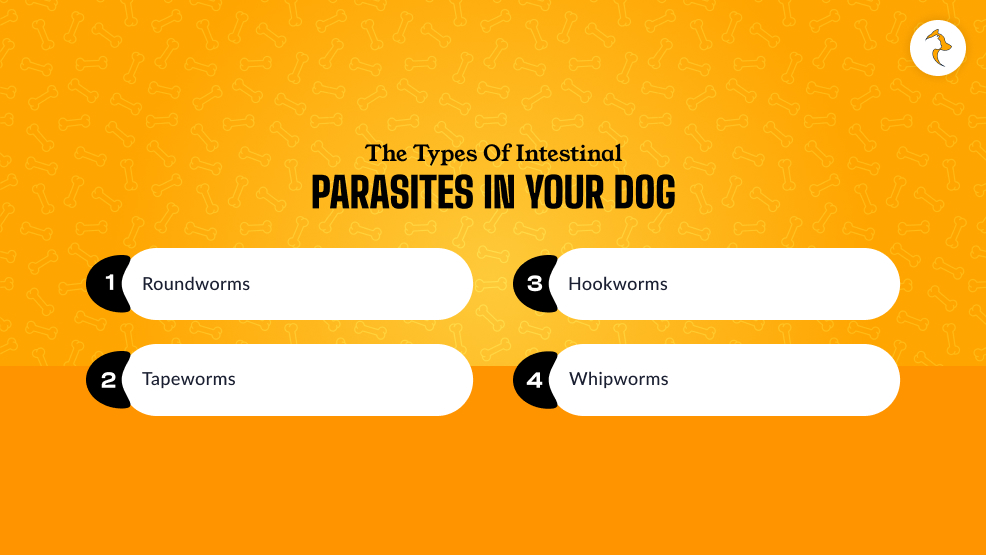
When you notice worms in dog poop, you must take them to a vet immediately. The vet will assess the type of intestinal parasite at first.
Also, as a pet parent, you must also know that the symptoms are different in dogs for each type of parasite infection.
1. Roundworms
Roundworms are the most common worms in dog poop. These worms usually enter the body of a dog through feces infestation or through the placenta of an infested mother.
The common signs of roundworm infestation in a dog are vomiting, diarrhea, and visible worms in dog poop.
Puppies can get severely affected due to roundworm infestation. They can have pot bellies, and their growth is restricted due to roundworm infestation.
Many puppies even die due to roundworm infestation.
2. Tapeworms
If a dog eats raw meat or a flea, there can be tapeworm infestation. Now, detecting a tapeworm infection in a dog can be a little difficult for a first-time pet parent because there are no major symptoms.
However, you will notice small, white speckles, resembling rice grains, in the poop of your dog. These speckles will also be visible around their anus.
3. Hookworms
Hookworms come from soil, and when dogs touch an infested flea. These worms are small and thin.
So, it can be difficult for you to notice hookworms in the dog poop.
However, your dog will show symptoms such as extreme lethargy, weight loss, regular or bloody diarrhea, and tarry/black feces.
4. Whipworms
Whipworms are common in dogs, and they are transmitted through infected feces.
Like the roundworms, the whipworms also affect the puppies most, and the common symptoms are a pot belly, diarrhea, weight loss, and the signs of anemia and dehydration.
How To Prevent Your Dog From Intestinal Infections?
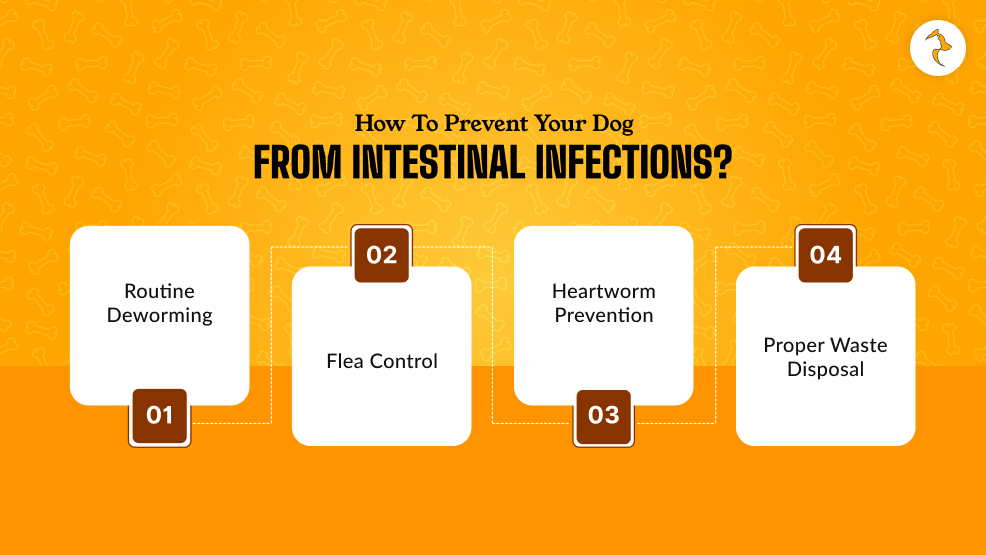
A vet suggests deworming medication when a dog suffers from worm infestation. However, you can take some preventive measures to reduce the frequency or the severity of the worm infestations.
1. Routine Deworming
Every minor or adult dog must have a preventative deworming routine as recommended by the vet.
Deworming treatments usually happen in an interval of 3-6 months for adult dogs and bi-weekly for puppies until they become 12 weeks old.
2. Flea Control
Tapeworms are transmitted through fleas. So, you can use a flea preventative to stop the spread of tapeworms.
Vet-approved spot treatments, regular vacuuming, and using insect growth regulators are the best methods for flea control in pets.
3. Heartworm Prevention
The American Heartworm Society recommends heartworm preventive measures through oral, topical, or injectable medication.
This is a year-round prevention plan, and medicines such as Simparica Trio and Heartgard Plus are useful for this preventive treatment.
4. Proper Waste Disposal
This brings us to how I began this article. You have to pick up the feces or poop of your dog.
If you don’t clean the feces, there will be higher chances of parasite infection.
How Is The Diagnosis Done When There Are Worms In Dog Poop?
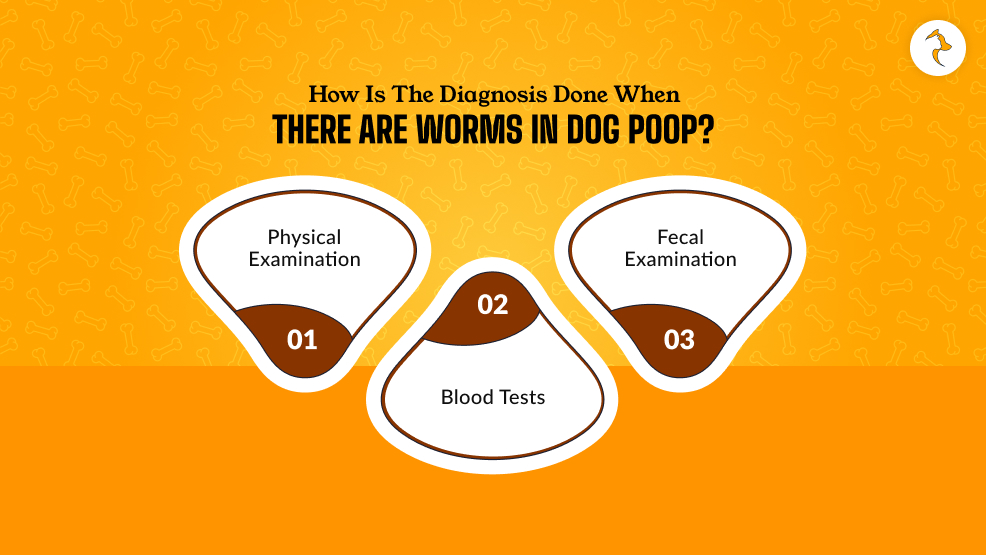
There are various diagnostic methods for parasite infestation in dogs. Fecal examination is the most popular diagnostic method for detecting warm infestation.
Also, the vet will create a fecal examination routine for your dog, and you should follow that.
Here are more details about the diagnostic methods for worm detection in the stools of your dogs.
1. Physical Examination
The vet of your dog will look for signs of malnutrition, dehydration, and anemia in your dog.
Furthermore, the vet will assess the signs of bloating in your dogs to diagnose parasite infection.
2. Blood Tests
Some parasites, such as heartworms, get spread in your body through the bloodstream. That is why blood tests are important for the detection of heartworms in a dog’s body.
3. Fecal Examination
The pathologist will collect the stool of your dog and keep it under the microscope to find signs of eggs and larvae of parasites.
It is also the best method to detect the type of worm infestation in your dog.
What Is The Treatment When There Are Worms In Dog Poop?
Fenbendazole and pyrantel are common deworming medications for dogs. Usually, a vet prescribes two rounds of these deworming medications.
The first round of medication kills the adult worms, and the second round kills the larvae and eggs.
Share








Leave A Comment