
A Complete Care Guide For Rainbow Fish

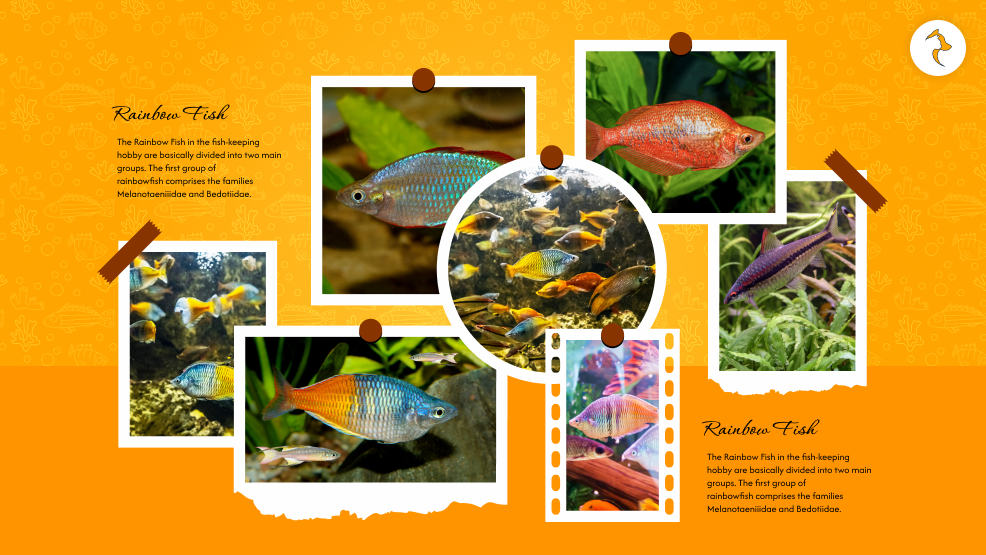
The Rainbow Fish in the fish-keeping hobby are basically divided into two main groups. The first group of rainbowfish comprises the families Melanotaeniiidae and Bedotiidae.
Moreover, this group includes a larger diversity of subgroups, like Melanotaenia, Glossolepis, and Bedotia. The Madagascar Rainbow fish falls within this group of fish.
There are also exceptions like the tiny Threadfin Rainbow Fish. Moreover, you should consider this fish a Pseudomugilid.
Hence, you can also find a second group of Rainbow Fish. This group includes the Families Pseudomugilidae and Telmatherinidae.
The Pseudomugilidae includes more small, docile fish. People often refer to these fish as “Blue Eyes.”
The Telmatherinidae includes only a single species. The hobbyists call this species Marosatherina ladegesi, the Celebes Rainbow Fish.
The rainbow fish gets its name from the incredible color on their body. One can easily identify the fish by its name when they see a fully grown Melanotaeniid.
What Should We Keep In Mind About Rainbow Fish?
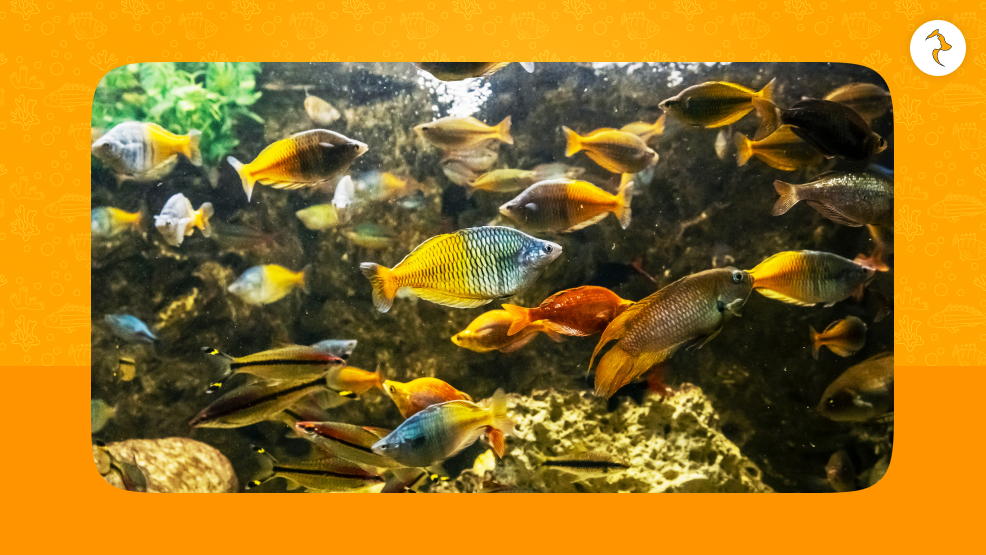
To take care of a Rainbow Fish in the right way, you should keep several things in mind. You should know about their natural habitats, water requirements, and tank setups.
1. What Is The Natural Habitat Of The Rainbow Fish?
Rainbow Fish come from several geographic locations across the globe. Moreover, this includes regions of Indonesia and Papua New Guinea.
These fish reside in various types of water bodies. These water bodies include rivers, streams, lakes, and swamps.
The invasive species and human activities have resulted in habitat loss for the wild Rainbow Fish population. Hence, the breeders produce most of the Rainbow Fish in various farms in Florida and Southeast Asia.
2. What Are The Water Parameters For The Rainbow Fish?
Several Melanotaneans prefer to live in hard and Alkaline waters. However, the captive-bred fish can live comfortably and thrive in a diverse range of environmental conditions.
You should keep the temperature between 74° and 78° F. On the other hand, the pH of the tank should be kept around 7.0 to 8.0. Furthermore, the alkalinity should stay between 5° and 20° dKH (90 ppm to 360 ppm.
The Madagascar Rainbow generally thrives in acidic water. Hence, you should keep the temperature between 74° and 80°F.
You should maintain a pH level of 6.5 to 7.5. The fish prefers an alkalinity range of 55-250 ppm.
Moreover, the requirements of Pseudomuglids are slightly different. The Pseudomijulids thrive at temperatures between 76° and 82° F and at a pH of 6.5 to 7.5.
Moreover, these fish prefer an alkalinity between 5° and 10° dKH (90 ppm to 180 ppm). You should use an aquarium heater with auto-cut technology to maintain the proper water temperature.
You should change the water once a week by t10%. On the other hand, you can also do a 25% water change on the alternate weeks.
Treat water with water conditioners and add chemical buffers to manage its pH. Monitor the water’s pH with a pH meter.
3. What Are The Main Hosing Requirements Of The Rainbow Fish?
Fishes of the family Melano Taeniidae tend to be very active. Moreover, they require plenty of space to swim around.
Moreover, comparatively small species like the Newt Dwarf Rainbow and Celebes Rainbow fish can live in a fish tank that holds at least 30 gallons of water.
However, most of the larger variants of the melanotaeniid rainbowfishes require an aquarium that is at least 50 Gallons in size, or a little larger.
You should add tall plants to provide the fish with hiding spaces. However, you should keep plenty of space for the fish to swim.
The blue eye or the threadfin rainbows can live in a 10-gallon or a 20-gallon aquarium.
4. What Is The Behavioral Nature Of The Rainbow Fish?
Most Melanotaeniid rainbowfish are very peaceful. Furthermore, they can peacefully coexist with most of the non-aggressive community fish.
You can keep the Rainbow Fish with larger tetras, smaller plecos, and other peaceful barbs. Rainbow fish is a fantastic choice for planted fish tanks.
The Rainbow Fish looks great in schools. Thus, you should keep them in a school of at least 6-7.
It looks incredible when a school of Rainbow Fish swims around in the tank. The Rainbow Fish exhibit their bright colors during mating.
The male fish flaunts his colors to attract the female Rainbow Fish. On the other hand, the Pseusomugilids and the Threadfin Rainbow Fish tend to be a little shy.
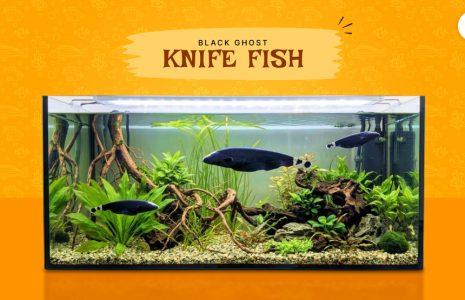
Hence, you should not add random fish to their tank. You should never keep the threadfin rainbow fish with fish like the Ghost Knife fish. Moreover, such weird tankmates can lead to disastrous results.
Suitable choices for these rainbow fish can be peaceful barbs, Otocinclus, Corydoras catfish, and other tetras.
Read carefully about the compatible species before adding any random fish to an aquarium. Adding fish irresponsibly can lead to the death of the other fish in the tank.
5. What Are Dietary Needs And Requirements Of The Rainbow Fish?
Rainbow Fish are generally omnivores. Thus, they can consume a wide range of things. These fish require both animal-based and vegetative matter.
They can consume Tropical Flakes, Color Flakes, Betta Treats, and Spirulina Flakes. The Pseudomugilids also accept this food.
However, you should provide them with a high amount of frozen food to ensure adequate protein intake.
Moreover, this will ensure the fish display more vibrant colors. You should provide your fish with food they can consume in just 2 minutes.
This will prevent residues that harm the water in the fish tank. Hence, this maintains water quality.
What Should We Keep In Mind About Rainbow Fish?
Most of the Rainbow Fish are community fish. Hence, you should keep them with other peaceful fish.
Some variants of Rainbow Fish often look dull. However, they showcase their vibrant colors before mating.
Male rainbow fish try to attract female fish by showing their beautiful, unique colors.
Share





Leave A Comment