
The Ultimate New Rabbit Owner Guide: Survival Tips For Your First Week


The new owners of rabbits mostly think that they have brought home a cuddly and squishy live soft toy that is very similar to their neighbor’s puppy or cat. However, people forget that rabbits remain very different from these animals.
The puppies generally do not show affection to people in the way canines and felines generally do. They are lagomorphs that are prey animals, not rodents.
Thus, these lagomorphs’ insecurities, trust issues, and health-related problems are very different from those of any other animal, like the canines or the felines.
Not just that, the rabbits also have a different way to communicate when they are in distress.
Furthermore, the rabbits cannot be touched or handled as people touch and handle other animals, such as cats or dogs.
Rabbits generally do not show affection immediately. Moreover, they have different ways of interacting with people and showing affection towards them.
This new rabbit owner guide seeks to provide readers with proper insights on how to handle a new rabbit.
Why Do The Initial Days Shape The Rabbit’s Behavior For Life?

The first seven days can shape everything with the rabbits. The rabbits generally have a long-term memory association. Thus, it is crucial for the owners to create a strong bond within their.
However, the rabbit keepers have to understand that the rabbits’ way of communicating with their owners is very different from that of other animals.
During the initial days, the rabbit owners can find the rabbit staying still in the corner or not responding to its name.
The rabbits often avoid being touched and barely eat on the first day. Hence, at that point, worry creeps in, followed by frantic searches and advice from various sources.
However, the owner should not forget the nature of the animal. Moreover, the rabbit takes time to get accustomed in the initial days.
People simply misunderstand their rabbits. The rabbits are prey animals. Thus, the rabbits communicate with surrounding creatures in a much different way.
The rabbits, as lagomorphs, stand still when they notice or sense any threat. Thus, this acts as a basic survival instinct for the rabbits.
1. Dealing With An Aloof Bunny During The Initial Days: New Rabbit Owner Guide
The rabbits often give up eating as their digestive systems are very delicate. Thus, even the slightest change prevents them from eating.
Furthermore, the nervous system of rabbits is very different. Thus, they often get aloof even during the slightest changes.
However, the rabbits do not want your reassurance in the form of touch when they are under stress.
Petting them or stroking your hand on them, picking them can make things even worse. These things can easily work with your cats or dogs, but the rabbits are very different.
Thus, your rabbit needs patience and calmness during these times. Thus, you should never try to breach the rabbit’s space during these moments.
Rabbits do not vocalize their discomfort. Moreover, they tend to freeze or hide. However, bunny keepers should not consider this behavior as a rejection.
They should try to interact with the rabbit while using curiosity in the rabbit. The basic presence of the master around the rabbit can make the rabbit curious.
Thus, the rabbit can try to smell or interact with the hands of the master or around the master as the fear and discomfort go away.
2. What Is The First Week About?
The first week is not really ideal for cuddling or showing physical affection. On the other hand, you can not expect a creature to learn tricks in the first seven days of interaction.
However, when the first seven days go really well, the rabbits tend to normalize. Hence, the rabbits eat well, and they sleep well. In addition, their curiosity encourages them to act curiously about things.
But a proper living space and ample time for the rabbits to get accustomed to the environment will bring their lifestyle back on track.
This new rabbit owner’s guide suggests that the first week is very crucial for the rabbits.
What Is The Best Time To Create The Strongest Bond With Your Rabbit?: New Rabbit Owner Guide
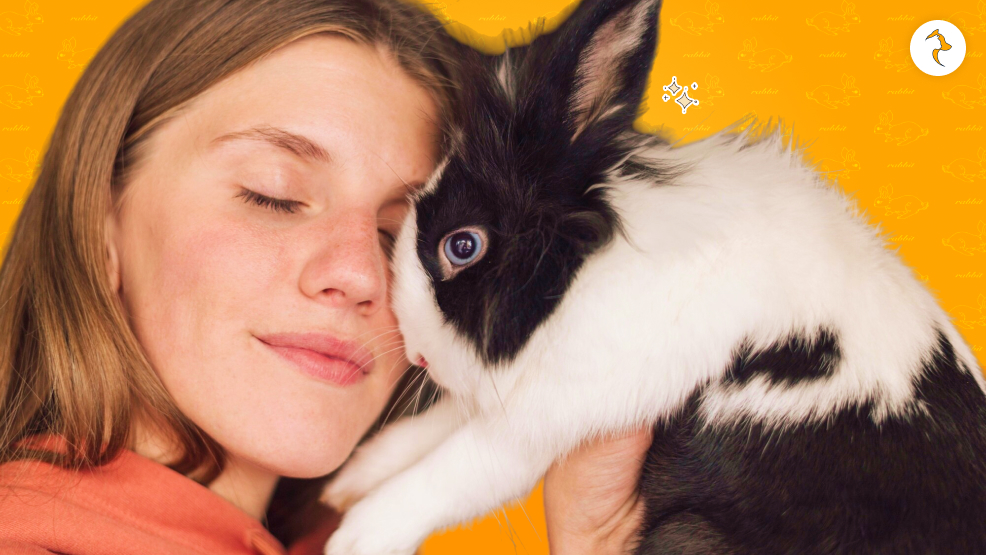
During this first week, rabbits form strong mental associations. They begin deciding whether people are safe or threatening.
As a result, early experiences carry long-term weight. Calm routines and predictable behavior teach a rabbit that nothing bad will happen.
At the same time, excessive handling, loud environments, or sudden changes send the opposite message.
Many new owners unintentionally slow bonding by trying too hard. Reaching into the enclosure, lifting the rabbit repeatedly, or insisting on physical affection often creates fear rather than trust.
With rabbits, control matters. When the rabbit chooses interaction, bonding happens naturally.
What Are The Different Phases To Interact With Your Rabbit?
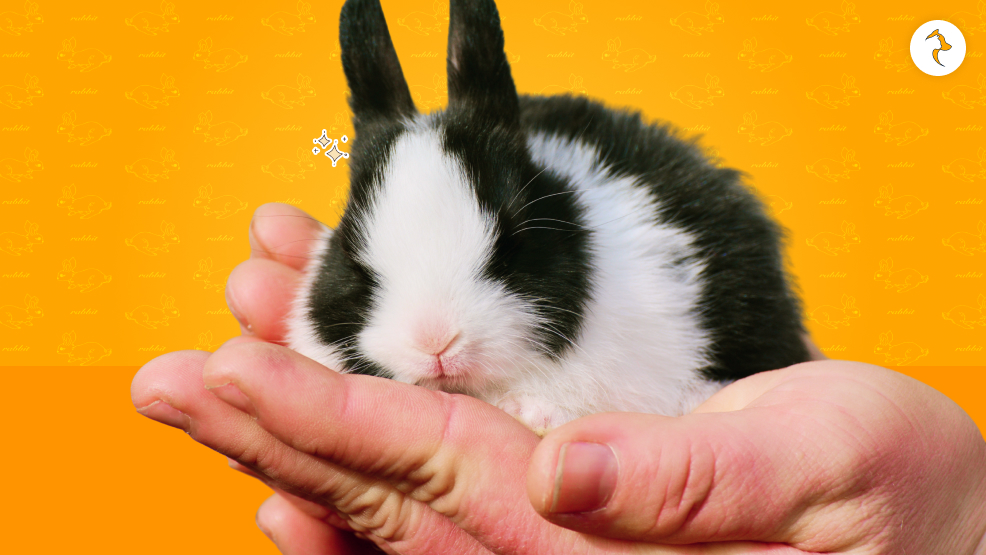
Interaction with the rabbit has to be very step-by-step. Interaction to bond properly can not simply happen overnight. Thus, there have to be multiple nuanced steps.
1. Giving Your Rabbit A Proper Set Up
Most new rabbit owner guides does not provide much information on a rabbit’s enclosure setup.
A proper rabbit setup requires a diverse range of elements and components.
Moreover, this new rabbit owner’s guide provides complete details about the different components of a rabbit’s setup.
A. Cage Vs Free Roaming: New Rabbit Owner Guide For Cage Set Up
The rabbits need space to stretch out fully, hop with momentum, and explore their surroundings.
Hence, when that space is missing, muscle tone drops, unhealthy weight builds up, and many rabbits become withdrawn.
However, most pet shops sell cages that suit the needs and requirements of visual appeal. These cages fit into the shelves neatly. However, they do not really suit all the needs and requirements of a rabbit.
Moreover, rabbits are active animals. Thus, the rabbits require space to hop and move around. These cages do not really meet the physical and mental needs and requirements of the rabbits.
Hence, here is a simple guideline to pick the perfect cage for a rabbit. The rabbit should be able to take three full hops in a particular direction inside the cage.
In practice, rabbits kept in cramped cages may seem calm at first. However, that stillness usually signals depression rather than comfort.
As a result, long-term inactivity often leads to both behavioral issues and avoidable health problems.
For these reasons, many animal welfare organizations strongly discourage cage-only housing.
Hence, limited space doesn’t just limit how much a rabbit can move. Over time, it subtly shapes their mood, confidence, and overall quality of life as well.
Thus, the rabbits should have ample time outside the cage. Hence, this allows the rabbits to get ample exercise.
B. The X-Pen Setup
For new owners, an exercise pen offers a realistic balance between safety and freedom. An X-pen creates clear boundaries while still allowing meaningful movement.
Moreover, a starting area of at least four feet by four feet works well, although more space always helps.
The owner should place the pen indoors in a quiet place in the house. Hence, the quiet place allows the rabbit to observe everything without getting overwhelmed by the new surroundings.
Furthermore, the flooring should be bedding. Thus, put soft rabbit-proof materials on the floor of the enclosure.
The metal mesh on the bottom of the floor can cause sore hocks in the rabbits,
Tiles can also serve as one of the most ideal choices. Thus, the tiles and other soft surfaces are good for the joints and muscles of the rabbit.
C. What Makes Indoor Housing One Of The Best Options For The Rabbits?
Some owners assume outdoor hutches provide fresh air and freedom. In reality, outdoor housing exposes rabbits to constant stress.
Hence, indoor housing protects the rabbit against factors like temperature changes, threats from predators, and several other things. Thus, ideally, the rabbit parents should keep their bunnies indoors.
The extreme climatic conditions, like heat and cold, can provide the bunnies with heat strokes, pneumonia, and other conditions.
Thus, the indoor rabbits tend to live longer than the outdoor ones. Moreover, they benefit from stable temperatures, social exposure, and reduced parasite risk.
Hence, according to our new rabbit owner guide, keeping a rabbit indoors isn’t indulgent. It’s a practical decision rooted in welfare.
D. What Are The Essentials That The Owner Should Keep In Mind While Creating The Enclosure?
Often, several new rabbit owner guides suggest buying accessories that seem only useful. However, these accessories often add very little value to your bunny’s enclosure.
Heavy ceramic bowls matter because rabbits easily tip lightweight dishes.
A full-sized litter box allows for natural movement and proper positioning. Paper-based litter absorbs odor and remains safe if ingested.
Hiding places are non-negotiable. Rabbits cannot cater to your gaze all the time. Thus, they require a proper retreat.
Moreover, a hiding place allows them to stay away from noise and problems throughout the day. You do not have to spend a lot of money on this. As a result, a cardboard box with two openings should work perfectly.
Above all, hay must be available at all times. It isn’t bedding or a treat. It’s the foundation of the diet.
E. New Rabbit Owner Guide For Rabbit Proofing The Space To Avoid Problems In The Future
The rabbits generally explore with their mouths. Moreover, the teeth of the rabbit keep growing throughout their life. Thus, the rabbits tend to keep chewing on something or the other.
Chewing is generally an instinct, and hence it is not really a sign of misbehavior. Thus, the owners should definitely secure things like electrical cords and others.
Unfortunately, most of the building materials are not organic at all. Thus, they can cause a high risk to the rabbits.
This new rabbit owner guide suggests that rabbit keepers block their balconies and other spaces. Unfortunately, the rabbit can jump from a height and die.
A proper environment prevents most behavioral problems in the future. Hence, a suitable environment prevents all the stress factors in the rabbits.
2. Providing The Rabbit With A Proper Diet: New Rabbit Owner Guide For A Proper Diet

The rabbits have a very delicate digestive system. Thus, they require a proper rabbit-friendly diet. Not providing them with a proper diet can cause several problems in the rabbits.
Diet influences rabbit health more than almost anything else. Most emergency vet visits trace back to feeding errors.
The rabbits suffer from one of the most problematic diseases known as GI Stasis. Hence, the condition turns out to be life-threatening for the rabbits.
Thus, the rabbit parents should provide their bunnies with adequate amounts of hay and plenty of water to keep their digestive systems functioning.
Hence, here is a proper new rabbit owner guide for preparing meals for the rabbits.
A. Hay Is A Sine-Qua-Non Of The Diet
Hay is one of the most important components of the diet of a rabbit. Moreover, you should put at least 80% hay in the meal for the entire day.
The teeth of the rabbits tend to grow throughout life. Thus, hay allows the rabbits to grind their teeth properly.
The rabbits develop painful spurs without an adequate amount of hay. Thus, the rabbit keepers should provide their rabbits with adequate amounts of hay.
Furthermore, hay also keeps digestion moving. Since rabbits can’t vomit, even a short slowdown becomes dangerous.
The owners should provide their adult rabbits with Timothy hay. Moreover, Timothy hay provides all the necessary nutrients required for nourishment.
On the other hand, Alfalfa hay helps rabbits under six months while providing them with an adequate amount of calcium.
Rabbits with sensitivity of any kind should eat Orchard or Meadow Hay. Good hay smells fresh and slightly sweet. Dusty or stale hay should always be avoided.
A proper new rabbit owner guide should always suggest incorporating an adequate amount of hay into the meal.
B. Fresh Greens And Safe Introductions
Fresh greens provide rabbits with nutrients and hydration. However, you should provide your rabbits with safe greens gradually.
Moreover, the list of safer options for fresh greens includes romaine lettuce, coriander, parsley, Bok choy, and mint.
You should always wash the vegetables thoroughly. However, serve them a little wet. This shall support hydration in the rabbits.
Avoid these foods. Do not provide your rabbit with onions, garlic, avocado, or other toxic elements that can harm the gut balance of your bunny.
Hence, our new rabbit owner guide suggests introducing new food, one at a time, over several days. Thus, this will prevent any problems in the rabbits.
C. Pellets As A Measured Supplement
Pellets don’t replace hay. They exist to supplement nutrition in controlled amounts. However, do not overfeed pellets to your bunny.
Moreover, overfeeding pellets can cause problems like massive weight gain and other problems in the rabbits.
According to our new rabbit owner guide, you should provide one-quarter cup of pellets for every six pounds of body weight of your bunny every day.
Avoid pellets with seeds and colorful feelers. Hence, only purchase pellets with hay.
D. Hydration Tips
Keep the water bowls always filled with an adequate amount of water. Water allows the guts to function properly.
Dehydration can easily cause problems related to digestion. Clean the bowl and refill the water daily.
3. Litter Training In The Rabbits
Rabbits naturally choose specific areas for excretion. Thus, this instinct makes litter training surprisingly straightforward when handled correctly. Accidents don’t signal stubbornness. They reflect habit formation.
One of the most effective techniques involves placing hay directly in or above the litter box.
Hence, rabbits like to eat while they eliminate, so pairing the two reinforces the habit. Most rabbits show progress within days.
Cleaning methods also matter. Ammonia and bleach smell similar to urine and often trigger repeat marking. White vinegar removes odor without encouraging re-marking.
Move the excretion into the litter box when they litter outside the box accidentally. Hence, this shall reinforce the correct action in the rabbits.
4. Building Proper Trust With Rabbit.
Rabbits are prey animals. Thus, they associate certain actions with the surrounding creatures as predatory.
Being lifted off the ground feels like a predator attack on a rabbit. Even rabbits that tolerate handling often find it stressful. Repeated forced contact teaches unpredictability, not safety.
Trust grows when the rabbit controls the interaction. Spending time on the floor changes everything.
Sitting quietly removes the threat of looming movement. When curiosity leads, rabbits usually approach on their own.
Learn to identify the signs of trust properly. Moreover, the rabbits show trust while nudging, circling around, and staying around, like companions.
The first week focuses on decompression. The following weeks bring routine and voluntary interaction.
Thus, true relaxation and affection usually appear after the first month. Progress varies, but patience consistently pays off.
What Are The Different Health Issues In The Rabbits? What Are The Main Symptoms To Deal With The Health Issues In The Rabbits?

GI Stasis is one of the most problematic diseases in rabbits. Moreover, GI Stasis occurs when digestion slows or absolutely stops in the small intestine.
Keep an eye on the dropping patterns and texture. Understand the posture of the rabbit. Moreover, the hunched posture often indicates issues like GI Stasis.
The rabbits generally stop grinding their teeth when they suffer from GI Stasis. Rush to the vet immediately when the rabbit stops eating or defecating for more than 12 hours.
Observe the textures of the droppings. Healthy droppings are round, firm, and golden brown.
Moreover, very small droppings, strings connected by hair, or a complete absence of signal trouble. Soft clusters called cacotopias are normal and meant to be eaten.
Stay in touch with the exotic pet vets. People often forget that the rabbits are categorized as exotic pets; thus, a considerable number of vets actually do not treat the rabbits.
This new rabbit owner guide suggests you keep a pet first aid kit ready.
What Are The Major Breed Specific Challenges That The Rabbit Owners Should Know About?

The health issues in the different rabbits remain diverse. Moreover, Wool breeds need regular grooming to prevent blockages.
On the other hand, Giant breeds require soft flooring, while Rex rabbits need extra foot care due to thinner padding.
Lop-eared rabbits require proper ear cleaning. Moreover, the lop ears in the rabbits often trap moisture. Thus, this can cause an ear infection in the rabbits.
Furthermore, the flat-faced rabbits often suffer from dental misalignments. Thus, the rabbit owners should be well aware of these tendencies to avoid any problems in the future.
Thus, this new rabbit owner guide suggests you get family-friendly rabbit breeds.
Simple Tips For You As A Rabbit Owner

Rabbits don’t need expensive toys. Cardboard and hay provide excellent enrichment. Electrical cord protection is essential. Moreover, bathing rabbits is dangerous and should be avoided.
Rabbits generally thump to express fear or irritation. The rabbits remain most active during dawn and dusk. Thus, people call them crepuscular.
Neutering and spaying the rabbits can prevent conditions like uterine cancer and others. This call also improves the behavioral habits of rabbits.
Simple handling techniques, such as towel wrapping, reduce stress during grooming.
Things To Remember Before Bringing Home Rabbits

The first week often feels tough because nothing is familiar yet. At the same time, once the space feels safe, the diet settles, and trust starts to build. Caring for a rabbit shifts from stressful to second nature.
People often forget perfection isn’t the goal here. Consistency, patience, and a bit of understanding give you and your rabbit the best results.
Get the first week right, and what comes next feels noticeably easier.
Frequently Asked Questions (Frequently Asked Questions)
Here are the answers to some of the most commonly asked questions about the new rabbit owner guide
No, you should not sleep with your rabbit, Set up a quiet, secure space with fresh hay, water, and soft flooring.
At the same time, handle less and focus on watching eating habits and daily behavior.
The first three days are often stressful, so hiding is common. Over the next few weeks and months, rabbits usually relax and grow more confident.
Rabbits take time to gradually connect with their human companions. Thus, they should be given time to get accustomed to it.
Most rabbits start settling within a few weeks. Full comfort can take one to three months if routines stay consistent.
Rabbits generally take time to settle in. However, the first month is really important.
Prepare the space before bringing the rabbit home. As a result, removing hazards early helps the rabbit settle in more easily.
Decide on a quiet place for your rabbit to allow it to settle in and get accustomed peacefully.
The rabbits generally bite when they consider you a threat. Moreover, the rabbits can consider you to be a giant predator.
The rabbits tend to chew on the data cables and the charger cords. Split loom tubing can protect the rabbit from any problem.
The wiring material often makes the rabbits sick. Thus, rabbit-proofing things do not just protect the gadgets but also prevent your bunny from chewing on something harmful.
Rabbits do need vaccines. Moreover, the vaccines protect rabbits from potentially fatal diseases such as Myxomatosis and Rabbit Hemorrhagic Disease Virus (RHDV).
The rabbit keepers should get their bunnies vaccinated at an early age instead of doing it in old age.
The rabbits can cause accidental droppings. Furthermore, they can also chew on the bed sheets and other materials.
Rabbits are different from dogs. Thus, they do not like to be cuddled or handled while they sleep.
You will have to clean the litter box daily. However, you can deep-clean the entire enclosure occasionally.
Ideally, you should clean the cage once a week. This will protect the rabbits from diseases
It’s called Calotropis. Rabbit excreta is a nutrient-rich dietary requirement, not gross behavior that needs to be corrected.
This is a common practice among rabbits. Do not try to stop the rabbit from doing it.
No, do not put a leash on your rabbit. Moreover, the rabbits can panic and break their backs.
Rabbits are social animals. Thus, rabbits enjoy the company of other rabbits. Mostly, they stay in herds. Hence, this new rabbit owner guide suggests keeping rabbits with other animals.
Rabbits can cost a lot. Moreover, products like Timothy Hay, hay-based pellets, and others are a must for the rabbit’s diet.
Additionally, only exotic pet vets treat rabbits. Exotic pet vets charge more than regular vets. Thus, this new rabbit owner guide suggests that the rabbit owners stay in touch with the exotic vets.
No, rabbits require exercise. Thus, they should spend an adequate amount of time outside their cages.
Share









Leave A Comment