
Allergy Bumps On Dogs: Causes, Symptoms, Treatment & Prevention


Is your dog stretching themselves excessively? You might even notice them biting specific areas of their body. It is not a pretty picture to see your pet baby in pain and discomfort.
However, to get them relief, you need to know what they are going through. What is bothering them? Check if they have some raised bumps on their skin.
Allergy bumps on dogs can cause them discomfort and make them feel uncomfortable. But what are these allergy bumps? What causes this? Let’s find out.
What Are Allergy Bumps On Dogs?
Allergy bumps are also known as urticaria or hives. These are red or white raised bumps that can appear on their skin suddenly. These vary in size and can look like small dots as well as large welts.
These mostly happen from allergens. Even though these cause them discomfort, they are not life-threatening. However, it is best to consult a veterinarian and get them the needed treatment.
What Are The Major Causes?
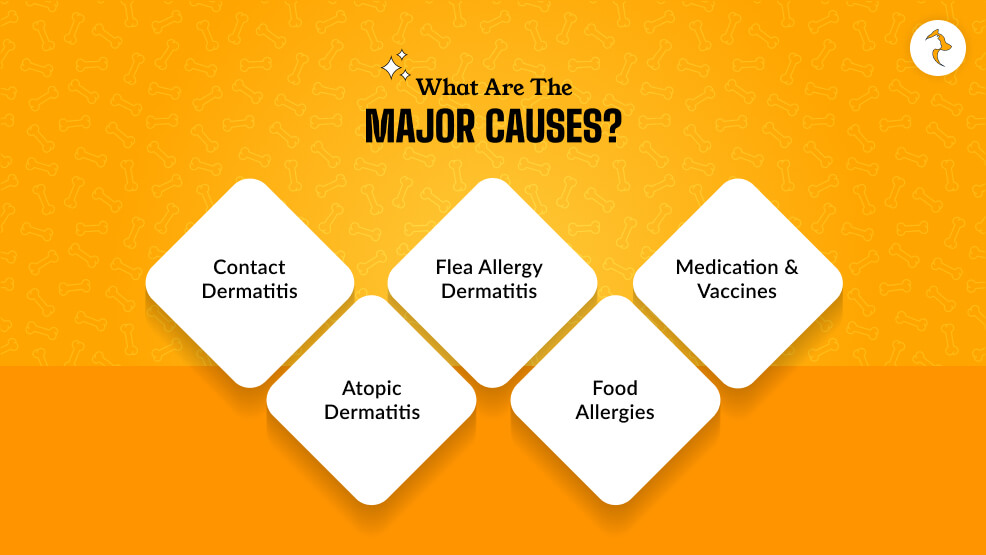
These allergies can appear in different ways and in various parts of the body. Here are some of the major reasons behind allergy bumps on dogs. Knowing this will help you prevent and treat common dog allergies. Let’s take a look at those.
1. Contact Dermatitis
These kinds of allergies occur when the dog comes into direct contact with an irritant, such as caustic materials, plants, cleaners, chemicals, or even certain dog shampoos.
This can cause localized itching along with inflammation. If you can eliminate the allergen source, it will automatically resolve the skill allergy symptoms.
2. Atopic Dermatitis
These are popularly known as environmental allergies. This kind of skin allergy is triggered by different ecological allergens like plant pollen, mold spores, and dust mites. This causes symptoms like profound itchiness in their paws, abdomen, face, ears, and armpits.
3. Flea Allergy Dermatitis
Dogs that have flea allergy dermatitis are extremely sensitive to flea saliva. Even a mild flea bite can cause skin irritation and trigger intense itching. You have to be proactive about flea control and have medications handy.
This is very important for their health. This not only helps them with flea allergy dermatitis, but also protects them from any kind of diseases that these fleas carry.
4. Food Allergies
There are some proteins like pork, chicken, and beef that can cause your dog allergies, but there are other food items as well that can cause them allergies.
Food allergies can happen to anything. This can cause skin problems, like rash, itching, and redness. It might be difficult to figure out the actual source of the food allergy.
If this is the condition, then you need to follow a vet-recommended diet with very limited ingredients to reduce the chance of allergies.
5. Medication & Vaccines
There are certain medicines as well as vaccines that can cause allergy bumps in dogs. It is not possible to know whether they will be allergic to that medicine.
So, it is best to take them back to the vet and get the medicine changed, or get something that will provide them some relief.
Symptoms Of Allergy Bumps
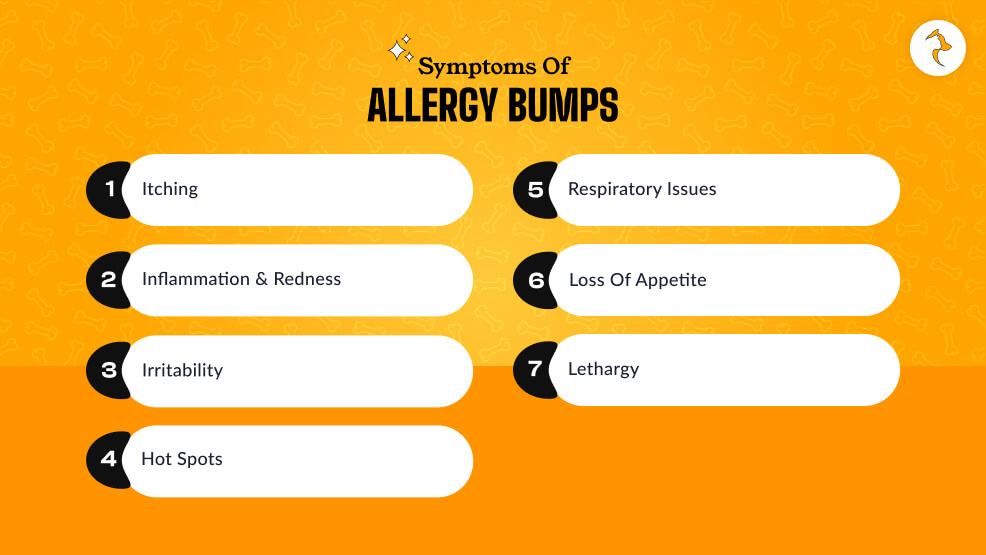
Here are some of the common symptoms that you will notice in dogs with allergy bumps.
- Itching: Your pup will always scratch, chew, or lick themselves, especially in areas like the rump, paw, belly, and armpits. You might even find them rubbing their back against furniture, carpets, and other surfaces.
- Inflammation & redness: Because of the allergic reactions, their skin might turn visibly irritated, red, and inflamed.
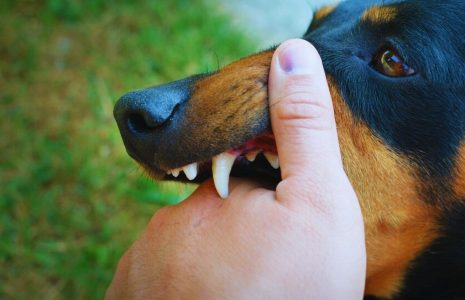
- Irritability: Due to itching and discomfort, your dog may exhibit signs of aggression, such as growling or yelping. They will get more irritated when you touch the affected area.
- Hot Spots: Dog hot spots are another symptom of allergy bumps. This might affect the area, and that might seem inflamed. These can be painful, moist, and red and might even see pus or serum oozing out.
- Respiratory issues: allergic reactions are often accompanied by respiratory problems like difficulty breathing.
- Loss of appetite: Due to the irritation and pain, they might refuse to eat. They might not even seem interested in treats for the time being.
- Lethargy: Because of everything that is going on inside their body, they will be tired and show signs like lethargy. They might not want to move around and stay in a place all day long.
Can You Manage These Symptoms At Home?
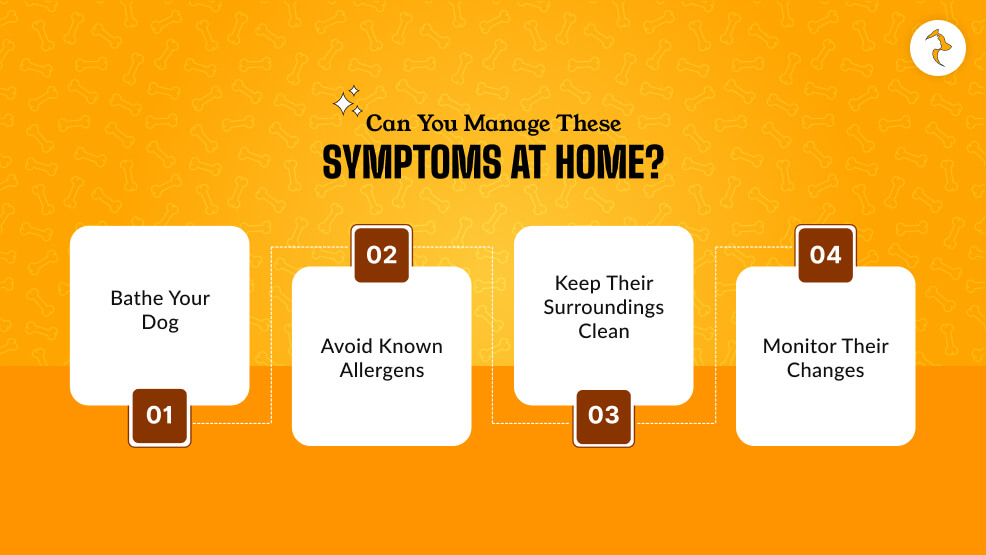
Even though it is always recommended to consult a vet to get the right treatment, there are some steps that you can take at home to manage the symptoms.
- Bathe your dog: Always use a hypoallergenic shampoo to soothe their skin and remove any allergens that may be present.
- Avoid known allergens: If you have an idea about what triggers their allergies, try to avoid those at any cost.
- Keep their surroundings clean: Keep your house clean to reduce pollen, dust, and any other kind of environmental allergens.
- Monitor their changes: Keep track of their symptoms and note any pattern or change that you might identify.
When Should You Take Them To See A Vet?
You should always take them to a vet if you think anything is unnatural with them. Here are some of the things that you should keep a check on.
- If your dog has difficulty breathing or swelling on their face, take them to a vet.
- Moreover, if there is persistent diarrhea and vomiting, you need to take them to see a vet.
- If the symptoms are persistent for 24-48 hours.
- If the bump appears frequently.
How To Prevent Allergy Bumps?
Here are a few tips that can help prevent these bumps on dogs.
- Use tick and flea preventives to minimize the risk of stings.
- Groom your dog regularly to reduce their exposure to environmental allergens.
- Test them for allergies to identify a specific kind of allergen and then prepare a management plan.
- Take them to a vet immediately to diagnose and eliminate any kind of food allergies.
Manage These Proactively
Even though allergy bumps on dogs are not life-threatening, these bumps are a symptom of an underlying allergic reaction that you should address immediately. If you are aware of the causes, you will be able to help them faster.
This will help them live a healthy and happy life. Take them on regular check-ups and manage their allergies for any future reactions.
Frequently Asked Questions
When discussing allergy bumps on dogs, there are some common questions people ask.
There are some dog breeds that are prone to getting skin allergies, like Labrador Retrievers, English Bulldogs, and Boxers. This is because of their skin characteristics and genetics.
Atopic dermatitis is the most common kind of skin allergy in dogs. These can be seasonal, non-seasonal, and can happen from pollen, frass, mildew, mold, ragweed, and dust mites.
To start with, you need to figure out what they are allergic to. Take them to a vet and they will be able to figure out what is causing them allergies. However, you can try to keep their surroundings and your pup clean.
Dogs that take Zenrelia are prone to a fatal vaccine-induced disease from inadequate immune response to any vaccine. You should discontinue it for at least 28 days to 3 months after getting any vaccination.
If the doctor suspects that your dog has some food allergies, then they might suggest a hydrolyzed-protein diet or a limited-ingredient hypoallergenic diet.
It takes at least an 8-12 week food trial, and make sure you do not give them anything from the table or any other treat.
Share







Leave A Comment