
Why Is My Dog Panting So Much: Causes, Home Relief & Vet Path Forward

It is not abnormal for a dog to pant, especially if they are excited, energetic, or hot. But heavy panting is something different. If there are some underlying medical issues, then the issue is serious.
When a dog is panting excessively, it could be a cry for help. This is a sign that they are suffering from an internal issue. It is you that they depend on for understanding their problems and taking care of them.
This is why you need to monitor them when you notice something like this, and look for other symptoms as well. This is where the question of why is my dog panting so much comes up.
What Is Normal And What Is Panting?
To identify excessive breathing, you need to understand their normal breathing pattern. On average, a healthy dog takes 15 to 35 breaths in a minute when they are resting.
So, if you notice your dog taking 40 breaths a minute when they are resting, that means there is something abnormal about it, and you need to take care of them. However, you have to remember that it is not always related to an issue. They cool themselves in this way as well.
Moreover, they regulate their body temperatures and let the water and heat evaporate from their tongue and upper respiratory tract.
They don’t sweat to cool themselves, so they breathe faster than usual to let the air circulate. Panting helps them to get their body temperature back to normal.
Why Is My Dog Panting So Much? What Are The Possible Causes?
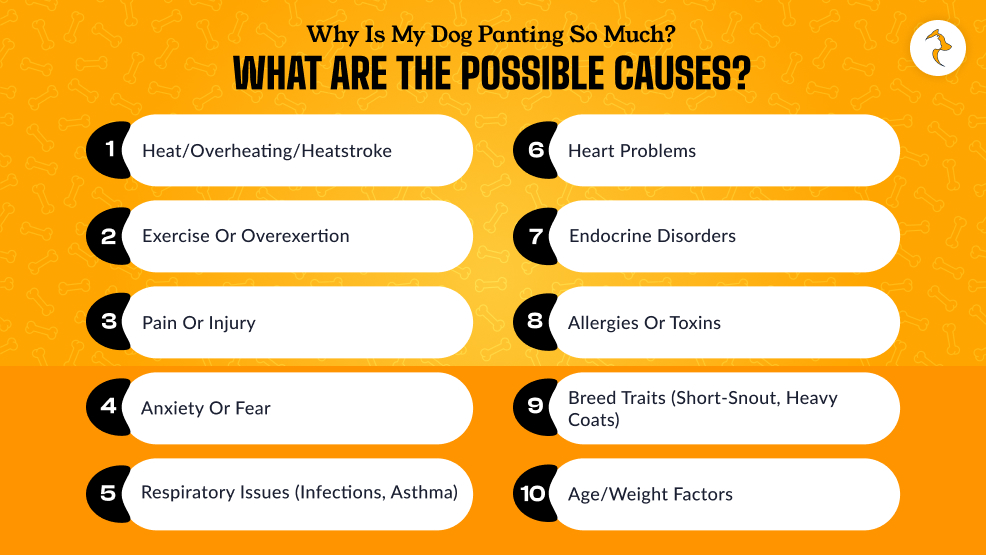
Why is my dog panting so much? This is a common concern among many dog parents. There are various reasons behind this. They often pant to cool off, but there are some other reasons as well.
1. Heat/Overheating/Heatstroke
If you have a happy, active dog, then panting is normal for them. It helps them cool down as they don’t sweat like humans. They rapidly inhale and exhale air this way. Moreover, they evaporate water from their lungs and nose this way.
When the water evaporates, their body cools down inside and out. They evaporate a lot of water in a very short span of time. Ensure they have enough water to drink during the hot days. If you notice your dog not drinking water, you need to be concerned.
This is normal, and there is almost nothing concerning about it. If they are panting because of the heat, get a cooling mat for dogs.
2. Exercise Or Overexertion
This is another normal cause behind dog panting. They pant when they are excited or right after they have had a vigorous session of exercise. There is nothing worrisome if they cool off and get back to their normal breathing pattern.
However, you need to look out for signs if they are reluctant to exercise, or their panting is not getting back to normal even after resting for a while. This could mean there is some underlying issue that you need to pay attention to.
3. Pain Or Injury
Why is my dog panting so much? It could be because they are in pain. Think. Were they injured in the last few days, or did they hurt themselves while playing? Heavy panting is often a sign that they are injured.
Check for other symptoms of pain like reduced pain, enlarged pupils, anxiety, licking or biting, along with restlessness. They often try to hide their pain with normal behavior, like wagging their tail. They might have an internal pain, so don’t wait. Take them to a vet.
4. Anxiety Or Fear
Dogs also pant when they are anxious. If you see them panting, monitor their body language. Check whether their eyes are wide open. Are they yawning? Are they looking away? There are some other signs you might notice in a dog when it is scared or anxious.
Track the situation to understand how you can make them feel better and prevent them from getting scared or anxious. If this happens frequently, take them to a vet and discuss the situation. They will be able to help them or provide some medication.
5. Respiratory Issues (Infections, Asthma)
When a dog is experiencing respiratory disorders, such as lung tumors, pneumonia, laryngeal paralysis, or asthma, it can cause panting or heavy breathing. Treatment depends on how far the condition has developed.
6. Heart Problems
Dogs also suffer from heart problems like we humans. Moreover, the symptoms are also similar, like difficulty in breathing, coughing, and excessive panting. The treatment of heart failure is done after they are diagnosed and the cause of their condition is found.
7. Endocrine Disorders
This is another reason why your dog might be panting excessively. For instance, Cushing’s syndrome causes a balance of hormones. The adrenal glands start producing too much cortisol.
Along with heavy panting, you will notice symptoms like hair loss, excessive hunger, excessive thirst, and urination. There are various treatment options available, like adrenal-suppressing surgery or drugs.
8. Allergies Or Toxins
Dogs often pant excessively because of toxins and allergies. You might notice intense panting in your dog caused by some food allergies or after coming in contact with an allergen. This is a medical emergency, and you need to take them to a vet immediately.
9. Breed Traits (Short-Snout, Heavy Coats)
Panting is a breed trait in some fogs, especially brachycephalic breeds or those that have a flat face. Also, breeds with thick and dense coats are prone to heavy panting. All dogs pant to regulate their body temperature; some breeds are prone to heavy and frequent panting.
10. Age/Weight Factors
Both weight and age are factors that affect the breathing pattern in dogs. With age, their muscles get weak, and that makes it difficult for them to breathe. Moreover, it is also difficult for obese dogs to breathe and move.
How Can You Help Them At Home? What Can You Do Right Now?
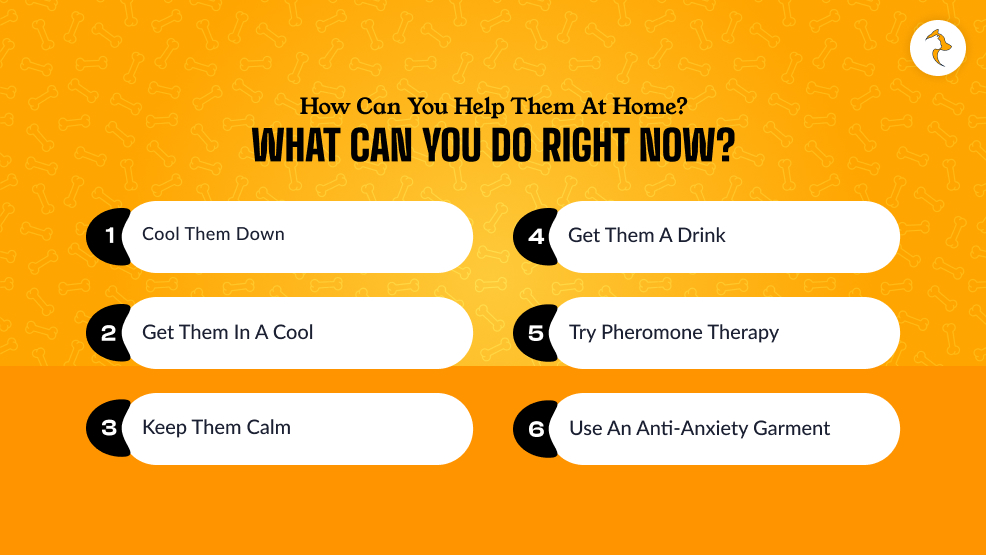
Why is my dog panting so much? Now, you have some idea about it. But how can you help them?
Before you take them to a vet, you can try a few things at home to calm them down and relieve them. Here are a few things that you can try at home. To start with, stay close to them.
1. Cool Them Down
If you know they have been outside, or they are panting because of the heat, you need to cool them down before things turn serious and they get heatstroke. Give them a bath, let them cool off in a nearby stream, or a paddling pool.
Moreover, you can use ice cubes or freeze their toys in a tub to keep things fun and comfortable at the same time.
2. Get Them In A Cool
Again, if the reason behind their panting is heat, you need to get them to a cool place immediately. These fur babies don’t lose cool easily, so you need to get them inside. Get them in a cool place, or turn on the air conditioning in the room; that might help.
3. Keep Them Calm
If your dog is panting because of stress and anxiety, you need to take them out of that situation and take them somewhere calm. Keep them away from noise, people, and all the hustle. Use collars, diffusers, and sprays to create a calming environment around them.
4. Get Them A Drink
Get them fresh water and keep them hydrated and cool. This will help if they are panting because of the heat. If they are refusing to drink, you can add some low-salt stock to encourage them.
5. Try Pheromone Therapy
You can use pheromone around them, which will make them feel like they are getting nursed by a female dog. You will get pheromone oil, diffusers, and sprays in all pet stores.
6. Use An Anti-Anxiety Garment
If you know your dog suffers from anxiety, then wrap them in an anti-anxiety garment. This will add some pressure in their body, making them feel like someone is holding them. This eases their anxiety.
What Does A Vet Do To Diagnose Them?
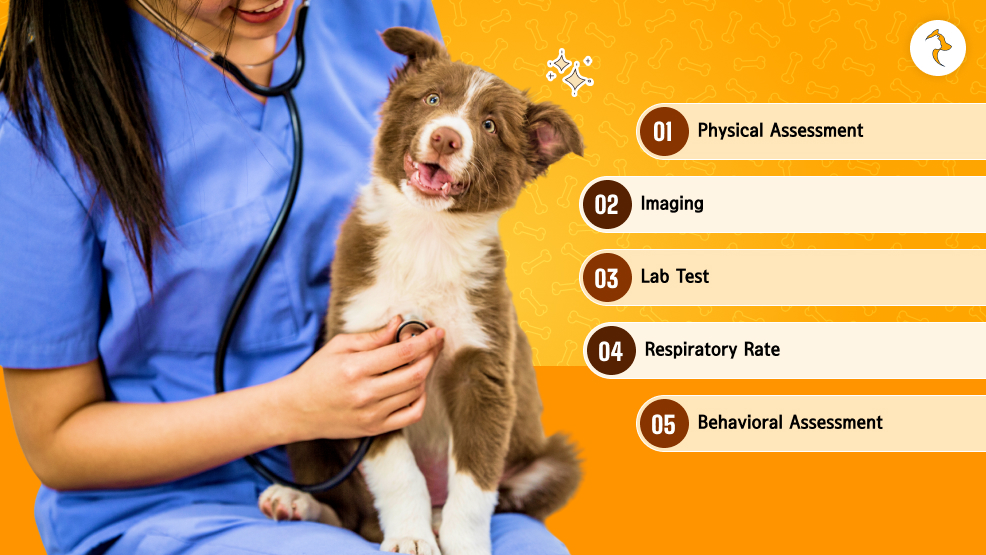
You must take your pet to a vet if its condition does not improve even after trying these simple home remedies. How does the vet diagnose them? They perform a complete physical examination and ask about their medical history. Here is how they diagnose these fur babies.
- Physical assessment: The vet will check the dog’s heart, abdomen, and lungs, and will ask you about the dog’s medical history. Also, look for signs like stress and anxiety.
- Imaging: The vet often suggests ultrasounds and X-rays to examine the abdomen, lungs, and heart to check for issues like broken ribs, tumors, and other abnormalities.
- Lab test: Vets also recommend urinalysis and blood tests to identify any underlying medical conditions, such as hormonal disorders or anemia.
- Respiratory rate: Vets often measure their respiratory rate while putting them in rest to compare their heart rate to their normal one. This helps them understand whether they are panting excessively.
- Behavioral assessment: They observe the dog’s behavior to determine if the panting is a symptom of a psychological factor, such as anxiety or stress, or due to physical pain.
Special Considerations
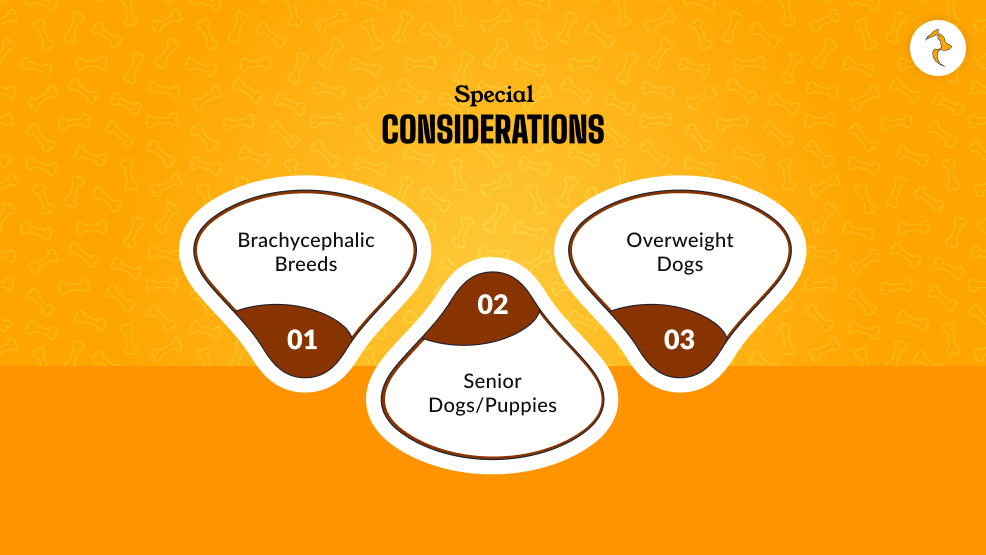
Apart from these reasons, there are some other conditions, or special cases, when they pant excessively. Here are those mentioned.
1. Brachycephalic Breeds
Brachycephalic breeds, those with a flat face like boxers, bulldogs, and pugs, are prone to excessive panting. It is because of their anatomical features, like their elongated soft palates and narrowed nostrils, that make breathing difficult for them.
2. Senior Dogs/Puppies
Puppies and senior dogs are both prone to breathing issues than a healthy dog, but for different reasons.
Puppies have a higher risk as their immune and respiratory system have not developed fully. In contrast, older dogs are prone to age-related issues like lung cancer and heart disease.
3. Overweight Dogs
Overweight dogs are also prone to breathing issues because of the excess fat content in their body, which leads to excessive panting. Moreover, during exertion, you will notice them breathing frantically.
Tips For Prevention
To prevent excessive panting in dogs, you need to manage their environmental factors. Here are some of the tips that can help your dogs in times of distress.
- Always keep their water ready when they have come from a session of exercise. Take them to a cool place, if needed, switch on the air conditioning of the room.
- Apply a cold compress to their body, encourage them to play in the water, or use a dog cooling mat.
- If your dog has anxiety, create a calm and cool environment. Use calming music, anxiety wraps, white noise, and pheromone therapy. Give them their favorite toys to keep them calm.
- Try to maintain a healthy weight so they are not overweight. Obesity can lead to various problems in the body and cause excessive panting as well.
- Proper grooming can help them stay cooler during the summer season.
- Moreover, if you have a flat-faced breed, they are prone to overheating and excessive panting.
Frequently Asked Questions (FAQs)
Why is my dog panting so much? While discussing the topic, here are some of the common questions people ask.
If your dog is breathing 30 times in a minute, even when they are resting, it is a sign of some underlying issue, and it is considered too many.
Yes, excessive panting at night could be concerning. It could be a sign of an underlying health issue, pain, anxiety, or stress. Excessive panting to regulate temperature is normal, but if it occurs at night, it might need a visit to the vet.
Yes, it can cause nonstop panting in dogs. It is a common response to emotional discomfort, stress, and fear.
Yes, some medications, like steroids and pain relievers, can make panting worse. Moreover, if you give them thyroid supplements, that can also have different side effects, and excessive panting is one of them.
If you notice other symptoms along with excessive panting, you need to take them to a vet immediately. Signs like confusion, unusual drooling, labored breathing, and blue or pale gums need immediate medical attention.
Share




Leave A Comment