
What Are The Main Signs Of Gastrointestinal Blockage In The Dogs?

Dogs often have the habit of chewing and swallowing anything that they see. Moreover, dogs generally explore the world with their mouths.
Thus, this increases the risk of ingesting non-organic substances that are highly harmful to dogs. As a result, this can easily cause bowel obstructions in dogs.
These bowel obstructions occur several times and often require surgical treatment. However, in minor cases, they can be easily treated with medication.
This article seeks to inform you about bowel obstructions in dogs, the major causes, and the signs of intestinal blockage in dogs.
What Are The Main Reasons Behind Bowel Obstructions In Dogs?

Doctors generally refer to bowel obstructions in dogs as intestinal blockages. Thus, it can be life-threatening at times.
The stomach or intestines of a dog can become partially or completely blocked after ingesting foreign objects. Thus, this results in intestinal blockage in dogs.
Thus, this obstruction prevents food and water from passing through the dog’s GI tract. Hence, this often reduces blood flow in dogs.
This decreases blood flow. Moreover, this can also cause the death of the dog within a span of three to seven days.
The digestive tract of a dog is vast and complex. Hence, obstructions can occur anywhere along the GI tract of the dog.
Often, the dog’s digestive system can pass the food into the esophagus. However, the system fails to deliver it to the dog’s stomach.
On the other hand, several of them can pass it to the stomach but may not be able to pass it to the dog’s intestines.
Moreover, this condition causes dehydration and electrolyte imbalances in a dog. The blockage prevents the absorption of nutrients and water through the digestive tract.
You should immediately rush to the hospital or the vet when you think that your dog has ingested a foreign object. Moreover, this causes serious problems for your dog.
What Are The Main Signs Of Intestinal Blockage?
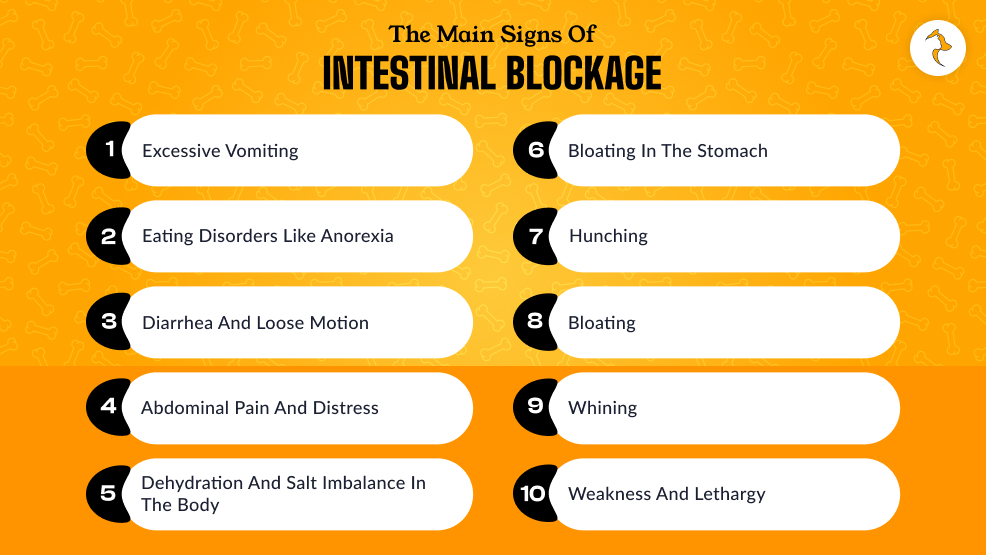
There can be multiple signs of intestinal blockage in dogs. These signs can be subtle as well as adverse. Rush to the hospital immediately if you see any of these symptoms.
Here are the main symptoms that you should definitely be aware of:
- Excessive Vomiting.
- Eating disorders like anorexia.
- Abdominal pain and distress.
- Dehydration and salt imbalance in the body.
- Bloating in the stomach.
- Hunching
- Whining
- Weakness and lethargy in the dog.
What Are The Other Reasons Of Intestinal Blockage Apart From Ingestion Of Foreign Body?
Generally, the ingestion of a foreign body causes intestinal blockage in dogs. However, other reasons can also cause issues in the canines.
1. Tumors And Masses
When you notice the signs of intestinal blockage in elderly dogs, you should immediately rush to the hospital.
Moreover, issues like tumors and masses can be the main reason behind intestinal blockage in dogs.
These abnormal growths often partially or completely block the gastrointestinal tract in dogs. Moreover, this generally occurs in senior dogs.
2. Other Health Problems Or Medical Procedures
Several other health issues and medical procedures often cause intestinal blockage in dogs.
Moreover, these health procedures include things such as scar removal and adhesion removal.
This generally happens due to scar tissue in the intestines. In addition, conditions such as hernias, intestinal torsions, and twisting can cause similar issues.
Ingestion of hair, thread, and other materials often leads to intestinal twisting.
Furthermore, severe intestinal inflammation often leads to intestinal blockage in dogs. These inflammations are often caused by internal injury in dogs.
Parasitic infections or stomach worms can also cause a blockage in a dog’s gastrointestinal tract.
Thus, whenever you see these signs in your dog, immediately take it to the hospital for better treatment.
What Is The Best Treatment For Gastrointestinal Blockage In Dogs?
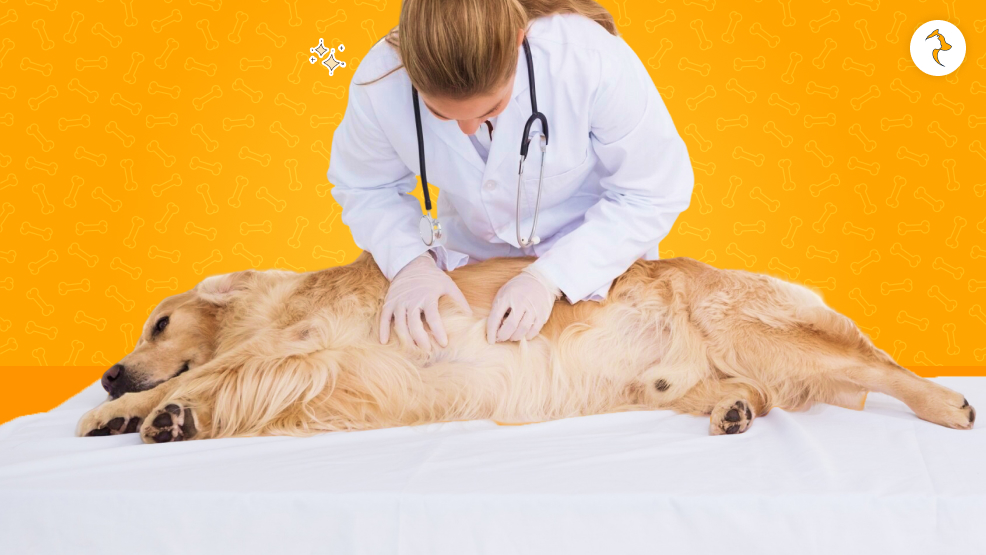
You should immediately take your furball to the vet when you notice any signs of intestinal blockage in dogs. However, you should also be aware of all the procedural nuances for the treatment.
1. Diagnosis Of Intestinal Blockage In Dogs
The veterinarian always starts by asking about the signs of intestinal blockage in dogs that you have noticed.
In several cases, the professionals induce vomiting at the clinic immediately. Hence, the vets try to remove the foreign object before it causes any blockage in the system.
However, the vet goes for a physical examination when they already notice signs of blockage in the dogs.
The vets generally conduct X-rays or blood tests, and an abdominal ultrasound, to further evaluate the situation.
2. What Are The Main Options For Treating Intestinal Blockage In The Dogs?
The treatment for intestinal blockage in dogs mostly depends on the size of the blockage. Additionally, the exact location where the blockage has occurred and several other things.
Sometimes the ingested item remains very small. The doctors try to remove these things from the system while vomiting.
However, in certain cases, the item passes through the dog’s stool quite naturally. Doctors remove the items lodged in the upper digestive tract using a simple endoscope.
However, certain critical conditions demand complex procedures. Moreover, the foreign object often becomes stagnant and does not move on its own.
Thus, the vets generally perform surgical treatments in these extraordinary situations.
3. Surgical Procedures For Treating Intestinal Blockage In Dogs
The surgeons generally administer IV fluids to prevent dehydration. Moreover, the doctors also provide medication for pain and nausea. Hence, this stabilizes the situation.
Further, the doctors perform gastronomy or enterotomy to remove the blockage. The vets generally close to the gastrointestinal tract after the blocking object is removed.
Frequently Asked Questions (FAQs)
Here are answers to some of the most commonly asked questions about the signs of intestinal blockage in dogs.
You should properly identify the signs of intestinal blockage in dogs. Moreover, these symptoms include things like Vomiting, anorexia, Diarrhea, Abdominal pain, Dehydration, Bloating, lethargy, and others.
Yes, smaller objects that create an obstruction often pass through the stool. However, larger obstacles require endoscopy.
In the most complicated cases, doctors generally perform surgery on the canine.
The signs of intestinal blockage in dogs depend on the severity of the case. The complicated blockage shows signs within a few hours. However, complicated cases take time to surface.
Partial obstruction mostly does not prevent excretion in dogs. Thus, the dog can suffer from intestinal blockage despite a gastrointestinal tract blockage.
Share





Leave A Comment