
Rabbits Eat This? A List of 50 Safe & Toxic Foods

The beloved character from childhood, called Bugs Bunny, has given us the idea that rabbits only munch on carrots.
However, that is not the reality at all. Carrots can be healthy for you, but what if I tell you that they are nothing but a cheat meal for your bunny?
Just because something is considered a plan doesn’t mean it guarantees safety. Therefore, you need to check the plans you are feeding to rabbits before letting them have them.
Here you can use a trick called the traffic light rule: green for daily-basis foods, and yellow for treats.
However, the foods that are red in color are toxic, and you should never give them to the rabbits.
In this article, we will learn about all the safe foods for rabbits. Let us dive in deep to get a much better idea of things.
The “Green Light” List: Safe Daily Veggies (The Staples)
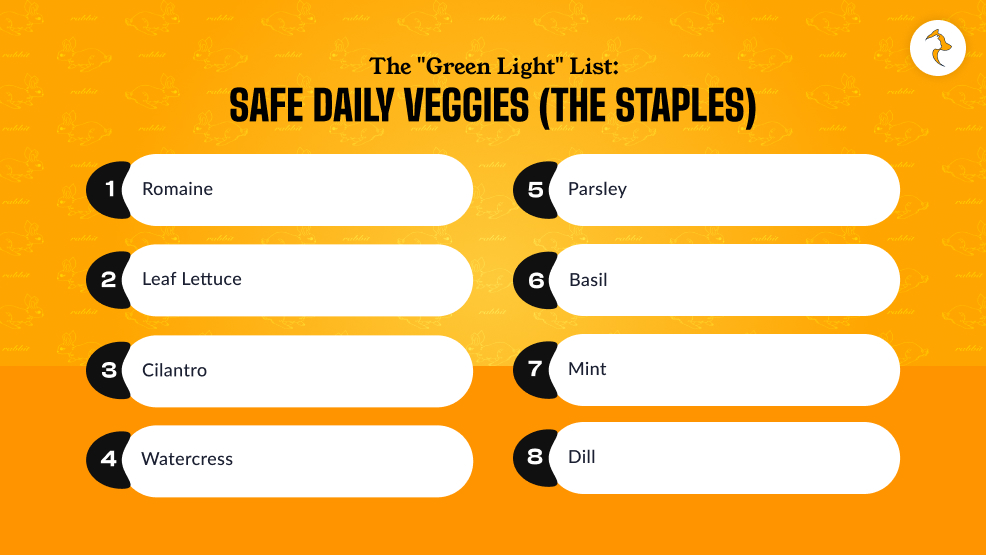
This is the safest food for your bunny. You should feed these things to your bunny on a daily basis.
1. Leafy Greens
Leafy greens like romaine, leaf lettuce, cilantro, and watercress are safe daily foods. Moreover, they are low in sugar and high in fiber.
Therefore, they support healthy digestion and daily hydration for rabbits.
2. Herbs
Herbs like parsley, basil, mint, and dill are also safe daily choices. Additionally, they add variety and important nutrients to your rabbit’s diet.
Thus, feeding small fresh portions daily helps keep rabbits active and healthy.
The “Amber Light” List: Safe In Moderation (The Treats)
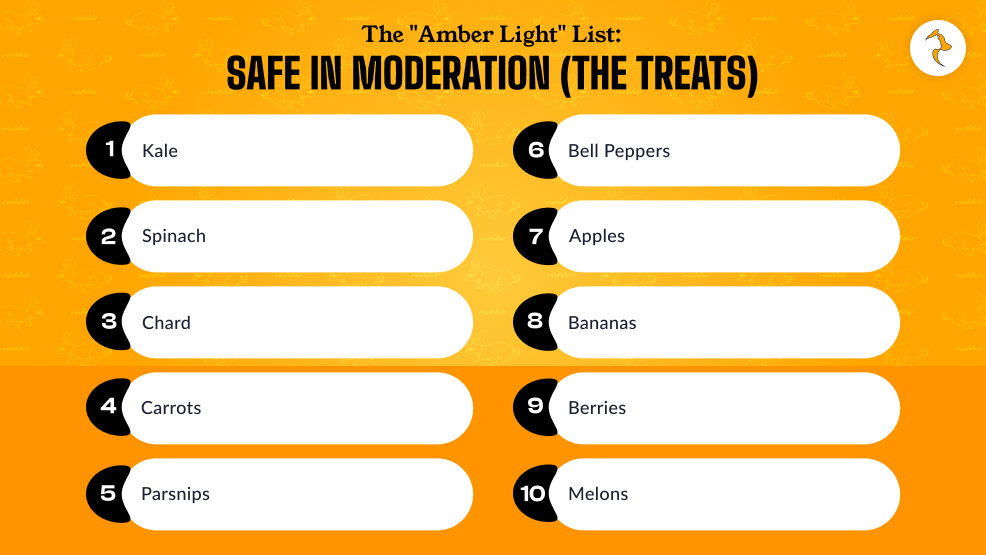
There are certain types of food for rabbits that you should consider very safe in moderation.
1. High Calcium Veggies
Vegetables like kale, spinach, and chard are kind of safe, but only in moderation. However, it has high calcium, which may cause bladder sludge if overfed.
Therefore, keep these vegetables rotated. One shot twice a week to get balanced nutrition.
2. High Sugar Roots
Root vegetables like carrots, parsnips, and bell peppers contain higher natural sugars.
Therefore, you need to feed them as small treats, not as a daily vegetable. And you should follow one rule here that gives only one inch at a time.
3. Fruits
Fruits like apples, bananas, berries, and melons have very high natural sugar in them.
Therefore, treat them as “nature’s candy,” not regular daily food. Instead of giving them whole fruits, offer only tiny pieces during training or as special rewards.
The “Red Light” List: Toxic Foods (Never Feed)
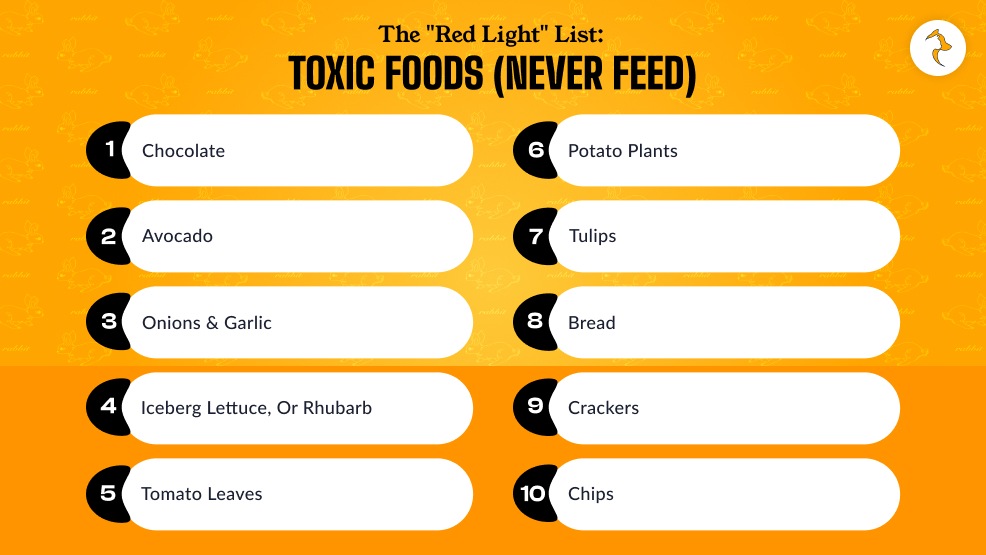
There are certain types of food that are not allowed for rabbits at all. Here are the main types of food you should not provide to your rabbits under any circumstances.
1. The Deadly 5
Never let rabbits eat foods like chocolate, avocado, onions, garlic, iceberg lettuce, or rhubarb because they are toxic to their health.
Consuming these types of food can seriously harm your rabbit’s digestive system and overall health.
Therefore, you need to keep these foods away from the daily diet of the rabbit.
2. Dangerous Plants
Plants like tomato leaves, potato plants, and tulips are quite dangerous for the existence of rabbits.
Therefore, you shouldn’t allow your rabbits to chew these plants either at your home or outside of the home.
Hence, you have to ensure that you keep this plant away from your rabbit to keep them healthy and safe.
3. Processed Human Food
Processed human foods like bread, crackers, and chips are considered very harmful for the rabbits.
They are harmful to rabbits. Therefore, never feed them those foods because some digestive problems and obesity might occur in them.
Instead of feeding them these foods, let them have some fresh vegetables so they can stay healthy and grow.
The “Gray Area”: Controversial Foods Explained
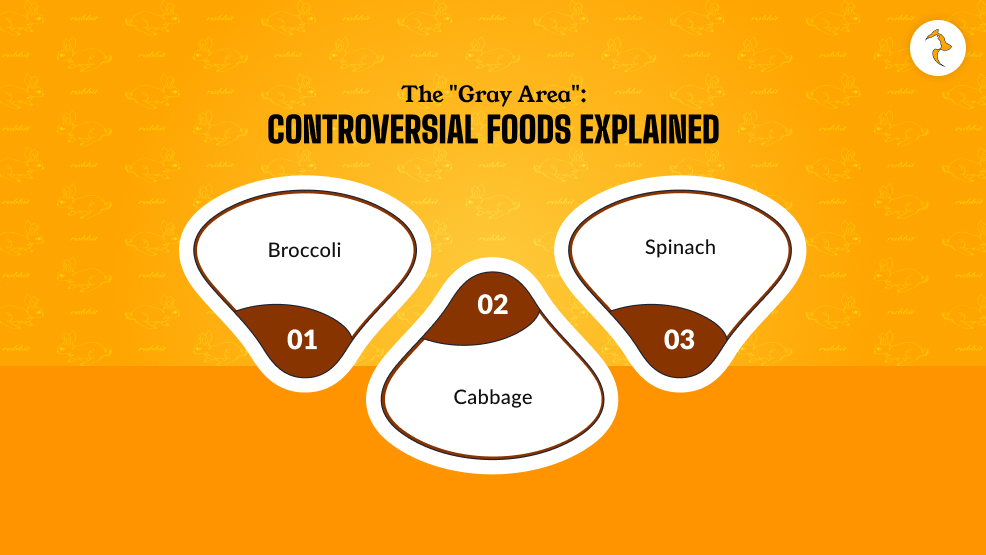
There are certain things that can not be completely considered safe foods for rabbits. However, they have nutritional values.
1. Broccoli & Cabbage (Gas Risk?)
Broccoli and cabbage are kind of risky to the rabbits because they may cause some gas in the body of the rabbit.
However, these vegetables are otherwise safe when they are introduced gradually, not by using chemicals.
Therefore, start giving them small portions and monitor the reaction of your rabbit before feeding them on a regular basis.
2. Spinach (Oxalates?)
Spinach has oxalates, which can seriously affect the kidneys of the rabbit and cause kidney problems in the future. However, otherwise, it is safe for the moderation of healthy rabbits.
Therefore, feed small amounts and avoid giving it to those rabbits who have kidney problems.
Breed-Specific Food Sensitivities
The following chart provides an overview of the breed-specific sensitivities in rabbits. Hence, with this chart, you figure out the breed-specific safe foods for rabbits.
| Category | The Sensitivity | Specific Advice / Product Need |
|---|---|---|
| Dwarfs (Netherlands, Poland) | Gut Stasis Risk. Their digestive tracts are tiny and prone to blockage from sugar. | Need: Zero fruit diet. Stick to herbs (Cilantro/Dill) as treats instead of bananas. |
| Giants (Flemish) | Calcium Absorption. Large bones need calcium, but they are also prone to sludge if overfed. | Need: Can tolerate slightly more Alfalfa/Kale than dwarfs, but monitor urine for “chalky” residue. |
| Angoras / Lionheads | Hairballs. Need help passing fur. | Need: Papaya/Pineapple (fresh, not dried) contains enzymes (bromelain) that may help break down mucus-binding hairballs. |
| Lops | Dental Disease. Prone to obesity, which worsens dental issues. | Need: Avoid “soft” veggies like cucumber. Focus on “crunchy” stems (Parsley stalks) to wear teeth down. |
What to Do If Your Rabbit Eats Something Toxic
If your rabbit has something toxic, you don’t need to panic at that time. All you need to do is stay, come, and act quickly.
At the beginning, you need to remove the harmful item immediately from the reach of that rabbit. Then go to a veterinarian as soon as possible for proper guidance.
However, don’t try to make your rabbit vomit at your house. Meanwhile, look out for any unusual behavior and obey the vet’s instructions carefully.
FAQs (Frequently Asked Questions)
Here are the answers to some of the most commonly asked questions about rabbit-safe food.
Yes, they can. But obviously, in small amounts only if that is organic and washed properly. But they prefer fruits over something like a banana peel.
Moreover, banana peels fall under safe foods for rabbits. The bunny parents can give their rabbits banana peels.
No, bread is not safe for the rabbits at all. Feeding bread to the rabbits can be very fatal. It is the cause of fatal diseases or bloating/stasis. So never let your rabbits eat bread or toast.
Yes, but you need to cut it into tiny 1-inch chunks. Because if it’s not cut properly, the long strings can get stuck in their throat or teeth.
Hence, this can prevent them from eating for days. Do not forget that your bunny is small.
Yes. The entire plant (flower, stem, leaf) is a superfood. You just have to ensure that there are no pesticides.
Pesticides and other chemicals can be very harmful to bunnies. Moreover, they can cause gastrointestinal issues in the rabbits.
Pet parents should wash them carefully to make them safe foods for rabbits.
No. Seeds are a choking hazard. Grapes are also very high in sugar. Hence, you should not offer food to your rabbit that has a high amount of natural sugar in it.
Because it contains high starch and solanine, which are dangerous to them, and a raw potato is toxic for them.
Yes, it’s safe and hydrating, but low in nutrients. It is perfect for hot summer days. On hot summer days, it helps lower body temperature. Cucumbers fall under safe foods for rabbits.
No. Not at all. It might be life-threatening to them. Hence, corn does not fall under the list of safe foods for rabbits.
The red food is safe, but the green leaves/stems are toxic. Hence, you should not feed your rabbit the entire plant.
No. Unlike Guinea Pigs, Rabbits can make vitamin C on their own. You should communicate with your vet before providing any type of nutritional compound to your rabbit.
Share





Leave A Comment