
Why Is My Dog Limping All Of A Sudden? Know The Causes, Things To Do, And When To Worry

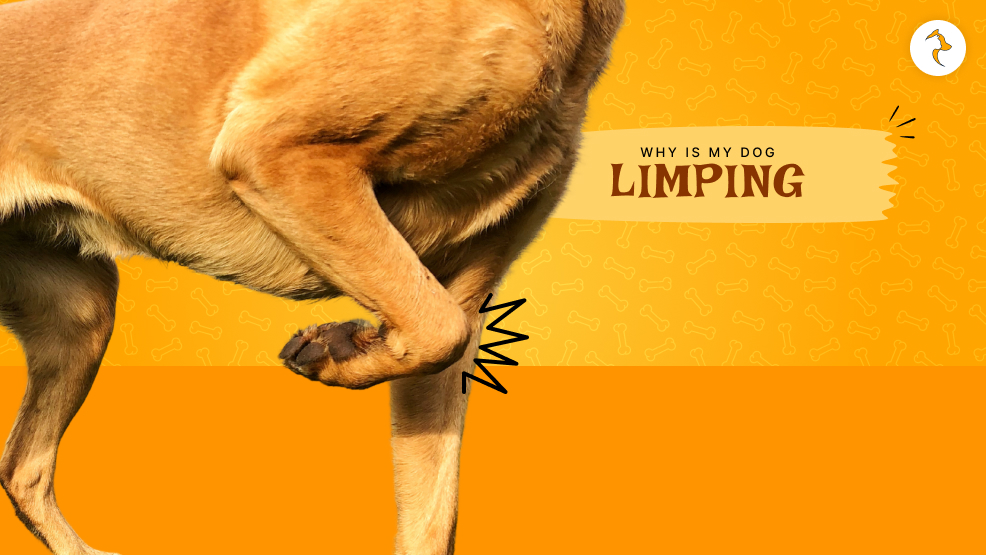
Does your dog have a scrape or cut on their paw? Then, it’s an obvious reason behind your dog limping.
It will be okay with some topical care and medication. In such cases, you don’t need to worry.
However, there can be more severe injuries, infections in the nailbeds, Lyme disease, or joint problems behind your dog’s limping.
In such cases, your dog needs immediate medical attention.
Also, while most of these reasons are sudden triggers, there can be chronic health issues such as arthritis. So, the topic “Why is my dog limping,” demands a detailed discussion.
Why Is My Dog Limping? You Know They Can Fake It Big Time

You know, Hazelnut sometimes stuns me with his antics. Sometimes I roll on the floor laughing because of his activities, and sometimes he brings the worst out of me.
It’s pretty much the same with all pet parents.
That day, I was reading an article on Newsweek. The story published on 17th February, 2026, has a hilarious account of how Coco, a 7-year-old Chihuahua, convinced her parent, Chris Bruce, with her enactment of limping.
Coco was hardly moving, and her parent took her to a vet who charged $500 and said that nothing was wrong with her.
Mr. Bruce brought her home, and immediately Coco started running in the backyard, and there were no signs of limping or any pain.
Now, that’s quite a trick.
Now, Bruce posted a video narrating the entire incident on Instagram, and it became viral. One of the viewers even commented, “They are always testing our love and budget.”
True that!
However, had it always been something so funny about why is my dog limping, a pet parent would have been the happiest.
In other words, there are often some serious reasons behind why your dog is limping, and you need to worry about them.
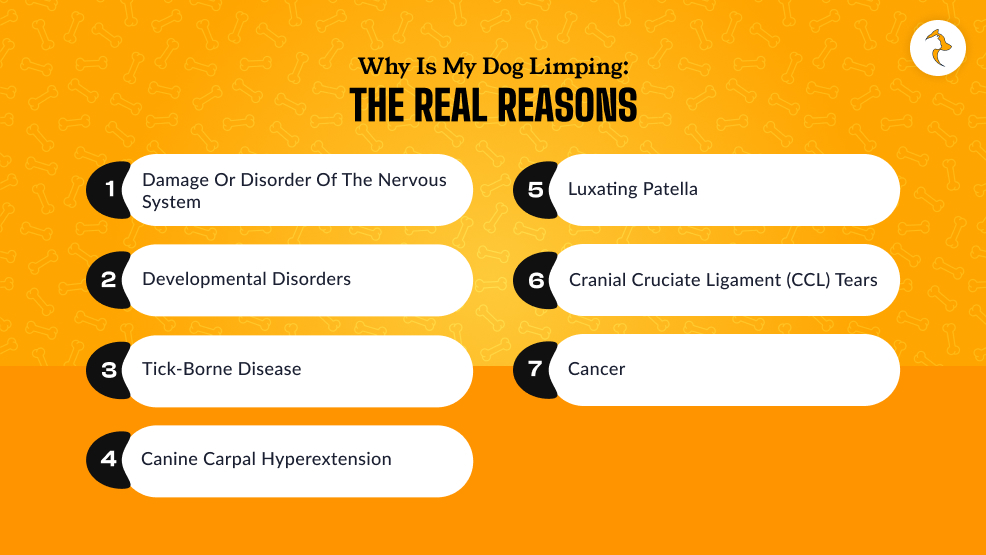
Why Is My Dog Limping: The Real Reasons
Common and minor injuries such as cuts, thorns, or something painful getting stuck to pawa, insect bites, and bee stings! There can be a thousand reasons why your dog is limping.
Along with these minor issues, there can also be conditions such as osteoarthritis, strain or tear in the tendons, muscles, or ligaments, broken bones, vascular conditions, inflammation, Lyme disease, and any other infections.
However, the following are the most severe reasons why your dog is limping.
1. Damage Or Disorder Of The Nervous System
Any damage or disorder of the nerve bundles, such as the brachial plexus, can cause limping and other mobility issues in dogs.
Intervertebral disc disease (IVDD) is a severe condition in this regard. Also, when a nerve bundle gets affected, it stops impulses from reaching the limbs.
As a result, it becomes difficult for a dog to walk, and the hind legs can get paralyzed.
2. Developmental Disorders
Panosteitis or inflammation is a very painful condition in the long leg bones of growing puppies.
Furthermore, Anatomic defects such as elbow or hip dysplasia or a luxating patella can cause limping.
3. Tick-Borne Disease
Any tick-borne disease, such as Lyme disease can make a dog limp. In this, the inconvenience keeps shifting from one leg to another.
4. Canine Carpal Hyperextension
This happens when a dog exerts excessive pressure on the carpus joint, and this condition affects the forelimb of a dog just above the paw.
Furthermore, canine carpal hyperextension causes swelling and joint instability.
Also, dogs of larger breeds suffer from this condition more.
5 Luxating Patella
Luxating Patella is a very painful condition, and in this, the knee cap or patella of the dog shifts or loses its alignment with the femur thighbone.
Pomeranians, Yorkshire terriers, chihuahuas, and other small breeds of dogs usually face this condition in the limbs.
However, it is more common in dogs of larger breeds.
6. Cranial Cruciate Ligament (CCL) Tears
Often, our dogs indulge in overexertion. They just don’t stop jumping or running. Now, this overexertion can cause a CCL tear.
It is the most common leg injury for dogs.
Furthermore, specific dog breeds such as golden retrievers, labradors, German shepherds, and rottweilers are more prone to having CCL tears.
7. Cancer
If a dog is suffering from bone cancer or there is soft tissue injury near the spine or limbs, they can limp.
In such cases, the gait becomes abnormal, and the dog may face partial or complete immobility.
What To Do When My Dog Is Limping?
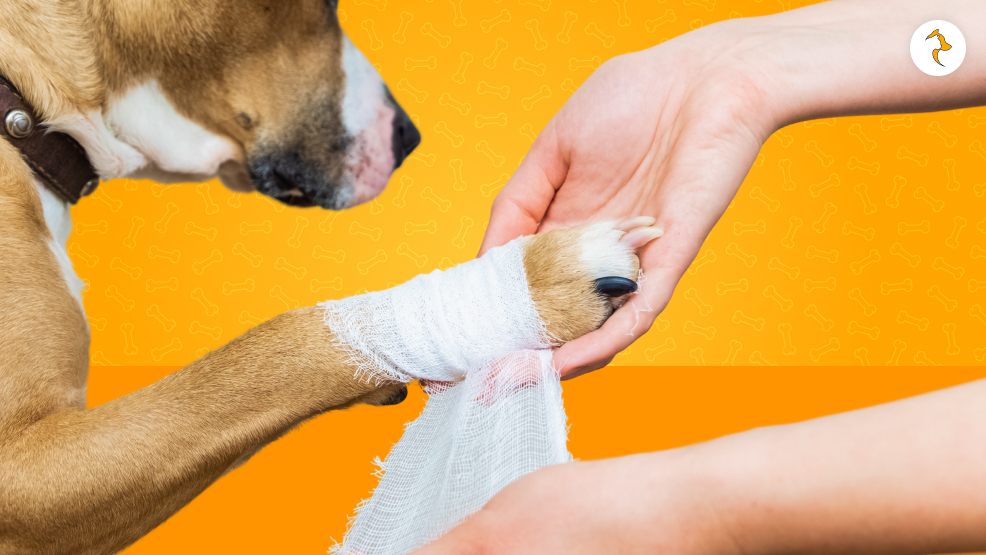
There are three stages of care-giving when your dog is limping. The process, however, starts with an immediate assessment.
1. Immediate Assessment
To understand why is my dog limping, you need to do an immediate assessment. Check the paws or legs for immediate injuries.
Then, observe them. Find out whether they are licking a specific spot in the leg or if they are whimpering.
Moreover, keep a keen eye on whether they are limping constantly or the limping is intermittent.
2. Consulting The Vet
When you take your dog to a vet for limping or mobility issues, they will conduct X-rays, blood work, or tick infection tests.
Based on the diagnosis, the vet prescribes anti-inflammatory medicines, painkillers, or suggests vaccination.
Furthermore, in cases of severe injuries, the dog may also have to undergo surgery.
3. Home Care
You must restrict the activities of your dog. You can keep them in a small kennel.
Furthermore, a hot and cold compress for 15 to 20 minutes several times a day helps to alleviate the muscle strains.
Moreover, you can use accessories such as toe grips and a harness to help with their movements.
Why Is My Dog Limping? Frequently Asked Questions (FAQs)
Here are the frequently asked questions and answers about why is my dog limping.
Yes, a dog’s limp will heal on its own when the injury is minor. However, if the limping continues for more than 24 hours and there is swelling or pain, it needs immediate medical attention.
Furthermore, in some cases, medication and surgeries become essential to heal the injuries.
If there is a minor sprain or injury in the leg of your dog, it will heal within 1 or 2 weeks. However, if the injury is more intense, it may take up to 3 to 4 weeks.
Also, when surgeries are involved, the dog may take up to 8 weeks for complete recovery.
The common signs of a pulled muscle or soft tissue injury in a dog are sudden lameness and swelling around the muscle.
The muscle area also becomes warm when there is a soft tissue injury.
If your dog is limping because of soft tissue injury or a pulled muscle, the vet suggests strict anti-inflammatory medications such as Carprofen (Rimadyl) or Meloxicam (Metacam.
They may also prescribe some painkillers.
Furthermore, they will suggest controlled recovery with physician therapies and activities such as underwater treadmill sessions, laser therapy, or light massage.
Also, supportive care, such as a cold compress and an orthopedic brace, helps in healing the soft injury of a dog.
Share






Leave A Comment