
Why Should You Keep Daisies Away From Your Cat?

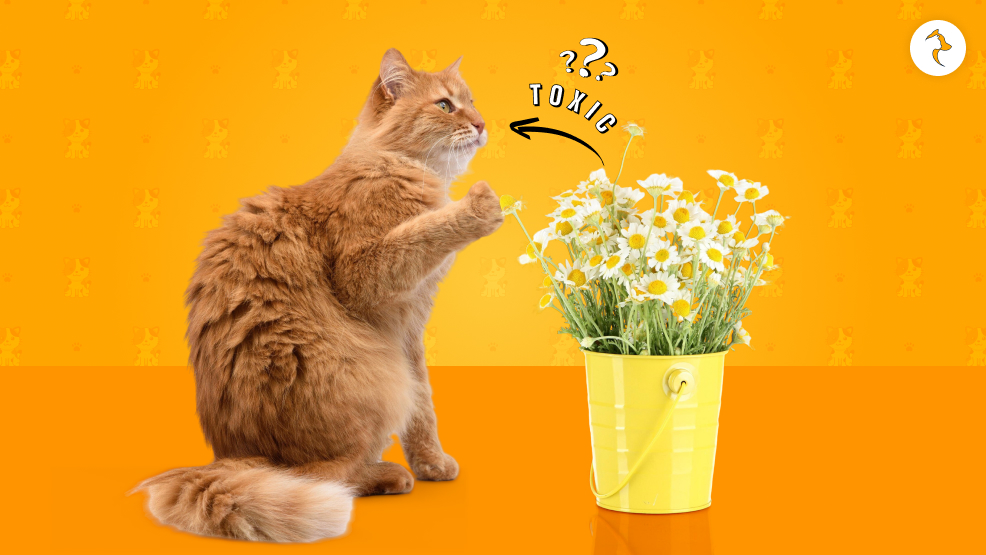
Daisies are one of the most beautiful flowers in the world. Despite their mesmerizing beauty, they are among the most toxic flowers for a cat.
Although daisies are not as toxic as flowers like lilies. But they can cause terrible symptoms that can be very dangerous to some types of cats.
In this article, we will understand the main dangers. In addition, we will also learn how to prevent these things from happening. Let’s learn how to protect our beloved pet from daisies.
Are Daisies Toxic To Cats?
Daisies belong to the chrysanthemum genus. Thus, they are very toxic to cats. The common daisies, which are also known as English daisies, also fall under the harmful category.
On the other hand, several types of disease, like the Gerbera daisies and blue daisies, are not really toxic to cats.
You should look up the safety factors for different types of daisies in your garden. Daisies contain pyrethrins, these act very toxic to cats.
Pyrethrins have several anti-insect qualities. Daisies also contain sesquiterpenes. This compound acts as a contact irritant.
Both the toxins deter animals and insects from consuming the plant.
What Are The Major Symptoms And The Potential Dangers Of Daisies In Cats?
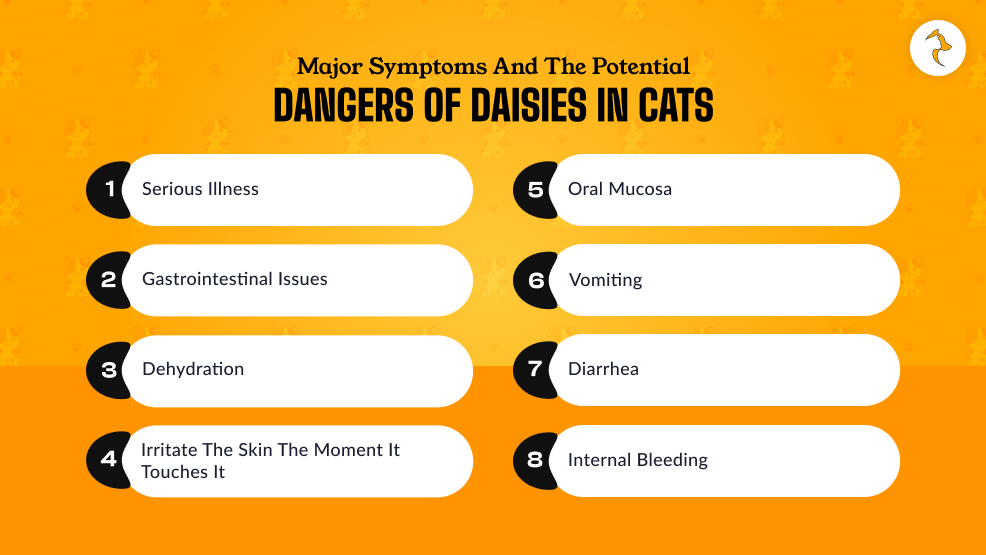
The toxins in daisies can cause serious illness in cats after ingestion. But the extent of daisy poisoning depends on the dosage of the flower consumed by the cat.
Thus, a cat may not show immediate adverse effects after chewing on the leaves or petals of the daisy plant.
The ill effects of daisy ingestion are generally not fatal in cats. However, the cats that have pre-existing conditions can definitely suffer from daisy poisoning.
The cats can easily suffer from symptoms like gastrointestinal issues and dehydration.
1. Sesquiterpene
Sesquiterpene is a dangerous toxin found in the daisies. It is a contact irritant. Hence, it will irritate the skin the moment it touches it.
Often, cats ingest it by mistake, which can cause irritation of the oral mucosa. The toxin can also irritate the gastrointestinal tract after ingestion. It can also result in drooling in excessive amounts.
In addition to this, the cat can also suffer from vomiting, diarrhea, and even internal bleeding in the GI tract in the most extreme situations.
2. Pyrethrins
The other toxin found heavily in daisies is pyrethrins. Pyrethrin is a natural insecticide. However, it is not safe for cats.
Consuming pyrethrin can damage the nervous system of a cat. This can make the cat move in a wobbly way. Furthermore, the legs of the cat would also not fall in coordination with each other.
How To Treat A Cat That Has Consumed Daisies?
While people ask, “Are daisies toxic to cats?”, it is important to understand how to deal with a cat that is suffering from daisy toxicity.
Always call your vet when you think that your cat has consumed daisies. Also, rationally and clearly convey the amount of daisy that your cat has consumed.
The professional veterinarians should be able to say it clearly when to wait and watch, and when it becomes very necessary to take immediate action.
However, in most cases, daisy ingestion does not require immediate medical attention. But at times, the cats can require proper fluid therapy to ensure hydration.
In addition to this, the vets often provide the cat with medication with the help of various types of fluids. This happens as the cat often refuses to eat or drink anything due to the poisoning.
You should always wash your cat with a cat-safe shampoo when its fur gets contaminated while staying around the flowers.
How To Prevent Daisy Poisoning In Cats?
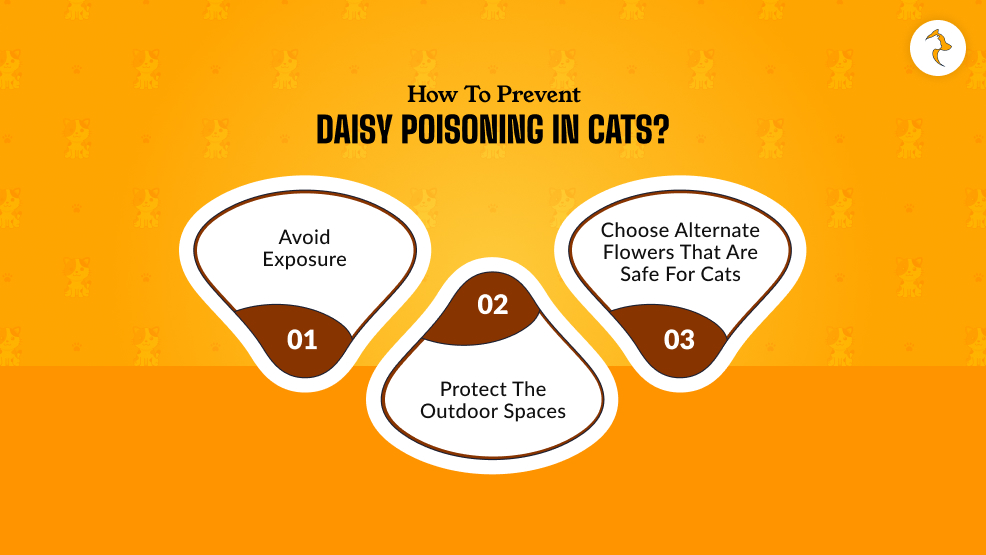
You should minimize exposure to keep a cat safe from daisy poisoning. Here are the most relevant practical tips that shall safeguard a cat.
1. Avoid Exposure
Cat parents should not keep daisies in their home. However, if you want to bring daisies to your home really badly, then place the vase in a location that can not be accessed by your cat.
Certain cats can easily reach areas that are very hard to reach for them. Thus, you should be very observant.
2. Protect The Outdoor Spaces
Keep your cat on a leash or a harness when you take your cat out for a walk. Put barriers around daisies in your garden. Hence, this will stop your cat from biting on daisies.
3. Choose Alternate Flowers That Are Safe For Cats
While you ask, “Are daisies toxic to cats?” you can also explore the other cat-friendly flowers. You should avoid the plants that fall under the ASPCA’s list of toxic plants.
Go through this list of plants that are safe for cats if you have a feline companion with you.
- African Violets
- Orchids
- Boston ferns
- Spider plants
- Polka dot plants
- Haworthias
- Areca palms
- Gerbera daisies
- Broelaids
- Blue daisies
And some others
Things To Keep In Mind If You Think Your Cat Has Consumed Daisies
A bouquet or a garden does not just have the same type of flowers. Hence, your cat can nibble on other types of flowers as well.
This includes flowers like lilies along with daisies. Thus you should always be aware of co exposure.
Co-exposure to multiple types of flowers can cause terrible issues in your cat. Flowers like lillies can cause kidney failure and other chronic issues in the cats.
Hence, you should immediately communicate with your vet when you find your cat munching on leaves and petals.
Frequently Asked Questions
Here are the answers to some of the most commonly asked questions that people ask along with “Are daisies toxic to cats?”
No,Daisies belong to the chrysanthemum genus. Thus, they are very toxic to cats. Hence, you should never keep daisies around your cat.
Daisies contain Sesquiterpene that act as a contact irritant. Hence, can cause irritation to your cat.
On the other hand, daisies also contain Pyrethrins, this directly attacks the nervous system of a cat.
Lilies, daisies, Birds of Paradise, Azaleas, and others are some of the most toxic flowers for cats.
Hence, cat parents should keep these flowers away from their feline companions.
Share









Leave A Comment