
Best 3 Real-Time Veterinary Radiology Tools

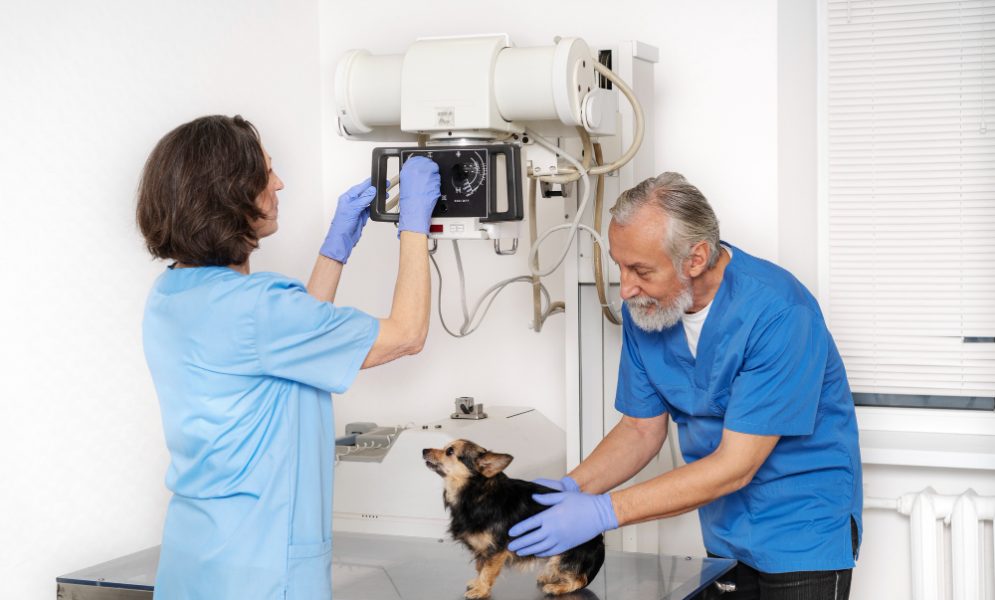
Veterinary radiology is no longer limited by access to imaging technology. Most clinics today can capture high-quality radiographs quickly and reliably.
The real constraint has shifted to what happens next, how fast those images can be interpreted.
Furthermore, it is also about how confidently findings can be acted upon.
Hence, this leads to seamless insights that can be integrated into clinical decision-making.
This is where real-time veterinary radiology tools are fundamentally changing the landscape.
Traditional radiology workflows introduce unavoidable delays.
As a result, the Images are captured, uploaded, queued, reviewed, and eventually returned as structured reports.
In lower-volume environments, this delay may be manageable.
In high-volume clinics or emergency settings, it becomes a bottleneck that affects the entire care process.
Veterinarians are forced to either wait for interpretation or make decisions without full diagnostic clarity.
Real-time AI radiology tools dramatically compress this timeline. As a result, things become less time-consuming.
Instead of treating interpretation as a separate stage, these platforms deliver insights almost immediately after image capture.
Radiology becomes part of the active clinical encounter, not a follow-up step. This shift has implications far beyond speed.
It changes how clinicians prioritize cases, how they communicate with clients, and how efficiently the clinic operates overall.
In this article, we will learn about the best veterinary AI radiology tools
| At A Glance: Best Real-Time Veterinary Radiology Tools• SignalPET – Best real-time AI + workflow-integrated diagnostics• Picoxia – Fast radiograph analysis• Radimal – AI triage with specialist validation |
What Is a Real-Time Veterinary Radiology Tool?
The real-time veterinary radiology tool serves as a mechanism for analyzing radiographic images.
Hence, the analysis of the images can be done immediately after they are obtained.
This type of system generally uses AI to find the structured findings within a few seconds or minutes of capturing the image.
These tools generally offer direct diagnostic support that helps in clear and prompt interpretation of the underlying conditions.
Hence, the system is very different from the traditional system, leading to delayed analysis.
Thus, the veterinarians can easily prioritize the urgent cases without heavily depending on conventional methods.
As a result, they can make treatment decisions without heavily relying on external radiology reports.
Best Real-Time Veterinary Radiology Tools
Here are some of the best real-time veterinary radiology tools that help vets achieve the best results in dealing with several conditions.
1. SignalPET
SignalPET is the most complete real-time veterinary AI radiology tool because it was built around a clear premise.
Hence, radiology should inform decisions immediately, not after the fact.
The platform plays a major role in delivering AI-driven interpretation immediately after images are captured.
Hence, this transforms radiology into a real-time diagnostic signal. Often, delays between imaging and clinical interpretation lead to disruptions.
Thus, this slows down the overall patient care. As a result, immediate insights play a very important role in high-throughput environments.
Any delays can often slow down efficiency in workflow and disrupt overall patient care.
SignalPET integrates clinical operations. Thus, this provides additional aid to the vets when used properly.
On the other hand, several AI tools involve separate layers. Hence, the operators must continually make adjustments to the workflow.
However, SignalPET can completely avoid every issue. Moreover, it does this while embedding itself directly into imaging.
Thus, the system provides insights to the clinicians and doctors in specific areas where they have already been working.
As a result, this eliminates all the chances of friction that creates great opportunities for adoption.
The system also uses a hybrid approach. Thus, the practitioners can easily also approach the professional experts, the radiologists.
Thus, they do not have to depend on any one thing. The involvement of manual and AI automated the methods reduces the scope for mistakes.
Hence, this leads to a balance between speed and clinical validation. As a result, people do not have to choose one at the expense of the other.
2. Picoxia
Picoxia takes a more focused approach. Moreover, the veterinary AI radiology tools serve as a high-performance AI interpretation engine rather than a complete workflow platform.
Moreover, the platform majorly depends on deep learning-based analysis of images.
Furthermore, they emphasize scalability, speed, and accuracy in terms of detection.
The platform generally automatically analyzes radiographs right after upload. Thus, these insights help clinicians identify abnormalities quickly.
Hence, the platform helps out largely in places where the volume of imaging is massively high.
Thus, this helps clinicians to identify all the abnormalities faster. Manual reviews in such environments can lead to errors due to time constraints.
3. Radimal
Readmal generally focuses on a very critical aspect in real-time radiology. These veterinary AI radiology tools help doctors to prioritize issues.
Moreover, prioritizing is not the most important thing. Hence, it can be about identifying the cases that require primary attention.
Hence, Raidimal’s AI-driven triage helps significantly in identifying the most critical cases first.
As a result, this capability plays an important role during emergencies and in critical care settings.
Moreover, delays in identifying the issues can lead to very serious consequences.
Why Real-Time Radiology Is Becoming a Core Requirement
The growing importance of real-time diagnostics is closely tied to broader shifts in veterinary care delivery.
Clinics are under increasing pressure to move faster while maintaining diagnostic accuracy and consistency.
Rising Caseloads Without Linear Staffing Growth
Many veterinary practices are experiencing sustained increases in patient volume. However, staffing levels, particularly access to specialists, have not kept pace.
This creates a persistent imbalance, where more imaging is being performed but not necessarily interpreted faster.
Real-time tools help absorb this pressure by providing immediate analytical support.
Hence, this allows the clinicians to maintain throughput without sacrificing diagnostic quality.
Expansion Of Emergency And Urgent Care Models
Emergency and urgent-care clinics operate in environments where time is a critical variable.
The ability to interpret thoracic, abdominal, or musculoskeletal radiographs quickly can directly influence treatment decisions and patient outcomes.
In these settings, even small delays in interpretation can cascade into larger operational inefficiencies.
Increasing Expectations From Pet Owners
Client expectations have evolved significantly with the advancements in since and vetrinary technologies.
Pet owners increasingly expect same-visit answers, clearer explanations, and faster treatment decisions.
Waiting hours, or days, for radiology reports is becoming less acceptable, particularly in cases where imaging is central to diagnosis.
Real-time radiology tools enable clinics to meet all these expectations.
Moreover, they deliver immediate insights that can be communicated directly during the consultation.
AI Maturity Reaching Clinical Utility: Veterinary AI radiology tools
AI in veterinary radiology has reached a level of maturity that enables its reliable use in daily practice.
Studies comparing commercial AI systems to veterinary radiologists suggest that, in certain scenarios, AI can approach specialist-level performance in identifying specific abnormalities.
This does not replace radiologists, but it significantly enhances the baseline level of diagnostic support available to every clinician.
Share






Leave A Comment