
Homemade Dog Food Recipes That Are Vet-Approved & Easy


The Dog parents often wonder which is the best food option for their dogs. They mostly find it difficult to decide between homemade dog food meals and the readily available kibbles.
However, did you know that homemade food for your dogs may not just help you cut costs, but can also help protect your dog from various diseases caused by harmful preservatives and other additives.
Moreover, dog parents can customize their food routines and recipes to address various deficiencies and diseases.
However, dogs of various sizes and breeds have diverse needs. Hence, homemade dog food recipes should also be regulated and prepared based on the specific dog breed needs and requirements, or the deficiencies the dog faces. The Pets Magazine brings you some of the easiest-to-prepare, cost-efficient, and vet-approved homemade dog food recipes.
What Are The Key Benefits Of Preparing Homemade Dog Food?
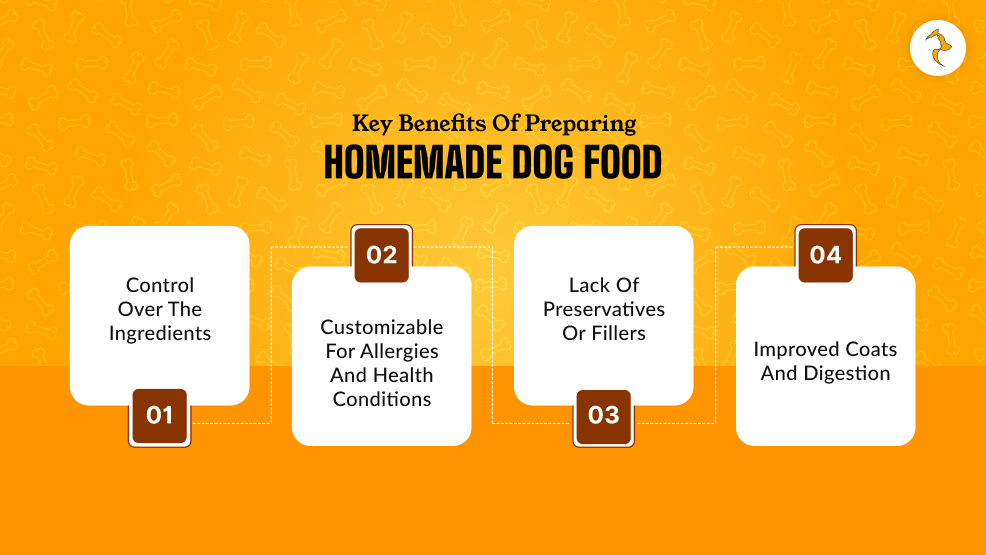
Home-made dog food recipes have multiple benefits. They provide the dog parents with control over multiple key elements.
Moreover, the customization of the recipes in accordance with the needs and requirements of your furry friend is the best part of preparing homemade dog food. Here are some of the key benefits of homemade dog food recipes.
1. Control Over The Ingredients
Homemade dog food allows dog parents to control the ingredients in their recipes. Thus, this allows the dogs to obtain the specific nutrients required for their growth and a healthy life.
2. Customizable For Allergies And Health Conditions
Different types of canines remain allergic to various ingredients. Canines suffering from certain types of diseases often have specific needs and requirements.
On the other hand, canines often suffer from certain types of allergies. Thus, certain ingredients can trigger allergies in our dogs.
Therefore, homemade dog food can help dog parents avoid using hazardous ingredients.
3. Lack Of Preservatives Or Fillers
Often, the kibble producers use preservatives and other additives in the kibbles to make the food tastier or increase the shelf life of the product.
However, pet parents do not always prioritize cost-efficiency and profit over their dogs’ health.
Thus, while preparing the meals at home, they choose the best for their dogs.
4. Improved Coats And Digestion
The incorporation of ingredients rich in omega-3 and omega-6 fatty acids helps improve dogs’ coats and digestion.
Thus, pet parents can adjust these factors accordingly to achieve better results with their dogs.
How Is Home-Cooked Dog Food Better Than Factory-Made Kibbles? Homemade Dog Food Vs Kibbles
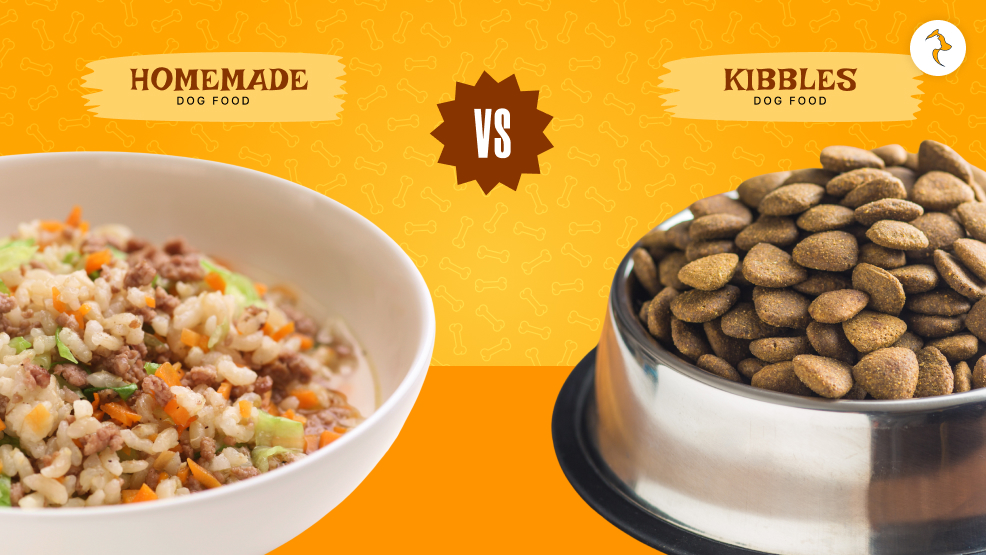
Most of the dog foods claim to serve the best purpose for the dog’s health. However, they are mostly prepared with commercial profitability in mind. Thus, it is important to conduct a one-on-one comparison of homemade dog food vs. kibbles.
1. The Presence Of AGEs In Kibbles
Most kibbles contain AGEs (Advanced Glycation End Products). AGEs act as oxidative compounds. Moreover, the accumulation of AGS over time can lead to inflammation and other health risks.
Hence, this inflammation increases the risk of heart disease, cancer, diabetes, and other conditions.
Moreover, a recent study by the MUSC Hollings Cancer Center found that dog food kibbles contain 100x more AGEs than those in human food.
On the other hand, the home-cooked meals prepared for the dogs do not contain any ingredients that could affect the animals’ long-term health.
The study also shows that certain breeds, like the Golden Retriever, have lost at least 5 years of their total life expectancy.
Moreover, consumption of kibbles with AGEs can be the main reason behind this.
Thus, dog parents can simply avoid giving their dogs poison while feeding them healthy, home-cooked dog food.
2. The Presence Of Heavy Metal In The Commercial Dog Food
Nature Scientific Reports has found alarming levels of Mercury, Vanadium, lead, and Uranium in dry dog food that exceed the FDA’s Maximum Tolerable Limits. This makes the food incredibly dangerous for your furry buddy.
The studies show that 100% of the Kibbles in the market exceed the FDA-approved Maximum Tolerable Limit for mercury. On the other hand, 80% of the Kibbles available in the market exceed the lead limits.
3. Carcinogens And High Heat Processing While Manufacturing The Kibbles
Many organizations and institutions have not conducted a proper study to determine whether Kibbles causes cancer in pets.
However, multiple experts have suggested that high-temperature preparation of Kibbles generates acrylamides, HCAs, and PAHs.
On the other hand, experts like Dr Laurie Cauger have suggested that the high carbohydrate content and low antioxidant levels create environmental conditions that may cause cancer.
However, the homemade dog food is cooked in conditions that shall not harm the dogs in any way.
4. Metabolic Disorders From High-Carb Kibble
The high carbohydrate content of the kibbles directly damages the dog’s metabolism. A study conducted by the University of Helsinki’s Dog Risk found that dogs that consume kibble show signs of elevated blood sugar.
The dogs also showed risks of heart disease due to increased cholesterol. Furthermore, the dogs showed signs of increased insulin resistance markers. Thus, this made the dogs prone to diabetes and other diseases.
A typical Kibble diet contains 44% carbohydrate, 34% fat, and 23% protein. A Veterinary Journal Study by the University of Helsinki, published on phys.org suggests that raw diet in animals shows better and healthier metabolism.
Thus, homemade dog food made with natural ingredients shows healthier results in dogs. This keeps the dogs from getting sick in the long run.
5. Investigation Of Dry Dog Food: Salmonella Outbreak 2023
CDC public health and regulatory officials in several states and the US, the Food and Drug Administration, and the Centre for Veterinary Medicine (FDA CVM) investigated the outbreak of Salmonella Kauimbu infection.
The investigation revealed that a specific product, High-Pro, showed signs of contamination. Thus, the food company stopped production and distribution of all products in the line.
A total of seven people from seven states were reported to have been affected by the virus. Thus, homemade food is a better choice for most dogs.
6. The Presence Of Preservatives In The Kibbles That Causes Cancer
Several kibble manufacturers utilize butylated hydroxyanisole (BHA) to increase the shelf life of their products.
However, several studies have shown that ingredients and preservatives like BHA make the dog more prone to chronic diseases like cancer.
Several instances have shown the dogs developing malignant tumors and other cancerous elements.
The state of California specifically considers BHA as a chemical that causes reproductive toxicity and cancer. The information has been taken from nahf.org.
On the other hand, homemade dog food is free of preservatives, and your dog gets served it as soon as possible.
7. Clean Label Project Findings
The kibbles contain high levels of arsenic, cadmium, lead, and glyphosate. Hence, these chemical components in the dog food often cause cancer and other diseases in the dogs.
Dr Andrew Jones publishes on veterinarysecrets.com that kibbles can cause several problems in dogs. Harmful ingredients are added to the dog food to make it tastier for your dogs.
Moreover, the food becomes dry and more easily handled. But the dogs suffer from these elements in the long run.
Summary Of The Risk Factors Of Kibbles
The table below summarizes all relevant risk factors to which dogs are exposed when fed Kibbles.
| Risk Factor | inked Illnesses |
|---|---|
| High AGEs | Cancer, inflammation |
| Heavy metals | Neurotoxicity, organ failure |
| Carcinogens (acrylamides, HCAs) | Tumor growth |
| High carbs | Obesity, diabetes |
| Preservatives (BHA, BHT) | Cancer, reproductive issues |
| Contamination (Salmonella, E. coli) | GI illness, systemic infection |
Which Are The Ingredients That Should Be Avoided While Preparing Homemade Food For The Dogs?
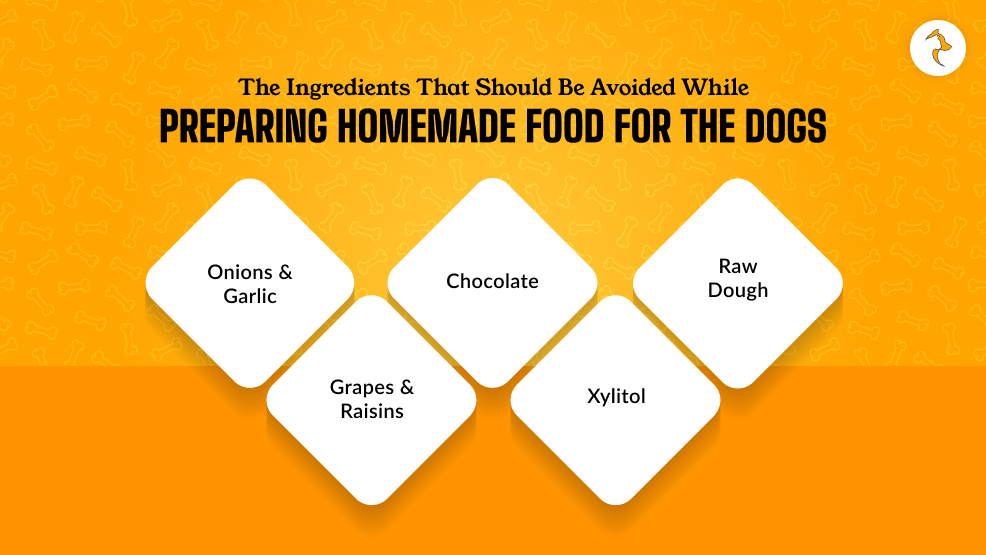
Multiple ingredients are toxic to your dogs. Moreover, the new dog parents often think that whatever is healthy for them is also healthy for their dogs. However, in reality, that is not the case.
The metabolism of dogs is very different from that of humans. Several things that might look like staples to us can actually be poisonous to your dogs.
Thus, several ingredients can cause poisoning in dogs. The parents should hence always consult the vet before introducing anything new to their dogs’ diet.
The following chart shows some of these ingredients that are harmful to dogs.
| Unsafe for Dogs | Why It’s Harmful |
|---|---|
| Onions & Garlic | Can cause anemia |
| Grapes & Raisins | Kidney failure risk |
| Chocolate | Toxic to the nervous system |
| Xylitol | Can cause liver failure |
| Raw Dough | Can expand in the stomach |
A Guide For Doing Groceries For Your Dogs: Understanding The Shopping Basics

There are some basics every new dog parent should learn. These ingredients should never harm your dog.
Thus, dog parents should always keep these things readily available at home.
1. Lean Meats
Canines always require a lean source of animal protein. Thus, lean meats like chicken, beef, turkey, and others can be the best source of protein for the dogs.
2. Carbohydrates
High levels of carbs can often damage your dog’s metabolism. However, carbs in regulated quantities are necessary for an energetic canine.
Thus, ingredients like brown rice, sweet potatoes, and oats are among the gluten-free options for your dog.
Hence, just like you, your dog’s metabolism also works well on the gluten-free sources of carbohydrates.
3. Vegetables
Dogs also require proper vitamins and other nutrients. Thus, the dog’s parents should incorporate healthy vegetables such as carrots, spinach, and peas into their dog’s diet.
4. Healthy Facts
Your dog’s body needs healthy fats to maintain their metabolism. Moreover, some of the healthy sources of fat include olive oil, fish oil, and others.
People should avoid sources like almonds and others. Even though almonds are not toxic for dogs, they can always choke your dog. This can especially cause problems in smaller breeds.
5. Supplements: Calcium, Zinc, Omega-3
Dog parents should rely mostly on natural sources of essential nutrients like omega-3 fatty acids, calcium, and Zinc.
However, in several cases, the dogs face deficiencies. Thus, the dog parents should always rely on the supplements.
Cost Comparison Of Kibbles Vs Homemade Food
People who are considering getting a dog often wonder what the costs will be for caring for it as it grows.
They wonder whether dry dog food or the homemade dog meal will be cheaper. Thus, here’s a cost comparison for feeding a medium-sized dog (30–50 lbs.) with dry dog food (kibble) versus homemade dog food.
1. Monthly Cost Breakdown For Feeding Kibbles Vs Homemade Food
The table below provides an estimate of the cost of feeding your dog dry dog food vs. homemade dog food.
However, the prices can vary from time to time. Thus, this remains an approximate expenditure. The costs can vary.
| Feeding Method | Estimated Monthly Cost | Notes |
|---|---|---|
| Dry Dog Food (Kibble) | \$52.50 | Based on mid-range kibble at \$5/kg |
| Homemade Dog Food | \$58.80 | Based on average ingredient costs and balanced composition |
2. The Approximate Expenditure Based On The Homemade Dog Food Compositions
The vet-approved dog meal recipes generally consist of one crucial elements. However, most recipes follow a fixed composition.
Thus, to determine the cost of the food, we will have to understand the composition first.
A proper vet-approved general diet for a dog mostly consists of 50% meat, 25% carbs, 20% vegetables, and 5% supplements to avoid deficiencies.
Therefore, the approximate cost of feeding a (30–50 lbs) dog shall depend on the approximate prices of these ingredients aligned with the composition.
| Ingredients And Percentage | Approximate Pricings |
|---|---|
| 50% meat (e.g., chicken, beef) | $8/kg |
| 25% carbs (e.g., rice, oats) | $2/kg |
| 20% Vegetables (E.G., Carrots, Spinach) | $3/kg |
| 5% supplements (e.g., calcium, omega-3) | $10/kg |
The prices mentioned above are approximate. Moreover, the prices of these products shall vary.
Is Home-Made Dog Food Costlier Than Kibbles?
The cost of preparing homemade dog food varies depending on the ingredients used. People often use cheaper ingredients to cut costs. But this will not serve the purpose of replacing your dog’s diet with homemade food.
Hence, a proper homemade dog food recipe should include all the necessary nutrients.
Homemade dog food is a little more costly than the kibble diet. Hence, it costs approximately $6.30 / month more.
However, homemade dog food provides the dog’s parents with proper control over the ingredients. Thus, dog parents can customize their dogs’ diets based on their conditions and diseases.
Homemade dog food is free of preservatives and other harmful chemical components. Thus, in the long run, homemade dog food increases the life expectancy of your furry buddy.
Which Are The Five Quick And Easy Vet-Approved Homemade Dog Food Recipes?
A healthy dog diet follows a perfect and steady composition of ingredients. However, your dog friends do not always like to eat the same thing every day.
Thus, your dog also requires variations in their meals. Here are the top five vet-approved homemade dog food recipes that your dog will enjoy.
1. Chicken Rice Digestive Soother
This recipe helps the most when your quadrupedal friend has a sensitive stomach. Here are the ingredients that should be used in the recipe.
Ingredients
- 1 cup boiled chicken breast
- ½ cup cooked brown rice
- ¼ cup steamed carrots
- 1 tsp fish oil
How To Prepare The Recipe?
Boil all the ingredients separately, then pour them into a big bowl and mix them well. The preparation can be easily stored in the fridge for at least three days.
All you have to do is take it out of the fridge, put it in the microwave, and simply warm it and serve it to your buddy.
2. Beef And Stew Potatoes
Recipes like beef and stewed potatoes are the best for active dogs. Moreover, dogs need to run and exercise a lot to be able to digest beef. Here are the ingredients that are required to prepare the recipe.
Ingredients
- 1 cup lean ground beef
- ½ cup mashed sweet potato
- ¼ cup peas
- 1 tsp olive oil
How To Prepare The Recipe?
Cook the meat thoroughly. Moreover, beef generally takes a bit more time to be prepared properly. Then boil the vegetables separately.
Further, peel the potatoes and then mash them up, and add a cup of peas. Finally, add a tablespoon of olive oil and then mix it well.
3. Turkey & Quinoa Allergy-Friendly Mix
This is a recipe that suits the needs and requirements of dogs with grain allergies. Here are the ingredients that are required for preparing this vet-approved dog food recipe.
Ingredients:
- 1 cup ground turkey
- ½ cup cooked quinoa
- ¼ cup spinach
- 1 crushed calcium tablet
How To Prepare The Recipe?
Boil all the ingredients separately and then sauté them all together on medium heat. Use olive oil to sauté all the ingredients.
4. Salmon Oats
This recipe acts as a coat booster and is especially good for dogs with long coats. Hence, this recipe helps to improve the skin and coat health of a dog. Here are the ingredients that are required for preparing this recipe.
Ingredients:
- 1 cup cooked salmon
- ½ cup oats
- ¼ cup shredded zucchini
- 1 tsp flaxseed oil
How To Prepare The Recipe?
Cook the fish properly, prepare the oats, shred the Zucchini, and boil it. Furthermore, take a tablespoon of flaxseed oil and sauté everything together.
The item can be easily stored in the refrigerator.
5. Lamb & Lentil
This recipe is best for senior dogs. Did you forget that your furry friend, unfortunately, grows old faster than you? Moreover, dogs of different ages require different diets. Thus, this recipe is the best for older dogs.
Ingredients
- 1 cup ground lamb
- ½ cup cooked lentils
- ¼ cup chopped green beans
- 1 tsp turmeric
How To Prepare The Recipe?
Cook the lamb and lentils by simply boiling them, then add turmeric and mix well.
Feeding Guideline By Dog Weight
Dogs of different weights have diverse nutrient requirements. Thus, it is important to ensure you provide your dogs with relevant portions. Overfeeding shall cause health hazards.
The table below provides a guide to feeding your dogs based on their body weight.
| Dog Weight | Daily Portion | Notes |
|---|---|---|
| 5–10 lbs | ½ – 1 cup | Small breeds |
| 10–25 lbs | 1 – 2 cups | Medium breeds |
| 25–50 lbs | 2 – 3 cups | Large breeds |
| 50+ lbs | 3 – 4 cups | Giant breeds |
Which Supplements Do You Need To Prevent Deficiencies?
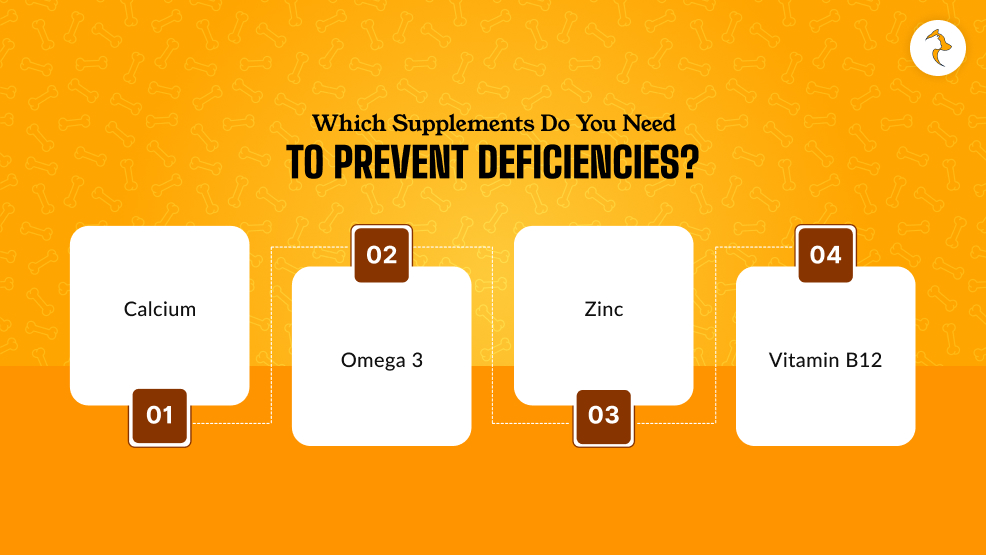
The dogs require additional supplements to prevent nutritional deficiencies. However, the only way to provide your dogs with the necessary supplements is through their food.
Thus, the dog’s parents should have a proper idea of the required supplements. Here are some of the most common supplements for dogs.
1. Calcium
Calcium is required for better bone density. The larger breeds, particularly in their middle and older ages, often face problems related to calcium deficiency.
The larger and heavier breeds are prone to joint issues. They must face pain and other problems, especially when they get older.
Thus, adding calcium supplements to homemade dog food provides them with the proper strength to fight bone deficiency.
2. Omega 3
Omega-3 fatty acids play a crucial role in improving the quality of the coat and the health of the skin in dogs. Moreover, incorporating natural ingredients like fish oil can help dogs obtain omega-3 fatty acids naturally.
However, it is often difficult to obtain from natural sources. Thus, omega-3 concentrated fish oils and other types of supplements available in the market can be beneficial for your dog.
3. Zinc
Zinc plays a crucial role in supporting your dog’s immune system. Moreover, Zinc supports the function of white blood cells in dogs. Zinc also enhances immune function.
Furthermore, zinc reduces the production of pro-inflammatory cytokines. Thus, this decreases the chances of inflammation in a canine body.
4. Vitamin B12
Vitamin B12 helps keep your dog energetic, and it also regulates your dog’s metabolism.
The dog’s parents should definitely run things through their vets. However, dogs should only consume vet-approved dosage for supplements.
Which Are Breed-Specific Cooked Dog Foods?

Every dog breed is different from the others. Moreover, various dog breeds have varying nutritional needs.
Various breeds develop diverse types of diseases. Thus, it is essential to ensure they receive proper nutrition tailored to their specific needs.
Here is a guide to prepare balanced, dog-breed-specific, homemade meal recipes for various species.
1. What Are The Breed-Specific Nutrition Tips?
Different dog breeds have different nutritional needs. Bulldogs require Low-fat meals that are anti-inflammatory. Moreover, Huskies need high-protein food to stay energetic.
Furthermore, breeds like Chihuahuas need nutrition-efficient diets in small portions. The Goldies need omega-3-rich food for better coats and better skin conditions.
2. Breed-Specific Ingredient Table Based On The Needs Of Dogs
Here are the details about the ingredients that can be used in a home-cooked meal based on the breed of dog that you have and their specific needs and requirements.
| Species | Needs | Recommended Ingredients | Things To Avoid |
|---|---|---|---|
| Labrador Retriever | Weight control, joint support | Lean proteins (chicken, turkey), Brown rice, or quinoa, sweet potatoes, Fish oil (for joints) | High-fat meats, excessive carbs |
| German Shepherd | Digestive support, joint health | Lamb or beef, Brown rice, Pumpkin (for digestion), Glucosamine supplements | Dairy, corn |
| Golden Retriever | Skin & coat health, heart support | Salmon or sardines, Oats, Carrots, and peas, Flaxseed oil | Soy, wheat |
| Bulldog | Anti-inflammatory diet, weight control | Turkey or chicken, sweet potatoes, Blueberries (antioxidants), and Olive oil | Fatty meats, grains |
| Beagle | Energy balance, weight management | Chicken or turkey, Brown rice, Zucchini and carrots, Omega-3 supplements | Excessive fats |
| Poodle | Skin health, cognitive support | Salmon or turkey, Quinoa, Spinach and blueberries, and Coconut oil | Artificial additives |
| Chihuahua | Calorie-dense meals and dental health | Ground beef or chicken, Brown rice, Pumpkin, peas , and Calcium supplement | Hard-to-chew ingredients |
| Shih Tzu | Coat health, digestive support | Chicken or turkey, Sweet potatoes, Carrots and peas, and Fish oil | Wheat, soy |
| Boxer | Heart health, lean muscle support | Lean beef or turkey , Brown rice , Broccoli, carrots, and a Taurine supplement | High-fat meats |
| Dachshund | Weight control, joint support | Chicken or turkey, Lentils, Spinach, carrot, and Glucosamine | Fatty meats, excessive carbs |
What Substitute Ingredients Can Be Used As A Replacement For Some Commonly Used Ingredients?
Several dogs develop various conditions. Thus, it is essential to know about alternative ingredients for the readily available ones.
Dog parents can replace rice with Quinoa if the dog is allergic to certain grains. Thus, quinoa serves as one of the best grain-free options.
Chicken or beef often contains fat. Thus, turkey serves as a much leaner source of protein. A dog on a diet should consume turkey, as it is low in fat.
Vegetables, such as carrots, can be replaced with pumpkins. Moreover, the canine digestive system finds pumpkins more digestible.
Things To Keep In Mind While Purchasing Ingredients And Preparing Homemade Dog Food
To make cheaper purchases, people should buy ingredients in bulk. Moreover, they should prepare and store food in batches.
Products with a lower risk of going off can be easily stored in bulk. Cook everything at once and then freeze in batches in separate containers. Hence, this will make things more convenient for you.
Pet parents should compare all available supplement brands and choose the best one for their pets.
Seasonal recipes should help you save a ton of money. Ingredients like Lamb & lentil stew and pumpkin mash can serve as good options for winter.
On the other hand, Ingredients like chicken and cucumber salad and frozen banana bites can help your dog stay cool in the summer.
Frequently Asked Questions
Here are the answers to some of the most commonly asked questions about homemade dog food.
Yes, you can mix them, but ensure both are nutritionally balanced. However, consult a vet if your dog has sensitivities.
Homemade dog food lasts 3–5 days in the fridge. Moreover, you can freeze them in batches to avoid any contamination.
Puppies can eat homemade food as long as it provides proper nutrients. However, always consult your vet for growth-specific requirements. Thus, slight changes in the puppies’ diet can make a significant difference in their health.
Share









Leave A Comment