
What Causes A Cat To Gag & What Should We Do In These Situations?

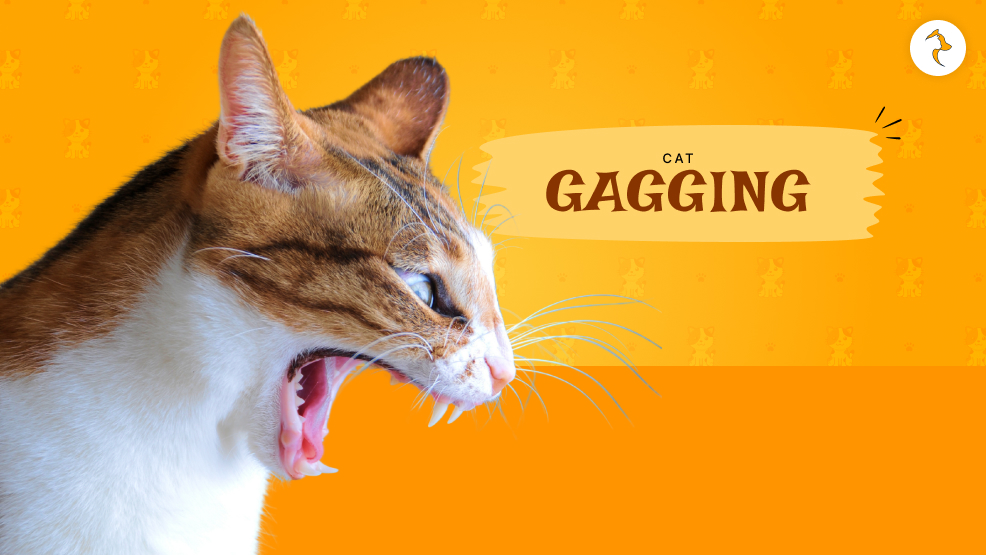
Cat parents generally find the sound of a cat gagging to be really unpleasant. However, gagging in cats is not particularly unpleasant.
However, gagging at times can indicate a certain underlying disease or condition. Hence, it becomes very important to understand which type of gagging is normal and which one is not.
In this article, we will talk about cat gagging. We will learn about the gagging that is normal and the one that requires veterinary attention. In addition, we will also discuss the major reasons behind cat gagging.
What Does It Mean When A Cat Randomly Gags?
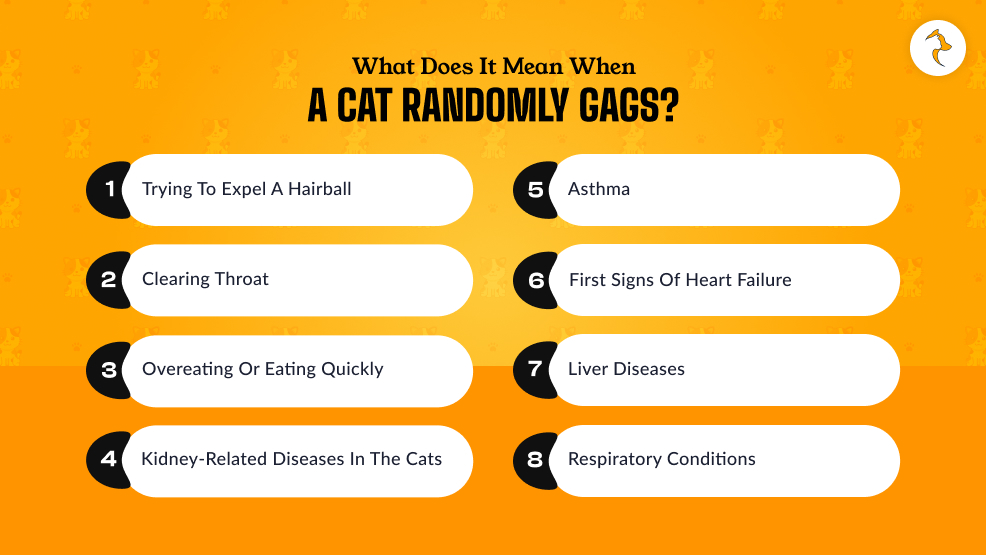
Gagging serves as a very common natural function in the feline body. Moreover, it suggests that the cat is trying to throw up.
However, the cat may not be able to throw up for some reason. But there can be multiple other reasons that can cause your cat to gag. Here are some of the major reasons why your cat can gag.
1. Trying To Expel A Hairball
The cats often groom themselves with their tongue. Thus, there is a chance of ingesting a ball of hair in this process.
This leads to clumps of hair in a cat’s stomach. But the digestive system is generally unable to digest the hair, so it tries to throw up during this process.
The process is generally more complicated than it sounds. Thus, in some cases, the cat’s digestive system requires multiple attempts to completely remove the hairball.
2. Why Is My Cat Gagging But Not Throwing Up? Clearing Throat
The cat often finds it very difficult to clear their throat. Cats have the habit of swallowing things that they should not consume. Thus, these non-edible things often get blocked in their throats.
Cats often stretch out their neck and gag continuously. In addition, they can also try to swallow repeatedly to remove the object from their throat.
You should take your cat to an emergency vet when you find something has gotten caught in the throat of your cat.
We human beings often decorate our homes with flowers like peonies. However, flowers like peonies can be very toxic for a cat.
Hence, you should always decorate your home with cat-compatible flowers.
3. Overeating Or Eating Quickly
The cats become nauseous or gag when they eat too fast or too much at once. Thus, in this situation, you can do a couple of things to ensure this does not happen.
You can serve your cat meals in small portions, in batches. Hence, this will prevent it from eating too much at once.
Cat parents should also figure out the right amount of food for their cat. This shall prevent them from feeding them extra.
Canned cat food also helps accurately measure portion sizes. Additionally, there are specialized bowls that prevent your cat from eating too fast.
Eating certain types of food can cause your cat to gag and vomit. Thus, you should know the types of food that you should avoid giving to your cat.
4. Kidney-Related Diseases In The Cats
Cats often suffer from various kidney-related diseases. Hence, this condition can also make a cat gag. Kidney diseases lead to the accumulation of waste products in a cat’s bloodstream.
Thus, the feline often feels lethargic and nauseous. Hence, this leads to weight loss and vomiting in the cats.
The cat parents should also be aware of the other signs of kidney disease in the cats. The other signs include frequent urination, increased thirst, and an unkempt appearance.
Sudden and acute kidney disease can happen due to ingesting toxins. Thus, you should take your cat to the vet immediately to restore kidney function.
5. Asthma
Asthma is one of the most common causes of cat gagging. Hence, a cat shall gag, cough, and wheeze in a hunched posture. They keep their body close to the ground in this situation.
Moreover, this condition shall be accompanied by several other symptoms. These symptoms include problems with breathing, breathing through the mouth, and swallowing.
In addition, they may have a constant gurgling noise in their throat. Moreover, asthma is one of the major veterinary emergencies.
Hence, you should immediately rush to the vet when your kitty shows signs of an asthma attack.
6. What Are The First Signs Of Heart Failure In Cats?
Gagging can be an early indicator of heart conditions in cats. In addition, several other indicators can also accompany a heart condition.
These signs include lethargy, rapid breathing, collapsing, and other things. Pet parents should take their pets to the vet if they notice any of these symptoms in their cats.
a. How Do Vets Check A Cat’s Heart?
The cats often get heart disease due to certain other conditions, like hypothyroidism, among others. Thus, the veterinarians generally search for these conditions in a cat.
The vets can also run various specialized blood tests on your kitty. Moreover, the initial test starts with an echocardiogram.
This gives the vets a quick idea of the thickness of the heart muscles, the functioning of the valve, and the flow of blood.
The doctors also use chest X-rays, NT-proBNP tests, and ECGs to determine the extent of damage and strain on the heart.
The doctors constantly monitor the cat’s heart rate. This provides them with proper clarity about the irregularities.
When the heart beat count exceeds the average, it can indicate underlying conditions. However, the heart rate often rises when the cat runs or engages in physical activities.
b. At What Age Do Cats Get Heart Failure?
Cats often suffer from several types of heart disease. These include congenital heart conditions as well as acquired heart disease.
Acquired heart diseases eventually occur. On the other hand, cats are generally born with congenital heart conditions.
Hence, acquired heart disease can happen to a cat at any age. There is no specific age at which such a disease develops.
7. Liver Diseases
Cats often suffer from liver diseases. However, it is important to figure out the signs early. There are multiple indicators and signs of liver disease in the cats.
Moreover, these include vomiting, cat gagging, jaundice, diarrhea, and swelling in a cat’s abdomen.
Liver disease often turns out to be absolutely life-threatening when it remains untreated. You should contact your vet right away if your cat has any liver disease.
8. Respiratory Conditions
Coughing, gagging, and difficulty breathing can be major signs of respiratory conditions.
Oftentimes, several viruses like the feline herpesvirus type-1 (FVR) and feline calicivirus (FCV) cause respiratory conditions.
In addition, several bacterial infections can also cause respiratory problems in the cats.
The bacterial infections like Bordetella bronchiseptica (B. bronchiseptica) and Chlamydia felis (C.felis) also cause respiratory issues in the cats.
Thus, this can easily lead to cat gagging. On the other hand, other things like fungal infections and heartworms can also lead to respiratory gagging.
Proper vaccination provides your cat protection against most of these conditions. Cat gagging can also happen due to minor issues.
These issues include things like a minor cough or cold in the cats. But you should always get things checked with your vet to stay cautious.
Minor respiratory issues, such as colds and the flu, are accompanied by symptoms like coughing, sneezing, and others.
Things To Remember About Cat Gagging
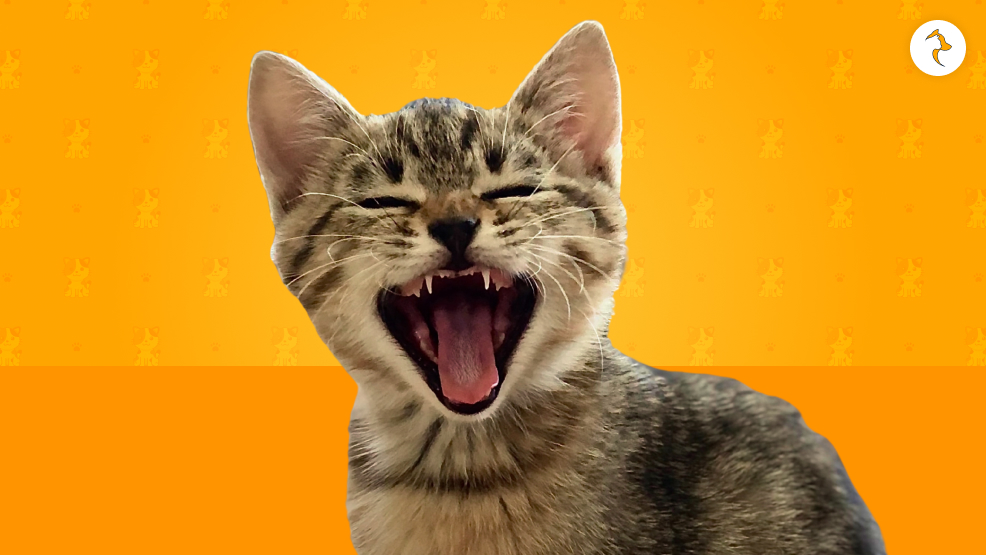
Cats often gag and vomit once or twice, and it is not abnormal. However, constant gagging and vomiting can indicate other issues in the cats.
Hence, you should definitely take your cat to a vet when you notice such symptoms. The data mentioned in the post should be considered for information.
You should never consider this as medical advice. Always reach out to your vet when gagging is persistent or recurs within a few days. It might indicate several underlying issues in the cats.
Frequently Asked Questions
Here are some of the most frequently asked questions about cat gagging.
The signs of progressing heart failure in cats include gagging and increased respiratory effort. In addition, the cat may experience decreased body weight and lethargy.
Gagging in cats can happen for multiple reasons. This often happens due to minor issues like overeating or eating too much within a very short span of time.
You should take your cat to the vet when the gagging is persistent. The veterinarians should check for foreign objects, such as hairballs, in the cat’s digestive system.
A Heimlich maneuver can also give a fast abdominal thrust behind the cat’s ribs. This can help in clearing foreign objects from the cat
Share







Leave A Comment